
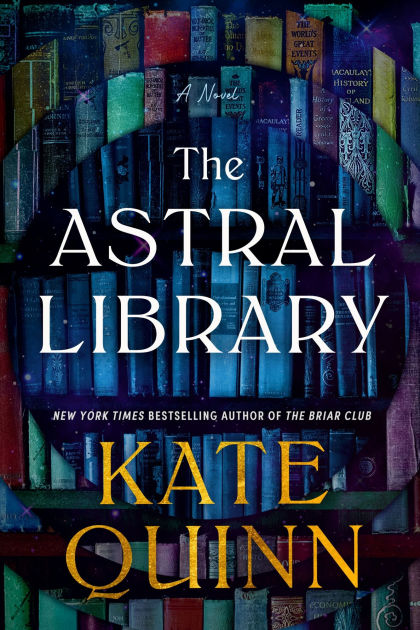
In her most ambitious project to date, Kate Quinn steps away from the gritty realism of world wars to explore the boundaries of time and memory in The Astral Library. Known for her meticulous research and vibrant female leads, Quinn infuses this novel with a sense of wonder and intellectual curiosity that challenges the traditional definitions of historical fiction. It is a haunting, beautiful ode to the stories that connect us all.
Book Comparison at a Glance
| Book Title | Genre | Target Audience | Rating |
|---|---|---|---|
| The Astral Library | Historical Fantasy | Fans of The Midnight Library & Shadow of the Wind | 4.9/5 |
Detailed Plot Summary
Set in a meticulously reconstructed post-war era, The Astral Library follows a librarian who discovers that certain ancient manuscripts act as gateways to an “astral” archive—a place where lost knowledge and forgotten memories are stored. This library exists outside of time, housing the souls of stories that were burned, banned, or buried throughout history.
As the protagonist delves deeper into the archive to find a missing piece of her own family history, she realizes that she is not the only one seeking the library’s secrets. A shadowy organization with ties to the occult and high-level politics is hunting for a specific scroll that could rewrite the outcome of historical events. The narrative skillfully jumps between the tactile world of dusty archives and the shimmering, surreal landscapes of the astral plane, creating a tension that is both cerebral and visceral.
The “Real Talk”
Kate Quinn’s strength has always been her ability to make history feel alive, and she brings that same skill to the “astral” elements of this book. The world-building is breathtaking; you can almost smell the old parchment and feel the cold air of the void. However, some die-hard fans of her strictly historical works might find the shift into fantasy a bit jarring at first. The pacing is deliberate, favoring atmosphere and philosophical inquiry over high-octane action, which pays off beautifully in the final act.
Character Analysis
The Archivist: Driven by a mix of professional dedication and personal grief, her character is a masterclass in quiet resilience. Her growth comes from accepting that some stories are beyond saving.
The Rival: A complex antagonist who isn’t motivated by simple greed, but by a distorted sense of historical justice. His interactions with the protagonist are the intellectual highlights of the book.
Vibe Check
- Luminous: Filled with vivid, glowing descriptions of light and shadow.
- Introspective: Deeply concerned with the nature of legacy and truth.
- Magical: A grounded sense of wonder that feels “almost” real.
- Nostalgic: A love letter to the era of physical books and quiet research.
Thematic Deep Dive
The central theme of The Astral Library is the preservation of truth in an age of misinformation. It explores how those in power seek to control the narrative by erasing the past. Another significant theme is the weight of memory—the idea that our personal and collective histories are a burden that we must choose to carry or release. Quinn also touches on the sanctity of libraries as the ultimate bastions of human freedom.
Reader Reactions & Cultural Buzz
The literary community has embraced Quinn’s new direction, with many praising her for taking a creative risk. “Astral Aesthetic” boards have appeared across Pinterest and TikTok, inspired by the book’s descriptions. While some readers have debated the mechanics of the time-travel elements, the emotional core of the story has been universally lauded. It has already been optioned for a high-budget limited series, further proof of its broad appeal.
About Kate Quinn
Kate Quinn is the New York Times and USA Today bestselling author of historical fiction masterpieces like The Alice Network and The Rose Code. A native of southern California, she attended Boston University, where she earned a Bachelor’s and Master’s degree in Classical Voice. Her background in music and the arts often informs the lyrical quality of her prose and her deep appreciation for historical detail.
Frequently Asked Questions
No, it is a completely standalone novel with a unique world and cast of characters.
About 60% of the book is grounded in real historical settings and events, while the remaining 40% explores the speculative “astral” elements.
Absolutely. The themes of memory and history provide excellent fodder for deep discussion.