
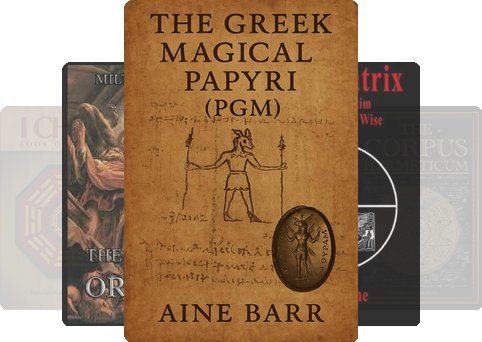
In a 2026 world dominated by predictive algorithms and AI, the human thirst for “The Unseen” has never been stronger. Ancient Books of Divination represent more than just superstition; they are the original data science—systemic attempts by our ancestors to find patterns in the chaos of existence. Whether you are a historian, a seeker, or a curious skeptic, these texts offer a profound look into the psyche of civilizations past.
Quick-Start Roadmap (TL;DR)
- For Beginners: Start with The I Ching (The Book of Changes).
- For Philosophers: Read The Corpus Hermeticum.
- For the Bold: Explore the Picatrix (The Aim of the Sage).
- Total Books Recommended: 5 Essential Texts.
The Entry Point: The I Ching (The Book of Changes)
If you read only one book on this list, make it the I Ching. Dating back over 3,000 years, it is the cornerstone of Chinese philosophy. Unlike Western “fortune-telling,” the I Ching focuses on change and the cyclical nature of time. It uses a system of 64 hexagrams to provide psychological and strategic guidance.
Why it’s accessible: You don’t need to believe in magic to appreciate its wisdom. It functions as a powerful tool for self-reflection and decision-making.
The Progression Path: 5 Essential Texts
1. The I Ching (The Book of Changes)
The foundation of Eastern divination. It teaches that the only constant is change.
2. The Sibylline Oracles
A fascinating collection of Greek and Roman prophecies. These were the “Official State Oracles” of the ancient world, often consulted by leaders during times of crisis.
3. The Picatrix (Ghayat al-Hakim)
The “Deep Dive.” This 11th-century Arabic grimoire bridges the gap between astrology and talismanic magic. It is dense, complex, and provides a window into the medieval scientific mind.
4. The Greek Magical Papyri (PGM)
A raw, authentic collection of spells, hymns, and rituals from Graeco-Roman Egypt. It’s a “practical” guide that shows how ancient people actually tried to influence the future.
5. The Corpus Hermeticum
The philosophical backbone of Western esotericism. It provides the “Logic” behind why divination was thought to work—the idea that “As above, so below.”
Comparative Analysis Table
| Book Title | Difficulty | Main Theme | Est. Reading Time | Why it’s Included |
|---|---|---|---|---|
| The I Ching | Moderate | Cosmic Balance | Ongoing (Ref) | Foundational Eastern text. |
| The Sibylline Oracles | Hard | Apocalyptic/Political | 6-8 Hours | Crucial for Western history. |
| The Picatrix | Expert | Astrological Magic | 15+ Hours | The bridge of occult knowledge. |
| Greek Magical Papyri | Moderate | Practical Rituals | 10-12 Hours | Primary source material. |
| Corpus Hermeticum | Moderate | Universal Law | 5-7 Hours | The “Theory” of the Unseen. |
Frequently Asked Questions
No. From a historical and academic perspective, they are safe explorations of ancient thought and literary heritage.
While helpful, most modern editions (like Penguin Classics) include introductory essays that provide all the necessary context.
An Oracle (like the Sibylline) records prophecies, while a Grimoire (like the Picatrix) is a textbook on how to perform the divination yourself.
Start Your Collection
To begin your journey with the I Ching, we recommend the following editions: