
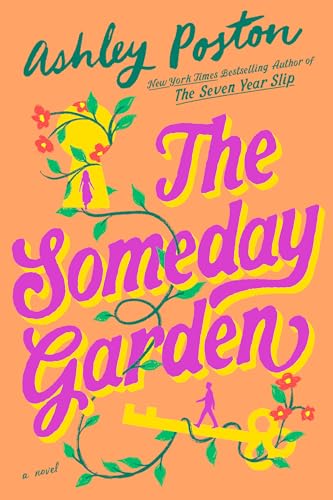
The Greenhouse of Lost Souls: Introduction
Every so often, a piece of contemporary fiction emerges that handles the fragile boundaries of human emotion with the grace of a master gardener. In The Someday Garden, author Ashley Poston returns to the whimsical, melancholic Sandbox of magical realism that cemented her reputation as a generational talent. Much like her previous breakout hits that balance spectral anomalies with deep-seated human yearnings, this highly anticipated release treats the abstract concept of timing as a physical, touchable entity. For readers who found solace in the quiet emotional depths of a Sky Beneath Her Taylor review, Poston delivers a narrative that feels both incredibly expansive and intensely intimate.
Botanical Metaphysics: Key Details
| Book Title | Genre | Target Audience | Anwar Library Rating |
|---|---|---|---|
| The Someday Garden | Magical Realism Romance / Contemporary Fiction | Fans of cozy fantasy, emotional romance, and whimsical growth narratives | 4.8 / 5.0 |
A Heartwarming Oasis: Quick Verdict & Vibe
The Someday Garden is a triumphs of atmosphere and emotional vulnerability, successfully executing a brilliant high-concept premise without burying its characters in structural gimmickry. Poston blends sharp, contemporary wit with an almost vintage sense of romantic longing, ensuring that every tear shed by the reader is fully earned.
- Pros: Masterful deployment of cozy magical realism, incredible character chemistry, and a poignant exploration of healing from generational grief.
- Cons: The middle pacing slightly slows as the botanical lore is established; some secondary characters lack the vivid dimensionality of the leads.
Cultivating Potential Tomorrows: Plot Summary (No Spoilers)
The narrative follows Clementine “Cleme” Montgomery, a modern botanist who inherits an eccentric, overgrown estate in a forgotten corner of the Pacific Northwest from her estranged grandmother. Cleme prefers the orderly, predictable laws of science over the messy chaos of human relationships. However, her orderly life is upended when she discovers that the central greenhouse—affectionately dubbed the “Someday Garden”—does not obey standard agricultural timelines. Under specific celestial conditions, the flowers that bloom within its walls show vivid, inescapable vignettes of potential futures, projecting glimpses of what “someday” might hold.
Enter Julian Vance, a cynical landscape architect hired to document the estate before local developers try to seize it. Julian carries his own heavy ghosts and has no patience for local folklore. As Cleme and Julian are forced to work side-by-side to restore the ancient conservatory, they accidentally cross paths with a singular blossom that reveals a devastating shared future. The stakes instantly shift from preserving historical greenery to actively wrestling with destiny, forcing both characters to decide whether they should hide from their looming heartbreaks or plant the seeds for a future they cannot fully control.
The Midnight Blossom: Ending Explained & Plot Twists (Spoilers)
Resolving the Botanical Paradox
Click to expand the deep-dive spoiler zone
🚨 WARNING: Major Spoilers Ahead! Do not expand this section unless you have finished the book or want the ending revealed.
The climax of the novel centers around the rare blooming of the *Someday Orchid*, a legendary plant that flowers only once every half-century under the light of a blue moon. As fan circles and official teaser arcs correctly anticipated, the ultimate twist reveals that the garden does not actually project immutable futures. Instead, it mirrors the subconscious fears and unhealed traumas of whoever steps into its soil. The tragic vision Cleme and Julian witnessed earlier was not a fixed execution of fate, but a manifest warning of what would happen if they continued to let fear dictate their choices.
In a heart-stopping final sequence, Julian attempts to leave the estate to protect Cleme from the sorrow shown in the vision. Cleme realizes the true nature of the botanical magic and destroys the orchid before it can fully mature, actively choosing the uncertain, chaotic present over a curated tomorrow. By shattering the crystal panes of the ancient conservatory to let the wild elements in, they break the curse of predictive grief. The novel closes with the garden reverting to a normal, albeit beautifully messy, public park, and Cleme and Julian choosing to take life one day at a time, free from the burden of knowing what comes next.
Whimsical Wit vs. Melancholy Roots: Critical Assessment of the Novel
The “Real Talk”: Pacing, Prose, and Impact
Poston possesses a rare structural agility that allows her to pivot from snappy, laugh-out-loud millennial dialogue to devastatingly beautiful observations on mortality within a single paragraph. Her prose style is lush without turning purple, making the magical realism elements feel thoroughly organic to the setting. While the narrative engine takes a few chapters to warm up while setting the rules of the greenhouse, the payoff is immense. The emotional resonance of the final third of the book lingers long after the final page is turned, firmly establishing it as a masterclass in modern commercial fiction.
Pruning the Emotional Hedge: In-Depth Character Analysis
Clementine stands out as an exceptionally relatable protagonist; her over-reliance on scientific classification is a beautifully rendered defense mechanism against the pain of past abandonment. Watching her learn to tolerate uncertainty is the true spine of the book. Julian serves as the perfect foil—where Cleme uses logic to shield herself, Julian uses apathy. Their slow-burn dynamic is built on mutual respect and shared intellectual curiosity rather than artificial miscommunications, making their ultimate vulnerability feel profoundly earned and deeply satisfying.
Atmospheric Chemistry: Vibe Check
The aesthetic profile of this release can be distilled into several distinctive atmospheric notes:
- Overgrown: A dense, mossy, and tactile environment that leaps off the page.
- Luminous: Filled with small, magical moments that glow against a backdrop of everyday life.
- Bittersweet: Balancing the sharp ache of past loss with the gentle warmth of new beginnings.
- Cozy: Best read under a heavy blanket with a hot cup of chamomile tea nearby.
Grief, Growth, and Second Chances: Themes & Motifs Deep Dive
At its absolute core, the text operates as an extended metaphor for the process of grieving. The act of tending to an unpredictable garden mirrors the chaotic, non-linear reality of healing from trauma. Poston utilizes the motif of the greenhouse to show how human beings often try to control their environments to avoid pain, accidentally choking out their own capacity for joy in the process. True growth, the novel argues, requires shedding our protective glass structures and letting the unpredictable rain fall.
For the Hopeless Romantics: Target Audience Guide
This book is tailor-made for readers who adore romances that don’t shy away from heavy existential themes. If you crave stories featuring competent adults solving strange mysteries, slow-burn emotional intimacy, and settings that feel like living, breathing characters, this is an absolute must-add to your physical bookshelf.
If You Loved This Drama: Similar Recommendations
If the unique blend of magical realism and profound emotional healing found in this novel resonated with you, consider diving into these stellar titles next:
- The Dead Romantics by Ashley Poston: The author’s signature exploration of love, ghosts, and editing that pairs beautifully with this botanical adventure.
- Remarkably Bright Creatures review: An equally moving exploration of grief, unexpected friendships, and quiet, magical everyday mysteries.
- The Garden of Small Beginnings by Abbi Waxman: A grounded, witty look at a botanist dealing with loss and discovering how to step back into the light.
The BookTok Bloom: Cultural Impact and Reader Reactions
Upon its debut, the title instantly set online book communities ablaze. BookTok creators quickly flooded feeds with aesthetic mood boards dedicated to Cleme’s greenhouse, praised the novel’s lack of cheap plot devices, and celebrated the deeply mature communication style between the romantic leads. It has rapidly secured its position on major indie bestseller lists and library picking selections worldwide as a definitive comfort read.
The Queen of Cozy Magic: About the Author: Ashley Poston
Ashley Poston is a critically acclaimed, New York Times bestselling author who has successfully navigated multiple corners of the publishing industry, from beloved young adult sci-fi retellings to adult contemporary romances featuring distinct paranormal and magical twists. Known for her deeply empathetic character work, structural ingenuity, and unyielding optimism, Poston continues to redefine what modern romance can achieve by seamlessly weaving profound universal truths into delightfully accessible, enchanting narratives.
Sprouting Clarifications: Frequently Asked Questions (FAQ)
Is The Someday Garden a standalone novel?
Yes, it is completely self-contained and functions perfectly as a standalone experience, though it shares the beautiful, signature cozy-magic tone found across the author’s broader adult fiction catalog.
Does this book have a happy ending?
Without ruining the specific steps of the journey, readers can rest easy knowing that Poston delivers a deeply comforting, emotionally satisfying, and hopeful resolution for our central characters.
How heavy are the themes of grief in the story?
While the book deals directly with the loss of parental figures and grandparental estrangement, the tone remains overwhelmingly uplifting, emphasizing recovery, joy, and the beauty of moving forward.
Securing Your Copy: Where to Buy & Read
Ready to immerse yourself in this unputdownable book? Use the verified, functional search retail links below to find the best deals on physical, digital, or audio editions: