
Whimsical Cartography and Anapestic Tetrameter: Introduction
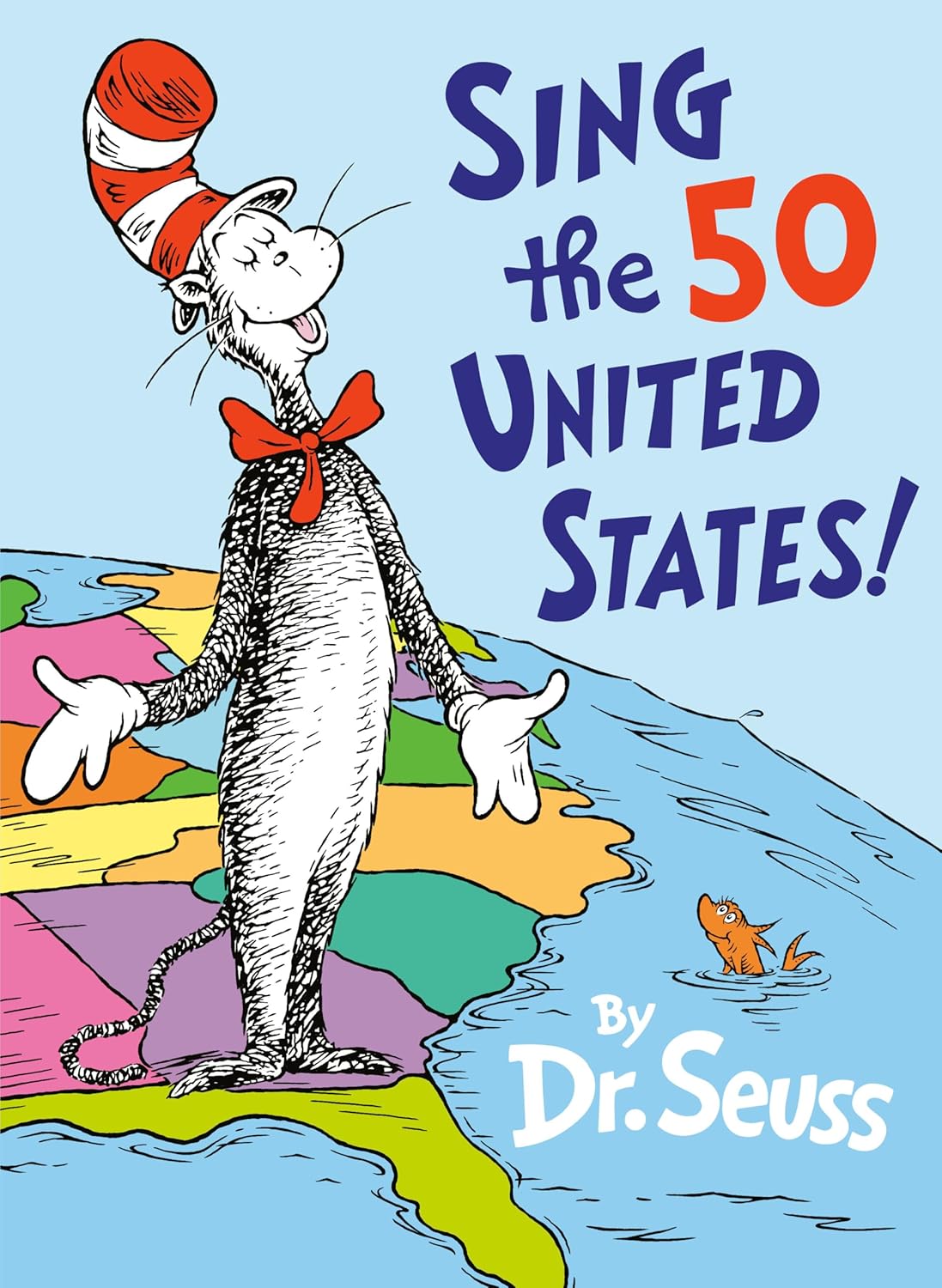
Educational children’s literature has long relied on the power of cadence to turn dense information into unforgettable memories. In Sing the 50 United States! by the legendary Dr. Seuss, young minds are treated to a rhythmic, colorful tour across the American landscape. Standing alongside iconic educational classics like The Cat in the Hat’s Learning Library series and classic schoolhouse mnemonics, this vibrant text utilizes the unmistakable linguistic flair that made Theodor Seuss Geisel a household name. By transforming state capitals, regional landmarks, and geographical boundaries into a grand, bouncing musical review, this book elevates standard social studies into a brilliant, auditory celebration of unity and diversity.
The Geographic Blueprint: Key Details
| Book Title | Genre | Target Audience Description | Anwar Library Rating |
|---|---|---|---|
| Sing the 50 United States! | Children’s Educational Non-Fiction / Concept Book | Early readers, preschool educators, and fans of mnemonic learning | 4.6 / 5.0 |
The Classroom Consensus: Quick Verdict & Vibe
An exceptional educational resource that effortlessly marries the whimsical aesthetic of Seussian illustration with practical geographical literacy. Its bouncing rhythmic prose serves as an incredible tool for early childhood memorization, ensuring that learning the names and traits of the states never feels like a dry academic chore.
- Pros: Masterful use of mnemonic rhyming structures; bright, high-contrast visual design; excellent interactive reading potential.
- Cons: Certain dense stanzas pack multiple states together rapidly, requiring adult guidance for younger readers to follow along structurally.
From Maine to California in Rhyme: Plot Summary (No Spoilers)
The structural framework of the book bypasses traditional fictional narratives in favor of a dynamic, coast-to-coast geographical journey. Guided by an array of whimsical, trumpet-tooting creatures and vibrant personified symbols, the text begins its journey on the rugged Atlantic coast. Each page turns to reveal a new state or region, celebrating its unique cultural identity, industrial hallmarks, or natural wonders through bouncing, lyrical verses.
Rather than dryly listing statistics or historical data, the text focuses on sensory associations. The golden wheat fields of the Midwest, the towering evergreen forests of the Pacific Northwest, and the sun-drenched coastlines of the South are brought to life through hyper-imaginative wordplay. The book functions as an open invitation to a national sing-along, encouraging children to vocalize the names of the states in a continuous, rhythmic pattern that builds a foundational mental map of the country.
As the visual tour progresses across mountain ranges, great rivers, and bustling metropolitan areas, the individual identities of the states converge into a grander, collective picture of the nation. The journey concludes with an inclusive, high-energy finale that gathers all fifty entities into one harmonious, interconnected song, leaving readers with a profound sense of geographic curiosity and structural scale.
Lyrical Cadence and Educational Utility: Critical Assessment of the Novel
The “Real Talk”: Pacing, Prose, and Impact
The linguistic architecture of this book relies entirely on the precise execution of musical cadence. The pacing is intentionally energetic, designed to match the natural breathing patterns of an enthusiastic read-aloud session. Dr. Seuss’s signature style shines brightest through his ability to make complex words and multi-syllabic state names slide effortlessly into a rhythmic groove. From an educational standpoint, the prose achieves exactly what it sets out to do: it breaks down regional geography into bite-sized, acoustically pleasing fragments that stick firmly in a child’s developing brain. The impact is immediate, transforming what could be a static classroom map into a living, breathing ecosystem of sound.
Anthropomorphic Guides and Personified States: In-Depth Character Analysis
Because the book functions primarily as an educational concept piece, traditional character development is subverted in favor of metaphorical representations. The true “protagonists” are the fifty states themselves, each given a distinct personality through clever artistic attributes and lyrical descriptions. Texas strides across the page with broad, sweeping gestures; Rhode Island is depicted with charming, miniature elegance; and Florida sparkles with sunlit energy. Assisting this grand parade are classic Seussian anthropomorphic guides—nameless, brightly colored creatures whose wide eyes and enthusiastic choreography mirror the reader’s own sense of wonder and discovery.
Bright Harmonies and Nostalgic Rhythms: Atmospheric Chemistry: Vibe Check
The aesthetic profile of this book can be broken down into three distinct sensory elements:
Kinetic Coloration: Bold, primary-heavy palettes filled with swooping linework, asymmetric landscapes, and joyful visual movement.
Auditory Bop: A reading experience defined by acoustic patterns, toe-tapping predictability, and infectious vocal energy.
Celebratory Unity: A welcoming, optimistic atmosphere that highlights the individual beauty of diverse regions while emphasizing their shared connection.
Cultural Unity Through Nonsense Verse: Themes & Motifs Deep Dive
Beneath the cheerful exterior, the book addresses the core concept of unity within diversity. By dedicating separate, distinct stanzas to individual states before weaving them together in the grand finale, the text presents a powerful structural metaphor for how independent parts form a stronger, unified whole. Additionally, it highlights the importance of playful curiosity in early childhood education. It asserts that geography shouldn’t merely be memorized through strict boundaries and black-and-white print, but felt through the joyous integration of art, song, and imaginative discovery.
Young Explorers and Classroom Libraries: Target Audience Guide
This book is a quintessential addition to the bookshelf of any parent, educator, or homeschool instructor seeking to introduce foundational social studies concepts to young children. It is perfectly optimized for early readers who respond strongly to auditory cues and rhythmic learning tools. If you want a book that will get children out of their seats, chanting state capitals and pointing excitedly at map outlines, this delightful volume is an absolute must-have asset.
Rhythmic Journeys Across the Globe: If You Loved This Drama: Similar Recommendations
If you want to keep the momentum of rhythmic, educational reading alive, check out these outstanding titles:
- There’s No Place Like Space! by Tish Rabe: A brilliant installment in the Cat in the Hat’s Learning Library that uses Seussian rhyme to explore the solar system.
- Fifty States Under the Mistletoe by National Geographic Kids: For readers ready to transition into lighthearted, fun-fact-driven geographical trivia with bright illustrations.
- Chicka Chicka Boom Boom by Bill Martin Jr. and John Archambault: The ultimate rhythmic concept book that brings the alphabet to life with the same infectiously kinetic energy.
Nostalgic Educators and Homeschooling Forums: Cultural Impact and Reader Reactions
The public reception surrounding this title highlights its enduring utility within early childhood education networks. On platforms like Goodreads, parenting blogs, and elementary teaching forums, the book receives high praise for its practical mnemonic value. Educators consistently share success stories of children mastering state names far ahead of curriculum schedules, directly attributing their progress to the infectious, sing-along nature of the Seussian verse.
The Master of Nonsense Verse: About the Author: Dr. Seuss
Theodor Seuss Geisel, known universally as Dr. Seuss, remains one of the most influential children’s authors and illustrators in literary history. Winning a Pulitzer Prize, three Academy Awards, and multiple Emmy Awards, his long career fundamentally revolutionized how children learn to read. By replacing dry, repetitive primers with imaginative, vocabulary-rich nonsense verse, Geisel opened the doorway to literacy for generations of young minds worldwide.
Parental Inquiries and Educational Queries: Frequently Asked Questions (FAQ)
Q: What age group is best suited for Sing the 50 United States!?
A: The book is ideally targeted for children aged 3 to 8 years old, working beautifully as both a preschool read-aloud book and an early elementary independent reading guide.
Q: Does this book include detailed historical facts about the states?
A: No, the book focuses primarily on names, physical geography highlights, and regional traits using rhythmic poetry, making it a foundational introductory tool rather than an exhaustive historical text.
Q: Can the verses actually be sung out loud?
A: Yes! The book is deliberately written in anapestic tetrameter, allowing parents and teachers to easily read it with a rhythmic, musical bounce or set the text to simple melodies.
Securing Your Literary Passport: Where to Buy & Read
Ready to immerse yourself in this unputdownable book? Use the verified, functional search retail links below to find the best deals on physical, digital, or audio editions: