
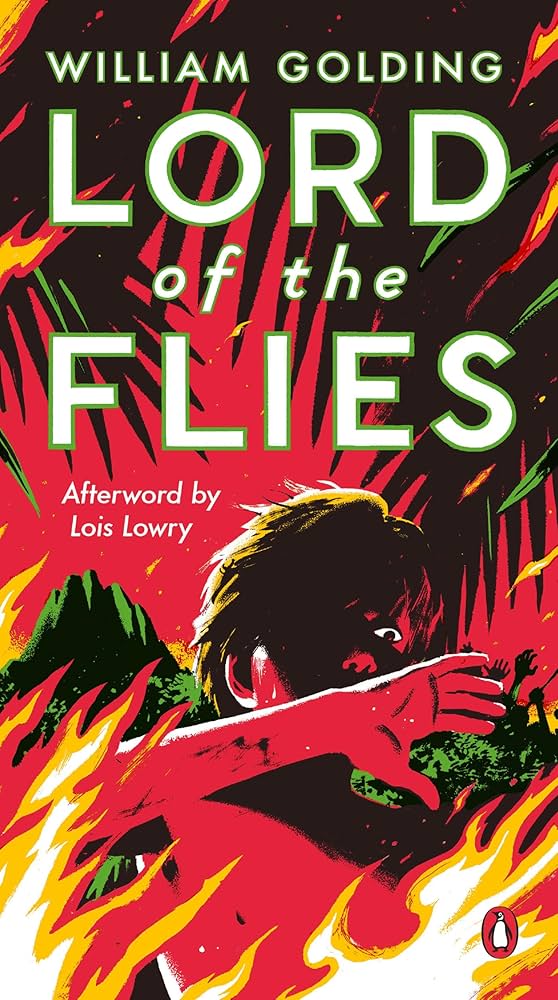
Introduction to Lord of the Flies
Few novels have left as indelible a mark on the twentieth-century literary canon as Lord of the Flies by William Golding. First published in 1954, Lord of the Flies remains a cornerstone of high school and university curricula worldwide. In Lord of the Flies, William Golding explores the thin veneer of civilization and the darkness that resides within the human heart. This masterpiece of allegorical fiction follows a group of British schoolboys stranded on an uninhabited island, and their subsequent descent into savagery. As a foundational text of post-war literature, Lord of the Flies by William Golding continues to provoke debate regarding human nature, leadership, and social order. Whether you are a student preparing for an exam or a reader seeking a profound psychological thriller, understanding Lord of the Flies by William Golding is essential for any lover of classic literature.
Lord of the Flies by William Golding Summary
The narrative of Lord of the Flies by William Golding begins in the midst of a global nuclear war. A plane carrying a group of British schoolboys is shot down, crashing on a remote tropical island in the Pacific. The initial chapters of Lord of the Flies establish a sense of order. Ralph, an athletic and charismatic boy, finds a conch shell and uses it to summon the scattered survivors. Along with the intellectual and physically vulnerable Piggy, Ralph establishes a democratic system, and the boys elect him as their leader. William Golding uses the conch as a powerful symbol of civilization and the rule of law early in Lord of the Flies.
However, tensions soon arise between Ralph and Jack, the leader of the choirboys who becomes obsessed with hunting the island’s wild pigs. In Lord of the Flies, William Golding portrays this rivalry as the central conflict between two different philosophies of governance: Ralph’s focus on long-term survival and rescue versus Jack’s focus on immediate gratification and primal power. As the boys’ fear of a mysterious “beast” grows, Jack uses this paranoia to manipulate the group, eventually breaking away to form his own tribe of “hunters” who abandon the fire—their only hope for rescue—in favor of bloodlust and ritualistic dance.
The tragedy of Lord of the Flies by William Golding reaches a fever pitch when Simon, the most spiritual and perceptive boy, discovers the true nature of the “beast.” He encounters the “Lord of the Flies”—a severed pig’s head on a stick—which “speaks” to him, revealing that the beast is not a physical creature but the inherent evil within the boys themselves. When Simon rushes to tell the others, he is brutally murdered in a frenzied ritual. This is followed by the death of Piggy and the destruction of the conch shell, signaling the complete collapse of civilization. Lord of the Flies concludes with a terrifying manhunt for Ralph, who is only saved by the timely arrival of a British naval officer, whose presence ironically reminds the reader that the “civilized” adult world is currently engaged in its own massive, violent war.
Characters in Lord of the Flies by William Golding Analysis
In Lord of the Flies, William Golding uses specific characters to represent various facets of human society and psychology:
- Ralph: The protagonist of Lord of the Flies. Ralph represents the “ego” and the democratic drive for order, leadership, and rescue. Throughout Lord of the Flies, he struggles to maintain authority against the lure of savagery.
- Jack Merridew: The primary antagonist in Lord of the Flies. Jack represents the “id”—the primal, instinctive, and violent side of human nature. William Golding uses Jack to demonstrate how easily authoritarianism can take root through fear.
- Piggy: The intellectual and scientific voice in Lord of the Flies. His glasses are a symbol of innovation and clarity. Unfortunately, William Golding shows that in a world without order, intellect is often the first thing to be discarded and destroyed.
- Simon: The visionary and “Christ-figure” of Lord of the Flies. Simon is the only one who understands the truth about the human condition, but his message is rejected by the mob.
- Roger: The embodiment of pure sadism. In Lord of the Flies, Roger demonstrates what happens when the legal restraints of society are removed from an individual who enjoys inflicting pain.
Major Themes in Lord of the Flies by William Golding Explained
The primary theme in Lord of the Flies by William Golding is the Conflict Between Civilization and Savagery. William Golding posits that the instincts for order and the instincts for chaos are constantly at war. The island serves as a laboratory where William Golding tests his characters to see which instinct will prevail. Another crucial theme is the Loss of Innocence. As the boys move from organized assembly to murderous hunting, Lord of the Flies illustrates the painful transition from childhood naivety to a dark awareness of human evil.
William Golding also explores The Nature of Evil in Lord of the Flies. Unlike many stories of his time, William Golding suggests that evil is not an external force (the “beast”) but an internal reality. This is captured in the title, Lord of the Flies, which is a translation of “Beelzebub,” a name for the devil. Furthermore, the Fragility of Democracy is a major theme, as the conch shell—representing the right to speak and be heard—is eventually crushed, showing how quickly power can shift from the many to the violent few in Lord of the Flies.
Is Lord of the Flies by William Golding Worth Reading Today?
Even decades after its publication, Lord of the Flies by William Golding continues to trend on platforms like TikTok and Reddit, where “BookTok” influencers debate its cynical view of humanity. Many readers find that the social media age has only made Lord of the Flies more relevant, as online tribalism often mirrors the mob mentality portrayed by William Golding. Cultural critics often reference Lord of the Flies when discussing survivalist media like *Survivor* or *Yellowjackets*. The consensus remains that Lord of the Flies by William Golding is an essential read for anyone interested in the psychological underpinnings of society and the enduring question of whether humans are inherently good or evil.
About the Author: William Golding
Sir William Golding (1911–1993) was an English novelist, playwright, and poet. His experience serving in the Royal Navy during World War II profoundly altered his view of humanity, leading him to reject the optimistic Victorian views of progress. This shift in perspective inspired him to write Lord of the Flies. Over his career, William Golding received numerous accolades, including the 1983 Nobel Prize in Literature “for his novels which, with the perspicuity of realistic narrative art and the diversity and universality of myth, illuminate the human condition in the world of today.” Lord of the Flies remains his most famous and influential work.
Where to Buy Lord of the Flies by William Golding
Get your copy of the timeless classic Lord of the Flies by William Golding at these major retailers: