
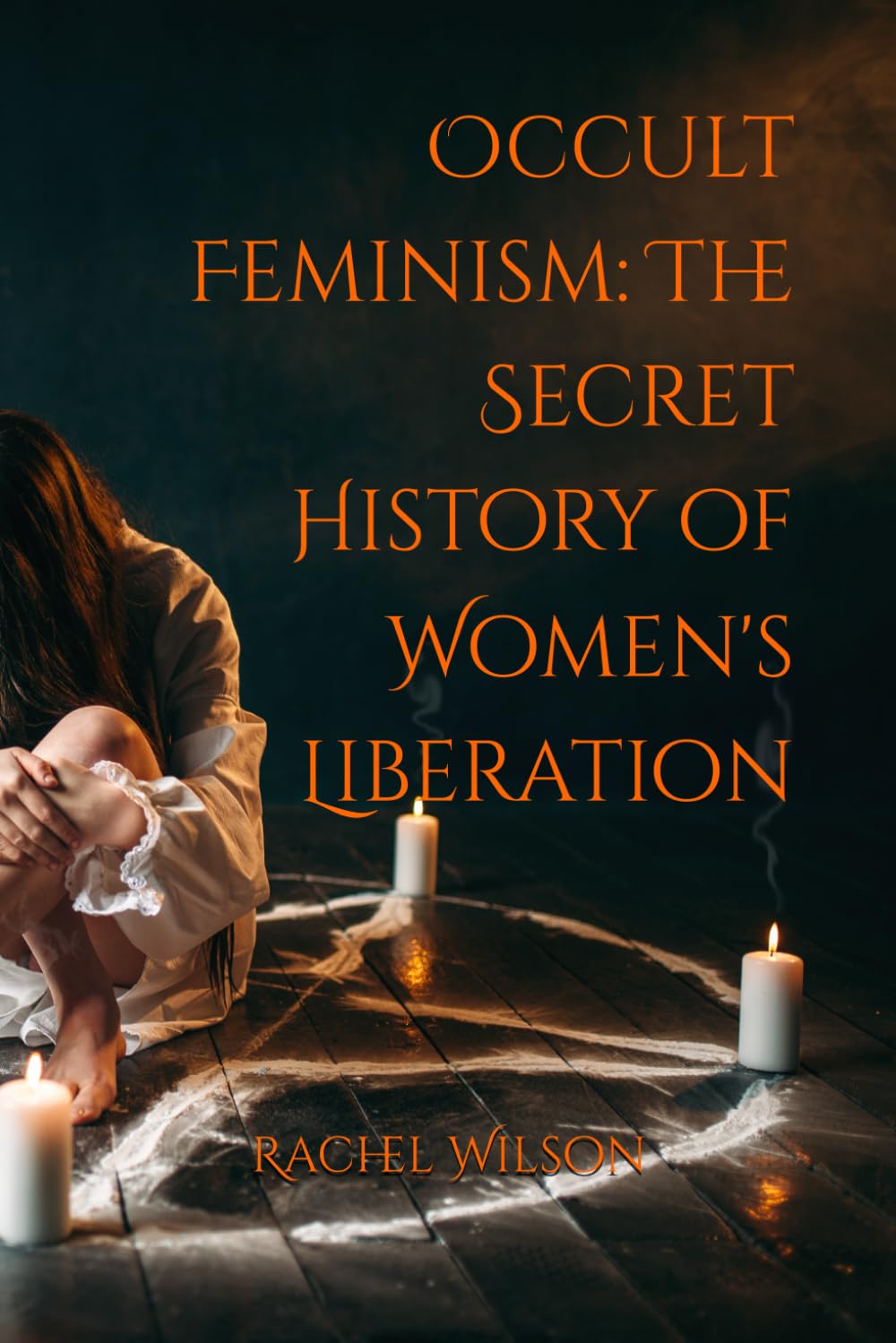
In an era where social movements are often viewed through a purely secular lens, Occult Feminism by Rachel Wilson offers a provocative and deeply researched counter-narrative. This isn’t just another historical recount of suffrage; it is a meticulous investigation into the spiritual and esoteric underpinnings that Wilson argues have driven the feminist movement since its inception. From the drawing rooms of 19th-century spiritualists to the radical shifts of the 1960s, Wilson challenges the reader to look beyond the surface level of political rights and into the realm of metaphysical transformation.
Occult Feminism: The 60-Second Summary
- The Core Thesis: The book argues that Western women’s liberation was not an organic, grassroots social justice movement, but an engineered transition designed to dissolve traditional family protection structures and transition women into corporate wage-earning, taxable units.
- The Esoteric Link: Wilson traces the core philosophical drivers of early first-wave suffragettes directly to 19th-century spirit mediums, séance tables, and the esoteric teachings of the Theosophical Society (e.g., Helena Blavatsky).
- The Theological Lens: Written from an unapologetic Eastern Orthodox Christian perspective, the text treats modern secularization and radical gender deconstruction as direct manifestations of ancient gnostic spiritualities.
Comparative Analysis
| Book Title | Genre | Target Audience | Anwar Library Rating |
|---|---|---|---|
| Occult Feminism | History / Esotericism | History Buffs, Critics of Feminism | 4.8/5 |
| The Feminine Mystique | Social Science | Sociologists, Feminists | 4.0/5 |
| The Secret Doctrine | Theosophy / Occult | Esoteric Students | 3.5/5 |
Detailed Summary: Unveiling the Hidden Narrative
Occult Feminism is structured as a chronological journey through the history of Western thought. Rachel Wilson begins by examining the Enlightenment and the subsequent rise of Romanticism, identifying these periods as the fertile soil for “gnostic” ideas. She posits that the movement for women’s liberation was never solely about voting rights or workplace equality, but rather a vehicle for a broader, more ancient spiritual agenda: the dissolution of traditional hierarchies and the biological family unit.
The book meticulously tracks the influence of figures like Helena Blavatsky and the Theosophical Society, illustrating how their concepts of “androgyny” and “spiritual evolution” eventually trickled down into mainstream feminist theory. Wilson argues that the shift from “First Wave” to “Second Wave” feminism was not a natural progression but a planned expansion of these esoteric goals, aiming to redefine what it means to be human by untethering identity from biological reality.
Throughout the chapters, Wilson connects the dots between various occult societies and the founders of major feminist organizations. She explores how the rejection of traditional patriarchy was often synonymous with a rejection of the Judeo-Christian worldview, replaced by a “Goddess-centric” spirituality that serves as the backbone for modern secular progressivism.
The “Real Talk”: Prose, Pacing, and Impact
Let’s be honest: Occult Feminism is a heavy read, not because of the writing style, which is surprisingly accessible, but because of the sheer volume of information provided. Wilson writes with the conviction of a researcher who has spent years in the archives. The pacing is deliberate—she doesn’t rush to conclusions but builds her case brick by brick. For those unfamiliar with occult terminology, some sections might require a second pass, but the effort is rewarded with a perspective that is rarely discussed in academia.
The emotional impact of the book is undeniably jarring. Whether you agree with Wilson’s conclusions or not, her ability to cite direct links between prominent activists and esoteric practices is unsettling. It forces the reader to question the “organic” nature of social change and consider the possibility of a more directed, philosophical evolution behind the scenes.
Character Analysis: The Ideologues Behind the Movement
While Occult Feminism is non-fiction, it treats historical figures as the central “characters” of its narrative. Wilson focuses heavily on:
- The Early Spiritualists: Women who used “mediumship” to gain a public voice and challenge the authority of the clergy.
- The Theosophists: Intellectuals like Blavatsky and Annie Besant, who provided the metaphysical framework for a post-Christian society.
- The Radical Second-Wavers: Figures who transitioned these spiritual concepts into the political and legal spheres, focusing on the deconstruction of the nuclear family.
Wilson analyzes their motivations not just as political actors, but as believers in a specific transformative philosophy that sought to liberate the “spirit” from the constraints of “matter” (nature and biology).
Vibe Check
- Provocative: Challenges almost every modern assumption about social history.
- Academic: Rich with citations and historical cross-referencing.
- Unsettling: Connects dots that many would prefer remain separate.
- Revelatory: Provides an “Aha!” moment for those sensing a deeper layer to modern politics.
Thematic Analysis: Gnosticism and the Erasure of Boundaries
The central theme of the book is Gnosticism—the ancient belief that the material world is a prison and that true “knowledge” (gnosis) allows one to transcend it. Wilson masterfully argues that modern feminism is the political application of Gnosticism. By viewing biological sex as a social construct or a “trap” to be overcome, the movement mirrors the Gnostic desire to shed the physical body.
Another major theme is the Reversal of Symbols. Wilson explores how traditional symbols of motherhood and domesticity were systematically deconstructed and replaced with symbols of autonomy and self-deification. This isn’t just a political shift; it is a liturgical one, where the “Self” becomes the ultimate object of worship.
Reader Reactions: The “BookTok” and Goodreads Buzz
Occult Feminism has created significant waves in niche intellectual circles. On platforms like X (formerly Twitter) and within “Trad” (Traditionalist) communities, it is hailed as a seminal work that explains the “why” behind the cultural shifts of the last century. On Goodreads, the book maintains a high rating, though it remains polarizing. Critics often point to Wilson’s clear traditionalist bias, while supporters argue that her bias is no more pronounced than the secular bias found in mainstream history books.
About the Author: Rachel Wilson
Rachel Wilson is a researcher, author, and public speaker whose work focuses on the intersection of theology, history, and social engineering. She has become a prominent voice for those seeking a traditionalist perspective on modern issues. Her background in investigating the origins of cultural movements allows her to draw connections that many mainstream historians overlook. She is also known for her podcasting work and contributions to various independent media outlets.
The Cultural Context: The Wilson Theological Network
Rachel Wilson’s systematic deconstruction of modern social movements intersects directly with the public work of her husband, Christian cultural debater Andrew Wilson (prominent for his theological analyses on the Theological Network and frequent public debates). Together, their work forms a highly visible, traditionalist paradigm that critiques modern secular family frameworks through classical Christian apologetics. This ideological foundation heavily guides the aggressive rhetorical delivery found inside Occult Feminism.
Frequently Asked Questions (FAQ)
Is “Occult Feminism” a religious book?
While it is written from a traditionalist and broadly Christian perspective, it is primarily a historical and philosophical analysis. It focuses on the spiritual beliefs of the feminist founders rather than preaching a specific theology.
Is this book suitable for beginners in history?
Yes, but it is dense. Readers who are already familiar with the basics of the French Revolution and the 1960s counter-culture will find it easier to follow.
Does it cover modern “Third Wave” feminism?
The book focuses heavily on the foundations and the Second Wave, but it provides the necessary context to understand where modern “intersectional” and “gender theory” feminism originated.
Did Rachel Wilson discuss Occult Feminism on Joe Rogan?
Yes. Following the text’s organic rise in alternative sociological circles, Rachel Wilson appeared on the Joe Rogan Experience (JRE #2460). The episode triggered massive public interest regarding her specific historical assertions about early feminist pioneers, occult séance circles, and the economic motivations behind the rapid industrialization of modern domestic roles. This review analyzes the foundational books and historical references that form the bedrock of those broadcast arguments.
Is there an official Occult Feminism PDF or Audiobook version?
While unauthorized digital copies circulate through various web indexes, the book is officially distributed across primary digital hubs. You can find the verified audio format narrated by R.M. McLeod on platforms like Audible and Apple Books, while physical and Kindle editions are available via traditional mainstream distributors.