
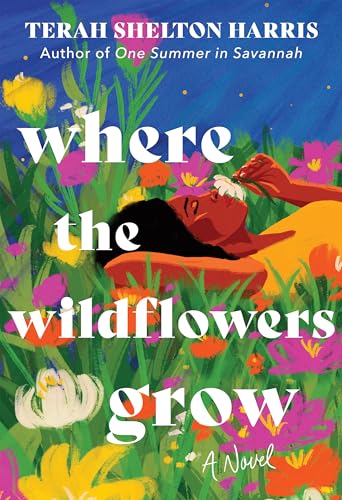
In her stunning follow-up to her debut, Terah Shelton Harris proves she is a definitive voice in modern Southern fiction. Where the Wildflowers Grow is a lyrical, emotionally charged exploration of what it means to go home—and what it takes to stay there. Harris weaves a narrative that is both intimate and expansive, tackling the heavy weight of family legacy, the complexity of sisterhood, and the radical act of self-forgiveness. For anyone who has ever felt like a wildflower trying to bloom in cracked soil, this book is an essential read.
Book Comparison at a Glance
| Book Title | Genre | Target Audience | Rating |
|---|---|---|---|
| Where the Wildflowers Grow | Contemporary Fiction | Fans of Family Sagas & Emotional Narratives | 4.9 / 5 |
Plot Summary
The story centers on Joelle D’Angelo, a woman whose life in the city has been a carefully constructed fortress against her past. When a family emergency calls her back to the rural Southern town she fled years ago, Joelle is forced to confront the ghosts she left behind. The setting is the family’s ancestral home, a place where the wildflowers grow thick but the secrets run deeper.
Upon her return, Joelle finds her family in a state of quiet collapse. Her relationship with her sister, once unbreakable, is now strained by years of silence and unspoken resentments. As they work together to save their family land—a plot of earth that has belonged to their Black ancestors for generations—they uncover a hidden history that challenges everything they thought they knew about their parents and themselves. The plot masterfully balances a present-day crisis with flashbacks that reveal the origin of the family’s fracture, leading to a climax that is as heart-wrenching as it is healing.
The “Real Talk”: A Critical Deep Dive
Let’s be candid: Terah Shelton Harris writes with a pen dipped in raw human emotion. Where the Wildflowers Grow is not a “light” read; it is a profound experience. The pacing is deliberate, reflecting the humid, slow-moving atmosphere of the South, but it never drags. Harris has a particular gift for dialogue—the kind of conversations where what isn’t said carries as much weight as the words themselves.
If there is a minor critique, it’s that some of the plot revelations in the final third feel slightly rushed compared to the meticulous buildup of the first half. However, the sheer strength of the prose and the authenticity of the emotional arcs make this a negligible flaw. This book manages to be both a “page-turner” and a “page-linger,” forcing you to stop and highlight sentences that hit just a little too close to home.
Character Analysis
- Joelle D’Angelo: A protagonist who embodies the “strong Black woman” trope only to have it deconstructed. Her journey is about realizing that vulnerability isn’t a weakness, but a bridge to connection.
- The Sister (Noelle): A brilliant foil to Joelle. Where Joelle ran, Noelle stayed, and the resentment that built between them is handled with incredible nuance. Noelle represents the burden of the “one who stayed.”
- The Land: In many ways, the family farm is a character itself. It represents the physical manifestation of Black resilience and the trauma of dispossession.
Vibe Check
- Ancestral
- Lyrical
- Tender
- Resilient
Thematic Analysis
The core theme of Where the Wildflowers Grow is Ancestral Inheritance. Harris explores not just the land and money we inherit, but the traumas and coping mechanisms passed down through generations. The wildflowers of the title serve as a powerful metaphor for the characters: beautiful, wild, and capable of growing in even the most neglected spaces.
Another vital theme is Black Land Ownership. By focusing on the struggle to keep the family farm, Harris taps into a significant and often overlooked historical and contemporary struggle in the American South. The book also dives deep into The Complexity of Forgiveness, arguing that true forgiveness isn’t about forgetting the past, but about choosing not to let it dictate the future.
Reader Reactions & Cultural Impact
Since its release, the book has become a staple in book club circles, particularly those focusing on African American literature and Southern Gothic themes. Readers on Goodreads have praised Harris for her “soul-stirring” prose. It has also sparked important conversations online about “generational healing” and the importance of preserving family history before it is lost to time. It is widely considered a significant contribution to the “New Southern” literary movement.
About Terah Shelton Harris
Terah Shelton Harris is a librarian and a freelance writer whose work has appeared in numerous publications. Her debut novel, One Summer in Savannah, was a breakout hit that established her as a master of emotional contemporary fiction. Based in Alabama, Harris draws deep inspiration from the landscapes and complex social histories of the South. She is known for her ability to weave heavy social themes into deeply personal, character-driven narratives.
Frequently Asked Questions
A: No, it is a standalone novel with a completely new set of characters and a different setting, though it shares the same emotional depth as her debut.
A: While it deals with heavy themes like grief and family trauma, it is ultimately a story of hope and reclamation. Most readers find it “cathartic” rather than simply “sad.”
A: Absolutely. It is one of the most discussed books of the year due to its rich themes of family, land, and history.