
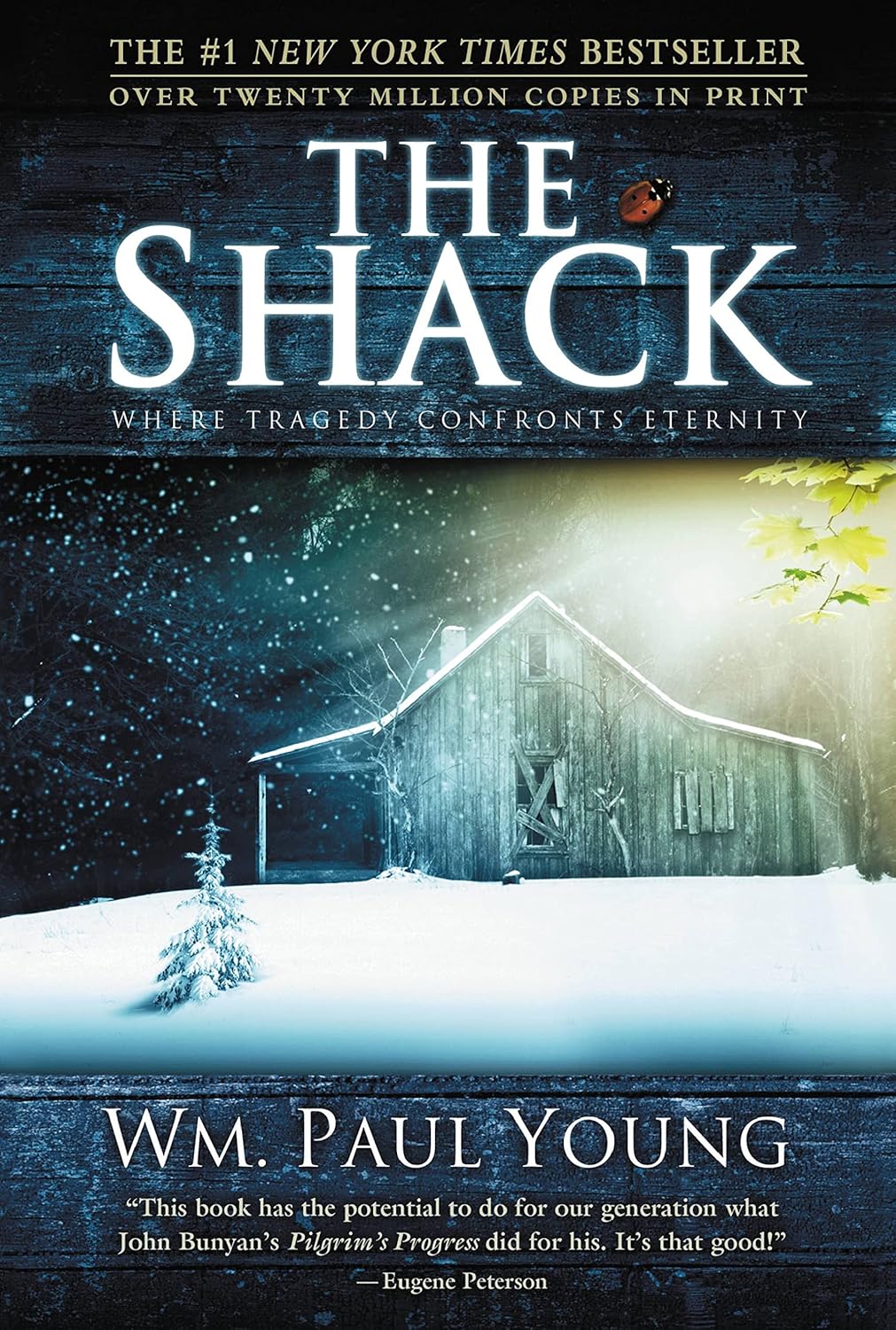
The Great Sadness and Radical Grace: Introduction
Few self-published phenomena have altered the landscape of contemporary spiritual literature quite like The Shack by William P. Young. Originally written as a private Christmas gift for the author’s children, this subversive piece of theological fiction escalated from a word-of-mouth underground hit to a towering New York Times bestseller. Standing shoulder-to-shoulder with classic allegories like C.S. Lewis’s The Chronicles of Narnia and John Bunyan’s The Pilgrim’s Progress, the novel tackles the ancient problem of theodicy—reconciling an all-powerful, loving deity with the existence of unspeakable human suffering. Young strips away clinical theology, replacing dry dogma with an intimate, highly controversial emotional landscape that challenges traditional Western depictions of the divine.
The Shack At a Glance: Key Details
| Book Title | Genre | Target Audience | Anwar Library Rating |
|---|---|---|---|
| The Shack | Christian Allegorical Fiction | Readers exploring grief, spiritual healing, and theological fiction | 4.2 / 5.0 |
The Shattered Sanctuary: Plot Summary of The Shack (No Spoilers)
The narrative of the novel orbits around Mackenzie Allen Philips, affectionately known as Mack, a man crushed under the oppressive weight of what he titles “The Great Sadness.” Years prior, during an otherwise idyllic family camping trip at Wallowa Lake, Mack’s youngest daughter, Missy, vanished from a campsite while he was frantically rescuing his son from a canoeing accident. The horrifying reality quickly crystallizes: Missy was abducted by a notorious serial killer known as the Little Ladykiller. The police investigation eventually tracks the girl’s trail to a derelict, isolated wooden shack hidden deep within the Oregon wilderness. Inside, officers discover Missy’s blood-soaked dress, confirming her tragic death, though her body remains unrecovered.
Plunged into chronic depression and spiritual paralysis, Mack’s life becomes an automated sequence of survival rather than living. His fractured relationship with God—whom his wife, Nan, warmly refers to as “Papa”—is defined by deep resentment and unspoken accusation. The status quo is violently disrupted on a freezing winter morning when Mack finds a strange, typed note in his mailbox. The message reads: “Mack, it has been a while. I’ve missed you. I’ll be at the shack next weekend if you want to get together. – Papa.” Torn between the terror that this is a cruel prank by the killer and a desperate, irrational compulsion for closure, Mack packs a weapon and drives back into the heart of his worst nightmare, returning to the very cabin where his daughter’s life was stolen.
The Grave in the Wilderness: The Shack Ending Explained & Plot Twists (Spoilers)
Click to expand the deep-dive spoiler zone
🚨 WARNING: Major Spoilers Ahead! Do not expand this section unless you have finished reading the book or watching its cinematic adaptation.
Upon arriving at the bleak, snow-draped cabin, Mack finds nothing but painful memories. However, as his anger reaches a boiling point, a supernatural shift transforms the freezing winter environment into a lush, radiant springtime oasis. The derelict shack morphs into an elegant, warm home inhabited by the Holy Trinity materialized in human form: Papa, a warm, loving African-American woman; Jesus, a humble Middle Eastern carpenter; and Sarayu, a shimmering, ethereal Asian woman representing the Holy Spirit.
The emotional climax of the novel occurs over a weekend of intense dialogue, culminating in a radical exercise in radical forgiveness. Papa reveals her masculine side to Mack when he needs a paternal figure to face the ultimate hurdle. Together with the Trinity, Mack is guided to a hidden cave deep in the mountains. Here, they locate the physical body of Missy, which was carefully hidden away by her killer. Mack wraps his daughter’s body in a beautifully woven shroud made by Sarayu and buries her in a sacred garden plot, achieving the deep closure that had eluded him for years.
The narrative’s final twist occurs on Mack’s journey home. As he drives out of the wilderness, completely transformed and liberated from his Great Sadness, his vehicle is broadsided by another car in a catastrophic accident. Mack wakes up days later in a hospital bed. His close friend Willie informs him that the accident actually occurred on Friday—the very day Mack was driving *to* the shack. The entire paradigm-shifting weekend, the profound theological conversations, and the burial of his daughter apparently transpired within a split second of unconsciousness while Mack lay dying or comatose. Armed with the memories of his vision, Mack leads authorities to the precise, real-world cave he saw in his encounter, allowing the police to recover Missy’s body and finally bring her killer to justice.
Human Tragedy vs. Divine Vulnerability: Critical Assessment of the Novel
The “Real Talk”: Pacing, Prose, and Impact
Evaluating this novel requires separating its stylistic execution from its heavy emotional resonance. As a purely literary construct, the prose is unvarnished and occasionally clunky. Young relies heavily on heavy-handed exposition, turning what could be subtle narrative threads into long, structured theological dialogues that can stall the book’s narrative pacing during the middle acts. The transition from a visceral, heart-wrenching kidnapping thriller into a peaceful, abstract pastoral dialogue creates a jarring structural shift that may leave fans of traditional fiction feeling disoriented.
However, what the book lacks in technical literary polish, it more than compensates for in raw emotional currency. Young excels at capturing the specific, suffocating texture of grief. By anthropomorphizing the Trinity into marginalized, intensely gentle personas, he effectively deconstructs the rigid, judgmental “old white man with a beard” archetype that dominates Western religious art. The vulnerability of the dialogue creates a comforting psychological safety net, allowing readers to explore their own deep-seated existential anger alongside the protagonist.
Deconstructing the Divine Triad: In-Depth Character Analysis
The character arcs within the narrative serve as an allegorical sandbox to explore relational theology:
- Mackenzie “Mack” Philips: The everyman archetype of trauma. Mack’s journey is not a simple linear progression from unbelief to belief, but a complex emotional unlearning. His psychological armor is built from intellectualism and self-reliance, which systematically crack under the weight of unconditional divine affection.
- Papa (Elousia): Portrayed initially as a radiant African-American woman who loves to cook, Papa represents maternal comfort, breaking the patriarchal expectations Mack holds. Her refusal to prevent the tragedy is reframed not as apathy, but as an expression of a grander, interconnected human free will that operates within a broken world.
- Jesus: Characterized by a toolbelt, dirt under his fingernails, and a distinct lack of physical majesty, Jesus serves as the tangible bridge for Mack. He models relational equality, demonstrating how the divine operates horizontally alongside humanity rather than purely vertically from a distant throne.
- Sarayu: As the Holy Spirit, her presence is fluid, creative, and chaotic. Her primary canvas is a wild, seemingly disorganized garden that, when viewed from an elevated perspective, reveals a magnificent patch of landscape architecture. This serves as a brilliant mirror for Mack’s chaotic, grief-stricken mind.
Atmospheric Chemistry: Vibe Check
If you are wondering what sitting down with this book actually feels like, here is the atmospheric breakdown:
Claustrophobic: The opening acts carry an intense, suffocating weight of dread, accurately capturing the sensory overload of parental panic and isolating mourning.
Luminous: Once the setting transitions inside the supernatural borders of the clearing, the atmosphere shifts into a warm, sun-dappled, sensory-rich environment filled with the aromas of home cooking and vibrant wildflowers.
Cerebral: Large portions of the text operate like a recorded Socratic seminar, demanding that the reader slow down and process abstract concepts of grace, submission, and eternity.
The Garden in the Chaos: Themes & Motifs Deep Dive
The narrative relies on several recurring symbols to convey its deeper, underlying message:
The Shack as a Psychological Metaphor
The titular structure is not merely a crime scene; it is a profound monument to human trauma. It represents the internal place where we store our deepest shame, unanswerable questions, and secret addictions. By demanding that Mack return to the location of his daughter’s death, the book asserts that true spiritual evolution requires walking directly into the center of our pain rather than building defensive perimeters around it.
The Garden of the Soul
Sarayu’s wild, messy garden serves as a living canvas for human experience. It is filled with toxic roots intertwined with beautiful blooms. When Sarayu reveals that the chaotic plot Mack is helping her clear is actually his own soul, the motif transforms into an explicit commentary on human limitation: humans view history as a series of isolated, catastrophic weeds, whereas the divine views it as an ongoing, beautiful ecosystem of redemption.
Who Should Step into the Clearing? Target Audience Guide
This book is tailor-made for readers navigating their own personal season of mourning or those wrestling with existential burnout. It will resonate deeply with fans of Mitch Albom’s The Five People You Meet in Heaven or those who appreciate the gentle, allegorical nature of Richard Paul Evans’s writing. However, it is essential to note that dogmatic theologians or strict traditionalists may find the non-canonical imagery and unconventional depiction of God frustrating. It is best approached with an open, introspective mind rather than a rigid analytical checklist.
If You Loved This Drama: Similar Recommendations
If the emotional and thematic dynamics of this novel caught your attention, consider adding these titles to your reading queue:
- A Grief Observed by C.S. Lewis: A raw, non-fictional diary of mourning that mirrors Mack’s unfiltered anger toward God after a devastating loss.
- The Five People You Meet in Heaven by Mitch Albom: An insightful look into the afterlife that explores how seemingly random earthly tragedies weave into a majestic cosmic tapestry.
- The Alchemist by Paulo Coelho: While less overtly Christian, this classic fable shares a similar atmospheric focus on traveling through personal trials to discover divine truths hidden at home.
The Great Theological Divide: Cultural Impact and Reader Reactions
The cultural footprint of this novel remains deeply divided. On BookTok and Goodreads, millions of readers praise the book as a life-changing oasis of comfort that rescued them from spiritual cynicism. Conversely, the novel sparked fierce backlash from several mainstream evangelical theologians who criticized its loose handling of orthodox doctrine and universalist undertones. Regardless of where one stands on its theology, the book’s ability to spark passionate, global kitchen-table debates about the nature of pain and divinity cements its status as a landmark cultural milestone.
About the Author: William P. Young
Born in Grande Prairie, Alberta, Canada, William Paul Young spent much of his early childhood raised by missionary parents among a stone-age tribe in Netherlands New Guinea. This unique upbringing, combined with a history of profound personal trauma and a period of intense financial collapse, deeply informed his empathetic approach to writing about suffering. Lacking formal backing from mainstream publishers, Young and his close friends established Windblown Media to publish the book themselves—a bold move that culminated in an independent literary success story that has now sold over 20 million copies worldwide and inspired a major Hollywood film adaptation.
Frequently Asked Questions (FAQ)
Is The Shack based on a true story?
No, the book is a work of fiction. While the kidnapping and murder of Missy are entirely fabricated, William P. Young has stated that the emotional landscape of the book, including Mack’s “Great Sadness” and the deep feelings of brokenness, is heavily autobiographical, reflecting his own personal journey through trauma, abuse, and spiritual healing.
Why did the book cause so much religious controversy?
The controversy stems from its non-traditional depiction of God. Critics argue that portraying the Father as an African-American woman violates classical biblical imagery and borders on heresy by blurring the distinct roles within the Holy Trinity. Others take issue with the book’s progressive view on salvation and its critique of organized institutional religion.
What does the word “Papa” mean in the context of the book?
In the novel, “Papa” is the affectionate nickname used by Mack’s wife, Nan, and eventually by Mack himself, to address God the Father. It is designed to mirror the intimate Aramaic term “Abba,” stripping away the cold, detached aura of an institutional deity and replacing it with the warmth of a close, loving parent.
Where to Buy & Read
Ready to immerse yourself in this unputdownable book? Use the verified, functional search retail links below to find the best deals on physical, digital, or audio editions: