
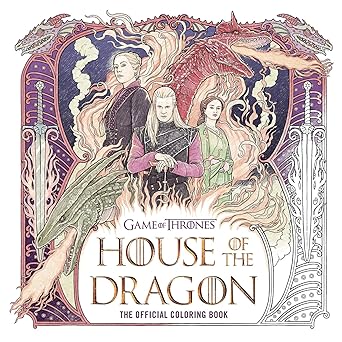
The Ash and the Ancestry: Introduction
Few authors command the landscape of modern dark fantasy like George R.R. Martin. With House of the Dragon (originally compiled within the historical narrative of Fire & Blood), Martin returns to the brutal, politically fragile continent of Westeros, transporting readers three centuries before the events of the mainstream series. Much like Shakespeare’s historical plays or the dark machinations found in A Parade of Horribles, this book functions as an intricate, multi-generational chronicle of power, dynastic decay, and the ultimate corruption of unchecked absolute rule.
House of the Dragon At a Glance: Key Details
| Book Title | Genre | Target Audience | Anwar Library Rating |
|---|---|---|---|
| House of the Dragon (Fire & Blood) | Epic Grimdark Fantasy | Adults, Lore Enthusiasts, Political Intrigue Fans | 4.7 / 5.0 |
The Quick Verdict: Pros & Cons
House of the Dragon is an absolute masterclass in worldbuilding and fictional historiography. It offers a dense, fascinating dive into the height of Targaryen power, though its unconventional textbook-like structure may alienate casual readers seeking a traditional linear narrative.
- Pros: Unparalleled depth of historical lore, deeply complex gray characters, and terrifyingly vivid draconic warfare.
- Cons: Dry prose style due to the “archmaester” framing device, and an overwhelming number of recurring family names.
The Seeds of Rebellion: Plot Summary of House of the Dragon (No Spoilers)
The core narrative centers around the legendary conflict known as the Dance of the Dragons—a catastrophic civil war that ripped Westeros apart. The story begins during the golden age of the Targaryen dynasty under King Viserys I. With a surplus of living dragons and an abundance of heirs, the empire seems invincible. However, beneath the golden facade lies a precarious succession crisis that threatens to rupture the realm.
When Viserys names his eldest daughter, Princess Rhaenyra, as his rightful heir, he shatters centuries of patriarchal precedent. The political ecosystem fragments into two bitter factions: the “Blacks,” who support Rhaenyra’s claim, and the “Greens,” who rally behind her younger half-brother, Aegon II, backed by the calculating Hand of the King. As alliances are forged in secrecy and old blood feuds are reignited, the stage is set for an apocalyptic family feud where dragons fight dragons, and the smallfolk pay the ultimate price in ash and blood.
The Vault of Hidden History: House of the Dragon Ending Explained & Plot Twists (Spoilers)
Click to expand the deep-dive spoiler zone
🚨 WARNING: Major Spoilers Ahead! Do not expand this section unless you have finished the book.
The climax of the Dance of the Dragons is a devastating war of attrition that leaves neither side truly victorious. Princess Rhaenyra and King Aegon II both meet tragic, brutal ends. After reclaiming King’s Landing, Rhaenyra is forced to flee due to riots sparked by a religious zealot known as the Shepherd, leading to the horrific storming of the Dragonpit where multiple dragons perish. She is eventually betrayed on Dragonstone and fed alive to Aegon II’s crippled dragon, Sunfyre, right before her young son Aegon III’s eyes.
However, Aegon II’s triumph is fleeting. Poisoned by his own advisors who realize the war is utterly lost, his death paves the way for Rhaenyra’s surviving lineage to take the throne. The war concludes with the crowning of the traumatized Aegon III, who marries Aegon II’s daughter, Jaehaera, symbolically uniting the broken halves of the family. The real twist is the absolute devastation of the Targaryen war machine: nearly all the dragons are dead, setting up the long, slow decline of the royal house from absolute gods to vulnerable mortals.
The Dual Perspectives: Critical Assessment of the Novel
The “Real Talk”: Pacing, Prose, and Impact
Reading this book requires adjusting your expectations. This is not written in the standard close third-person style of A Song of Ice and Fire. Instead, it is penned from the perspective of Archmaester Gyldayn, utilizing conflicting primary sources such as the dynamic court jester Mushroom and the straight-laced Septon Eustace. This brilliant narrative choice creates an engaging layer of historical unreliability, prompting readers to constantly question what constitutes objective truth versus propaganda.
While the tactical descriptions of aerial warfare are breathtakingly executed, the middle sections can occasionally drag under the weight of endless lineages, court minor characters, and minor skirmishes. For those looking for the high-octane pacing seen in books like Marion Blackwood’s War of Fire and Fury, the dry academic framing here can occasionally feel like reading an actual medieval history textbook rather than an escapist fantasy adventure.
Anatomy of Ambition: In-Depth Character Analysis
The characters within this historical tragedy are remarkably painted in shades of dark gray, avoiding any clear-cut heroism:
- Rhaenyra Targaryen: The “Realm’s Delight” begins as a charismatic, proud pioneer of female autonomy, but the relentless weight of loss, betrayals, and systemic misogyny slowly hardens her into an increasingly paranoid, ruthless ruler.
- Daemon Targaryen: The Rogue Prince is perhaps Martin’s most mercurial creation. Equally capable of profound villainy and inspiring heroism, his dark charm and calculated unpredictability drive the violent momentum of the early war.
- Alicent Hightower: The Dowager Queen embodies the tragic reality of women who navigate patriarchal systems by weaponizing their sons, sacrificing her own humanity to secure her family’s absolute advancement.
Atmospheric Chemistry: Vibe Check
The overall mood of this epic can be summarized by several distinct aesthetic states:
- Decadent: The glittering, gold-trimmed height of Valyrian exceptionalism.
- Claustrophobic: Poisonous court whispers, hidden daggers, and systemic paranoia.
- Incinerating: The horrifying, apocalyptic reality of aerial dragon combat.
- Melancholic: The lingering sadness of a great dynasty slowly destroying its own legacy from within.
The Crown of Thorns: Themes & Motifs Deep Dive
At its core, the narrative functions as a profound critique of institutionalized misogyny. The entire tragic arc of the Dance of the Dragons is set in motion simply because the lords of Westeros refuse to accept a woman sitting upon the Iron Throne. Martin masterfully highlights how systemic bias inevitably leads to societal self-destruction.
Additionally, the motif of the dragon serves as a double-edged sword. While dragons represent unparalleled military superiority and godlike authority, they also serve as a striking metaphor for weapons of mass destruction. When nuclear-level power is paired with petty human flaws, jealousies, and emotional insecurity, absolute devastation is the only possible outcome.
The Chosen Vanguard: Target Audience Guide
This book is tailor-made for dark fantasy veterans who prefer complex political machinations over simple good-versus-evil dynamics. If you enjoy deep worldbuilding, fictional lore documents, historical accounts, and multi-generational family sagas like the Wars of the Roses, this work will be a crown jewel in your collection.
If You Loved This Drama: Similar Recommendations
If you find yourself missing the cutthroat politics and complex court intrigue of the Targaryen court, check out these excellent reads:
- The Accord of Fire: A fast-paced, political high-fantasy focusing on magical bloodlines and competing heirs.
- The Accursed Kings by Maurice Druon: The classic historical fiction series that originally inspired George R.R. Martin’s vision of Westeros.
- The Priory of the Orange Tree by Samantha Shannon: A magnificent epic fantasy featuring distinct, complex cultures and legendary dragon lore.
The Global Resonance: Cultural Impact and Reader Reactions
With the smash-hit success of the HBO television adaptation, this book has experienced an massive cultural resurgence across platforms like BookTok and Goodreads. Readers continuously debate the morality of the respective factions, arguing over the justifications of Team Black versus Team Green, confirming the enduring power of Martin’s morally ambiguous worldbuilding.
About the Author: George R. R. Martin
George R.R. Martin is an internationally acclaimed master of fantasy, science fiction, and television screenwriting. Often dubbed “the American Tolkien,” his revolutionary work on A Song of Ice and Fire fundamentally reshaped the landscape of modern fantasy, earning him multiple Hugo, Nebula, and Emmy awards throughout his illustrious career.
Frequently Asked Questions (FAQ)
A: No, the events are fully chronicled within the broader companion history book titled Fire & Blood.
Q: Which faction is considered “right” in the war?
A: Martin purposely leaves the narrative ambiguous, showing that both the Blacks and the Greens commit horrific atrocities in pursuit of power.
Q: Do I need to read the main series first?
A: Not at all. Since this story functions as a distant prequel set 300 years earlier, it can be thoroughly enjoyed without prior knowledge of the main novels.
Where to Buy & Read
Ready to immerse yourself in this unputdownable book? Use the verified, functional search retail links below to find the best deals on physical, digital, or audio editions: