
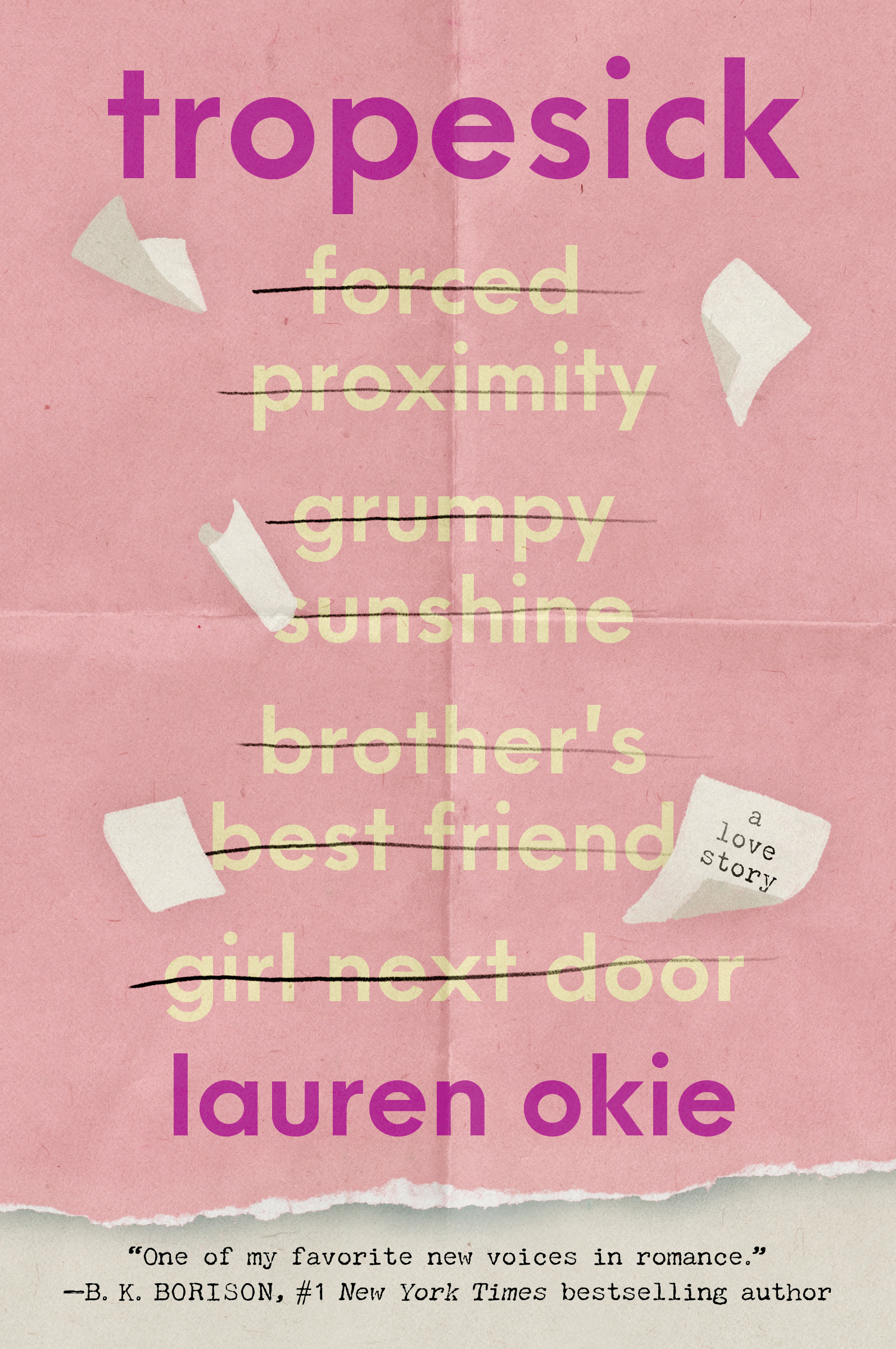
The Prison of Literary Expectations: Introduction
What happens when the very narrative patterns designed to give us comfort become a claustrophobic psychological prison? In Tropesick, the groundbreaking and deeply subversive novel by Lauren Okie, the conventional boundaries of modern commercial romance are torn apart to expose something far more sinister. Operating as both a brilliant satire of the publishing industry and a deeply unsettling psychological thriller, the book holds up a dark mirror to our collective obsession with hyper-stylized relationship dynamics. It functions as a sharp, modern counterweight to standard contemporary fiction, forcing readers to examine why we crave toxic behavioral loops under the banner of escapism.
Okie introduces a narrative ecosystem that feels simultaneously familiar and deeply jarring. By utilizing structural elements that mimic traditional romance milestones only to violently deconstruct them, the prose echoes the psychological depth of Gillian Flynn’s Gone Girl while maintaining the meta-literary wit of high-concept psychological thrillers. It stands out as an intellectual, visceral exploration of how media consumption shapes our intimate desires, marking Okie as a daring new voice in contemporary suspense fiction.
Tropesick At a Glance: Key Details
| Book Title | Genre | Target Audience | Anwar Library Rating |
|---|---|---|---|
| Tropesick | Meta-Fiction / Psychological Suspense | Readers of dark thrillers, cynical romance fans, and literary satires | 4.2 / 5.0 |
The Quick Verdict: Pros & Cons
Tropesick is a lightning-fast, intellectually stimulating ride that masterfully subverts expectations at every turn. While it brilliantly strips away the romanticism of dangerous tropes, its aggressive cynicism and structural experimentalism might occasionally alienate readers looking for a traditional, comforting narrative resolution.
- Pros: Exceptional, highly original meta-commentary on modern fiction, razor-sharp pacing, and a genuinely unpredictable climax.
- Cons: A highly unlikable cast of characters that may deter casual readers, and certain structural shifts that occasionally disrupt the emotional stakes.
The Haunted Architecture of the Romance Factory: Plot Summary (No Spoilers)
The plot centers on Maisie Calloway, a fiercely intelligent but deeply disillusioned developmental editor working for a major romance publishing imprint. Having spent a decade analyzing, sanitizing, and manufacturing hundreds of forced proximity, enemies-to-lovers, and billionaire fake-dating manuscripts, Maisie finds her psyche entirely warped by clichés. She is profoundly “tropesick”—incapable of experiencing genuine human connection without filtering it through the calculated, commercial patterns of bestselling paperbacks.
Desperate to escape her creative burnout, Maisie accepts an invitation to an exclusive, highly secretive creative retreat located at a historical, isolated estate in upstate New York. The retreat promises an elite gathering of authors, editors, and ghostwriters looking to break free from commercial formulas. However, upon arrival, Maisie realizes the estate is run by a charismatic, intensely unsettling literary purist who believes that modern romance formulas have structurally ruined human psychology.
As the weekend progresses, the retreat morphs into a living simulation. The guests find themselves placed into scenarios that mirror classic, highly romanticized plot devices—only stripped of their safe, fictional glazes. When the electricity cuts out and an artificial snowstorm strands them, Maisie realizes that a real-world architect is forcing them to live out the dark, dangerous logical conclusions of the tropes they have weaponized for profit, turning their sanctuary into a desperate game of survival.
The Mastermind in the Margin: Tropesick Ending Explained & Plot Twists (Spoilers)
Click to expand the deep-dive spoiler zone
🚨 WARNING: Major Spoilers Ahead! Do not expand this section unless you have finished the book.
The final act of Tropesick completely upends the survival-thriller framework by revealing that the physical dangers of the estate were completely orchestrated from within Maisie’s own social circle. The initial twist reveals that the eccentric estate owner was merely an actor hired to play a part, and the physical isolation was a carefully simulated environment designed to induce psychological vulnerability in the participants.
The true mastermind behind the entire “Tropesick Simulation” is revealed to be Julian, Maisie’s seemingly passive, supportive long-time co-editor. Julian had spent years cataloging Maisie’s private complaints, her severe professional burnout, and her growing resentment toward the predictable algorithms driving modern fiction. Driven by a twisted, obsessive desire to create the “perfect, un-formulaic masterpiece,” Julian weaponized her psychological exhaustion, building a real-life maze where her reactions to simulated terror would serve as the foundational outline for a revolutionary, boundary-pushing psychological manuscript.
In a final confrontation in the estate’s sprawling archival library, Julian offers Maisie a terrifying choice: she can either expose the trap to the authorities and return to the uninspiring world of editing repetitive commercial fiction, or she can sign her name as the co-author of this new, terrifyingly authentic psychological book, cementing her financial and critical freedom. The novel finishes on a chillingly cynical note. Maisie, fully realizing that her mind has been permanently altered by the ordeal, chooses the manuscript over morality. The final scene shows her back at her corporate desk, completely cured of her creative blocks, editing the very story of her own survival—proving that she has transitioned from a victim of narrative formulas into the ultimate, cold-blooded consumer of them.
Calculated Deconstruction vs. Emotional Isolation: Critical Assessment of the Novel
The “Real Talk”: Pacing, Prose, and Impact
Evaluating Lauren Okie’s prose requires adjusting one’s expectations away from standard, comfortable storytelling. Her writing style is hyper-observant, highly analytical, and intentionally clinical. Okie crafts sentences that mimic the polished, accessible veneer of commercial fiction, only to slide in razor-sharp observations about manipulation and psychological control. This duality works perfectly for a meta-thriller, maintaining a breathless, unputdownable narrative pace while delivering a heavy dose of intellectual discomfort.
The pacing is exceptionally tight, mimicking the structural countdown of a classic thriller while systematically dismantling the psychological health of its characters. However, because the book is so intensely focused on deconstruction and satire, the emotional warmth is non-existent. Every interaction is loaded with subtext, transactional calculations, and underlying paranoia. While this choice perfectly serves the book’s thematic core, readers who require a deeply sympathetic protagonist to anchor their enjoyment might find Maisie’s ultimate descent into cold, opportunistic cynicism difficult to stomach.
The Broken Mirror and the Shadow Author: In-Depth Character Analysis
Maisie Calloway: Maisie is a brilliant study in professional burnout and cognitive dissonance. She is simultaneously addicted to and repulsed by the media she curates. Her journey is not one of traditional moral growth, but rather an exploration of adaptation; she realizes that in a world governed by manipulative storytelling, the only way to survive is to become the writer rather than the character being manipulated.
Julian: Julian represents the extreme, predatory logical conclusion of the obsessive creator. He hides behind a facade of calm, beta-male predictability—a direct subversion of the aggressive alpha-male archetypes Maisie spends her days editing. His malice is purely intellectual, making him an incredibly modern, unsettling antagonist whose primary weapon is his deep understanding of human vulnerability and narrative expectations.
Atmospheric Chemistry: Vibe Check
The aesthetic profile of this novel is deeply calculated and distinct. Here is the sensory breakdown:
- Clinical: The prose constantly analyzes human emotions as if they are mechanical plot points on a outline board.
- Claustrophobic: The heavy, dark architecture of the estate and the mounting snow outside create a classic, isolated pressure cooker environment.
- Subversive: Every time a scene feels safe or familiar, the rug is violently pulled away to expose a darker truth beneath the surface.
The Commodification of Human Desire vs. Narrative Slavery: Themes & Motifs Deep Dive
The central thematic pillar of Tropesick is the terrifying ways in which commercial algorithms modify raw human emotion. Okie argues that by consuming thousands of identical, highly structured romantic narratives, the human brain loses its ability to process the chaotic, unscripted, and messy realities of real-world relationships. Maisie cannot love or hate genuinely; she can only categorize her experiences. This exploration serves as a brilliant critique of modern internet fan culture and the publishing industry’s reliance on repetitive formulas over artistic risk.
Furthermore, the motif of the “manuscript” runs heavily throughout the text. Life inside the estate is continuously framed as a rough draft requiring editing. This constant blurring of reality and written text highlights the danger of viewing real people as characters meant to fulfill a specific role in our personal narratives, suggesting that when we try to edit our lives to fit a perfect, satisfying trope, we inherently strip away our shared humanity.
When the Algorithm Fails to Comfort: Target Audience Guide
This book is a must-read for anyone who has ever felt a sense of fatigue with the current state of commercial fiction. If you love reading romance but frequently find yourself rolling your eyes at predictable plot points, or if you are a thriller fan who loves high-concept, intellectual parodies like Yellowface, then this novel is tailor-made for your shelf. It is an ideal pick for analytical book clubs that enjoy debating the moral choices of deeply compromised, complex characters.
If You Loved This Drama: Similar Recommendations
If the sharp, meta-fictional edge of Okie’s thriller left you craving more intellectual suspense, explore these highly recommended titles:
- Yellowface by R.F. Kuang: A similarly biting, fast-paced satirical thriller that exposes the intense dark side, racial politics, and ethical vacuums of the modern publishing world.
- The Plot by Jean Hanff Korelitz: A brilliant look at literary theft, extreme creative desperation, and the terrifying real-world consequences of treating real trauma as raw story material.
- Verity by Colleen Hoover: For readers who want another deeply unsettling, atmospheric thriller centered around a manipulative writer, a hidden manuscript, and distorted realities.
The Goodreads Civil War and Viral BookTok Debates: Cultural Impact and Reader Reactions
Upon its release, Tropesick ignited a massive ideological war across major reading platforms. On Goodreads, the novel has drawn sharp polarization; traditional romance communities have frequently criticized the book, viewing it as a mean-spirited attack on the genre that brings them joy. They argue that Okie’s deconstruction of popular tropes feels overly cynical and dismissive of escapist media.
Conversely, the psychological thriller communities on BookTok and Reddit have aggressively championed the book as a masterpieces of meta-fiction. Content creators have gone viral mapping out the hidden structural clues Okie dropped in the early chapters, praising her willingness to expose the psychological exhaustion of the modern reading audience. This intense friction has kept the title trending heavily, making it one of the most talked-about indie releases of the year.
About the Author: Lauren Okie
Lauren Okie is an exciting, fiercely independent voice operating at the volatile intersection of literary satire and psychological suspense. Drawing heavily from her background in media studies and her experience within the corporate machinery of digital publishing, Okie crafts highly self-aware narratives that actively challenge contemporary consumption habits. Her sharp, uncompromising style has established her as an author to watch for readers who demand high-concept, intellectually rigorous thrillers that refuse to play by the traditional rules of genre fiction.
Frequently Asked Questions (FAQ)
Q: Is Tropesick against the romance genre as a whole?
A: No. In various press statements, Okie has clarified that the book is not an attack on romance, but rather a psychological exploration of how corporate algorithms over-saturate genres, treating complex human desires as repeatable, profitable formulas.
Q: Are there any explicit or traditional romance subplots in the book?
A: Absolutely not. While the book heavily utilizes the architecture, terminology, and staging of classic romance subplots, every single one of them is systematically subverted, analyzed, and transformed into psychological tension.
Q: Does the book have a happy or satisfying ending?
A: The ending is structurally satisfying as a psychological thriller, resolving all major mysteries. However, it is an emotionally dark and cynical conclusion that lacks a traditional moral victory or standard romantic resolution.
Where to Buy & Read
Ready to immerse yourself in this unputdownable book? Use the verified, functional search retail links below to find the best deals on physical, digital, or audio editions: