
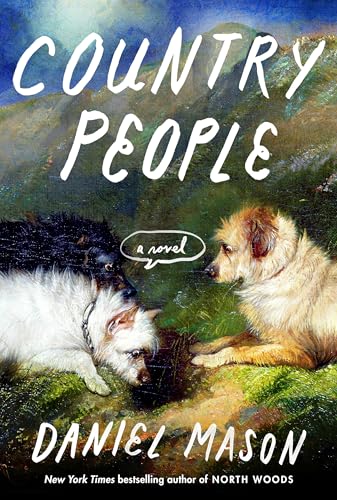
The Layered Landscapes of Human Experience: Introduction
Few contemporary authors can dissolve the boundary between historical realism and structural myth as effortlessly as Pulitzer Prize finalist Daniel Mason. Following the monumental success of his polyphonic masterpiece North Woods, Mason shifts his gaze in Country People to a deceptively simpler canvas—a contemporary family’s sudden transplant from urban California to the dense, historical forests of Vermont. Yet, much like Nabokov’s comic eccentricities in Pnin or the satirical edge of Gary Shteyngart’s Our Country Friends, this novel blooms into something far grander than a simple fish-out-of-water comedy. It is a striking, deeply moving examination of what happens when the neat narrative grids we construct for our lives collide with the wild, unpredictable terrain of local history and shared mythologies.
In terms of its uncanny ability to explore isolation and structural space, readers might find thematic echoes with minimalist classics like I Who Have Never Known Men, though Mason swaps stark dystopia for a lush, deeply empathetic playground of small-town idiosyncrasies.
Country People At a Glance: Key Details
| Book Title | Genre | Target Audience | Anwar Library Rating |
|---|---|---|---|
| Country People | Literary Fiction / Magic Realism | Lovers of pastoral satire, folklore, family dynamics, and lyrical prose | 4.8 / 5.0 |
The Editor’s Take: Quick Verdict & Vibe
Country People is an absolutely radiant, big-hearted literary triumph that balances razor-sharp social satire with a profound reverence for the mysteries of the natural world. It proves that Daniel Mason remains one of our greatest living orchestrators of tone, shifting seamlessly from domestic comedy to cosmic wonder.
- Pros: Genuinely witty dialogue, exceptionally rich integration of folklore, an unforgettable cast of small-town eccentrics, and deep emotional sincerity regarding marriage.
- Cons: The deliberate, episodic pacing in the first half may feel overly leisurely to readers looking for a plot-heavy thriller.
The Call of the Green Mountain State: Plot Summary of Country People (No Spoilers)
The domestic anchor of the novel centers on Miles Krzelewski-Petrosian, a well-meaning father and husband who is profoundly stuck. Miles is a specialist in Russian folktales, or rather, a perpetual student who is currently twelve years late in delivering his doctoral dissertation. Haunted by a quiet, mounting anxiety that he has become a lingering disappointment to his loved ones, Miles spends his days telling outlandish bedtime stories to his children, Wesley and Olive, and walking a truffle-hunting dog in a coastal California suburb completely devoid of truffles. He is a man searching for a grand narrative arc that remains consistently out of reach.
A sudden catalyst arrives when his highly successful wife, Kate, a distinguished scholar of John Milton and William Blake, is offered a prestigious one-year visiting professorship at an elite college in rural Vermont. Sensing a golden opportunity to reset his life, break his writer’s block, and find himself, Miles enthusiastically packs up the family and their dog Giuseppe to housesit an economics professor’s rustic estate in the fictional town of Greensbury. They are warned simply to watch for leaks and keep the animals out. However, Greensbury is not merely a scenic retreat; it is an organic, deeply stratified ecosystem of historical memory, populated by characters who seem to step straight out of the very folklore Miles studies—from an enigmatic, ghostly tree surgeon to a scythe-wielding biochemist obsessed with traditional land management.
The Jeremiah Wylkes Society Climax: Country People Ending Explained & Plot Twists (Spoilers)
Click to expand the deep-dive spoiler zone
🚨 WARNING: Major Spoilers Ahead! Do not expand this section unless you have finished the book.
The whimsical comedy of the novel shifts dramatically into the uncanny during the final act. Miles receives a series of anonymous, mysterious postcards inviting him to attend a clandestine meeting of the Jeremiah Wylkes Society. Wylkes was a real-world 19th-century local pastor rumored to have discovered a subterranean, utopian underground kingdom hidden deep within a local limestone cavern network.
Driven by his deep academic obsession with folklore and a desperate need to find something “real” to anchor his life, Miles leaves his family during an intense autumn storm to seek out the cave entrance coordinates mentioned in the final note. Upon entering the depths of the caverns, Miles experiences a sequence of dreamlike, hallucinatory encounters that blur the lines between psychological breakdown and true supernatural magic realism. He encounters the society members, who are revealed to be the town’s oddest historical preservationists keeping the memory of Wylkes alive—not out of a literal belief in an underground kingdom, but as an active, living commitment to the power of shared regional imagination.
The ultimate emotional twist occurs when Miles realizes that the anonymous postcards were not sent by a shadowy cult, but by his own wife, Kate. Realizing that his depression and writer’s block were swallowing him whole, Kate orchestrated the entire mystery using local lore to trigger Miles’s sense of wonder and intellectual passion. Emerging from the cave into the crisp dawn, Miles does not find a physical kingdom, but instead achieves a profound inner clarity. He returns to his family ready to abandon his stale, academic framework of Russian folktales, choosing instead to write down the beautiful, lived folklore of his own family’s year in the woods. The book closes with Miles successfully defending a radically repurposed thesis centered on the modern mythology of domestic survival, proving that the real “kingdom” was the resilient bond of his marriage and parenthood.
Pastoral Wit Meets Subterranean Wonder: Critical Assessment of the Novel
The “Real Talk”: Pacing, Prose, and Impact
Daniel Mason writes with a fluid, shimmering musicality that evokes the sights and auditory textures of rural New England with stunning fidelity. His prose avoids the sterile trap of contemporary autofiction, opting instead for a warm, expansive omniscience that honors every individual creature in the landscape—down to the family dog. Much like the narrative patterns analyzed in our review of Little Wonder, Mason understands how to anchor a highly whimsical concept in the gritty, mundane realities of domestic life. The pacing is intentionally slow and rhythmic, mirroring the changing of seasons in Vermont, which allows the final, surreal plunge into the limestone caverns to carry an incredible, mythic weight. It is a masterclass in structural architecture, showing that a writer known for grand historical epics can apply that same profound dignity to a modern family sitting around a kitchen table.
The Symphony of Insecurity: In-Depth Character Analysis
Miles is an exceptionally drawn protagonist—painfully relatable in his imposter syndrome, yet entirely endearing due to his bottomless capacity for falling in love with the world around him. He represents the modern intellectual’s deepest fear: the terror of being an observer rather than a participant in life. Kate stands as a brilliant counterbalance; where Miles is soft, porous, and easily swept away by fantasy, Kate is anchored by the rhythmic structure of Miltonic verse and pragmatic devotion. Her secret orchestration of the Jeremiah Wylkes mystery is one of the most romantic, deeply empathetic acts of character development in recent fiction. The secondary characters function almost like a modern Greek chorus of rural New England life, each embodying a different methodology of processing time, land, and survival.
Atmospheric Chemistry: Vibe Check
- Lyrical & Joyous: The prose bounces along with a sparkling, babbling-brook energy that celebrates the sensory details of rural life.
- Mischievous: A gentle, dryly comedic undercurrent that affectionately pokes fun at academia and urbanites trying to adapt to the countryside.
- Uncanny: The cavernous, subterranean final acts introduce an echo of ancient superstition and deep-time geology that shifts the emotional temperature completely.
The Architecture of Belief: Themes & Motifs Deep Dive
At its core, Country People explores the vital distinction between history and mythology. Mason argues that human beings cannot survive on bare, literal facts alone; we require the soft, protective insulation of stories to make sense of our relationships and changing identities. The subterranean caverns serve as a physical manifestation of the subconscious mind and the hidden, historical layers of the land itself. By contrasting Kate’s structured academic study of epic poetry with Miles’s chaotic immersion in local legends, the novel highlights how marriage itself is a collaborative storytelling project—one that requires constant revision, patience, and a shared suspension of disbelief.
The Seeker of Wonder: Target Audience Guide
This novel is absolute gold for readers who long for fiction that leaves them feeling deeply reconnected to the magic of everyday life. If you are a fan of Wendell Berry’s deep environmental love, or if you enjoyed the shifting perspectives and environmental deep-dives of Mason’s own North Woods, this will be an immediate favorite. It is an exceptional choice for book clubs that want to discuss the delicate balances of creative marriages, the psychology of long-term stagnation, and the therapeutic power of nature.
If You Loved This Drama: Similar Recommendations
- North Woods by Daniel Mason: The essential companion piece, exploring the magnificent, centuries-long history of a single plot of land in Massachusetts.
- Our Country Friends by Gary Shteyngart: A sharper, more overtly satirical look at a group of urban intellectuals retreating to a country estate during a cultural crisis.
- The Overstory by Richard Powers: For readers who want to dive even deeper into the dense, majestic interconnectedness of the North American forest ecosystem.
The BookTok Accolades and Literary Acclaim: Cultural Impact and Reader Reactions
Since its release in July 2026, Country People has quickly become the definitive literary darling of the summer season. On platforms like BookTok and Instagram, readers have flooded the community with aesthetics centered on cozy Vermont cabins, historical maps, and lyrical quotes about the power of bedtime stories. On Goodreads, the reception is overwhelmingly positive, with major historical fiction authors praising Mason for bringing his trademark polyphonic depth to a warm, accessible contemporary setting, solidifying his status as one of America’s premier contemporary storytellers.
About the Author: Daniel Mason
Daniel Mason is an Associate Professor in the Stanford University Department of Psychiatry and a highly celebrated American novelist. He is the author of internationally acclaimed works including The Piano Tuner, The Winter Soldier, and A Registry of My Passage upon the Earth, which was a finalist for the Pulitzer Prize. His previous novel, North Woods, was a New York Times Top Ten Book of 2023 and a finalist for the National Book Critics Circle Award. Mason’s background in medicine and psychiatry uniquely colors his fiction, infusing his characters with a deep, psychological precision and clinical empathy.
Frequently Asked Questions (FAQ)
Is Country People a direct sequel to North Woods?
No, it is a completely self-contained standalone novel set in the contemporary era. However, it shares a very similar thematic DNA, magical realist tone, and deep reverence for the history of the New England landscape.
What role do the dogs play in the story?
The family dog, Giuseppe, acts as a brilliant narrative anchor throughout the novel. He represents instinct, unconditioned presence, and the simple reality of nature, providing an ironic contrast to Miles’s overly intellectualized anxieties.
Does the book feature structural illustrations?
Yes, the physical edition of the book contains beautifully curated black-and-white historical photographs and illustrations that enhance the atmospheric, folkloric feeling of the text.
Where to Buy & Read
Ready to immerse yourself in this unputdownable book? Use the verified, functional search retail links below to find the best deals on physical, digital, or audio editions: