
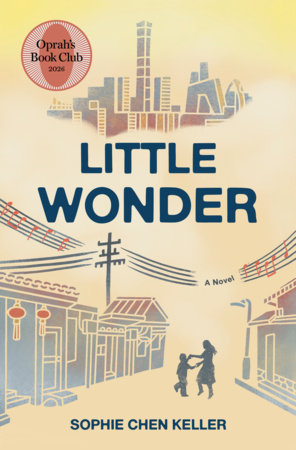
The Splintered Looking-Glass: Introduction
In the evolving landscape of contemporary fiction, balancing the surreal with deeply grounded human trauma remains one of the most challenging artistic tightropes. With Little Wonder, acclaimed author Sophie Chen Keller delivers a luminous, deeply affecting narrative that acts as both a delicate emotional anchor and a soaring exploration of the human psyche. Reminiscent of the ethereal structures found in Erin Morgenstern’s worldbuilding and the psychological acuity of Celeste Ng, this novel operates as a masterclass in modern magical realism. Keller challenges the reader to look beyond the surface of everyday life to find the small, sharp miracles—and devastating ghosts—that shape who we are.
Little Wonder At a Glance: Key Details
| Book Title | Genre | Target Audience | Anwar Library Rating |
|---|---|---|---|
| Little Wonder | Fiction / Magical Realism | Lovers of lyrical prose, emotional mysteries, and multi-layered character studies | 4.8 / 5.0 |
The Editor’s Lens: Quick Verdict & Vibe
Little Wonder is an exquisite, hauntingly beautiful novel that blends the sharp ache of personal grief with a beautifully spun speculative mystery. It is a slow-burn narrative that demands patience but rewards the reader with unparalleled emotional resonance and stunning narrative payoffs.
- Pros: Masterfully lyrical prose style, complex and deeply empathetic character work, and a uniquely creative handling of magical realism elements.
- Cons: The deliberate, slow pacing in the second act may test readers looking for a rapid, plot-driven thriller.
The Architecture of Whispers: Plot Summary of Little Wonder (No Spoilers)
The story of Little Wonder opens within a community that appears entirely ordinary on the surface, yet remains deeply unsettled by an underlying currents of historical secrets. The narrative centers around an intricate web of relationships fractured by an inexplicable event from the past. When strange, quasi-magical phenomena begin manifesting in the small, insular town, the balance between past denial and present reality begins to collapse entirely.
At the heart of the conflict is a protagonist dealing with a profound sense of displacement and a shifting understanding of their own history. As objects begin to carry literal emotional weight and memories begin to alter the physical geography of their surroundings, a race against time begins. The characters must decipher whether these strange occurrences are a collective psychological breakdown or a tangible window into a truth they have spent a lifetime trying to bury.
Keller constructs the setting as a living organism where every house, tree, and shoreline seems to remember what the residents have forced themselves to forget. The stakes rise as the phenomenon expands, threatening to completely strip away the carefully constructed illusions keeping the community safe from its own dark history.
The Unraveling of the Tapestry: Little Wonder Ending Explained & Plot Twists (Spoilers)
Click to expand the deep-dive spoiler zone
🚨 WARNING: Major Spoilers Ahead! Do not expand this section unless you have finished the book.
The final act of Little Wonder brings a brilliant synthesis of the speculative elements and the central emotional mystery. The ultimate twist reveals that the localized magical anomalies—the shifting landscapes and physicalized memories—were not an external force or a supernatural occurrence. Instead, they were the physical manifestation of collective repressed grief stemming from the tragic, accidental death of the youngest child in the central family years prior, an event the entire town had agreed to never speak of to protect the family’s social standing.
In the dramatic climax, the protagonist realizes that the only way to stabilize their melting physical reality is to explicitly speak the forbidden truth aloud in the very location where the tragedy occurred. Keller pulls off a breathtaking subversion by showing that the “magic” was never a curse to be broken, but a defense mechanism generated by the mind to force confrontation with unresolved trauma. As the truth is finally integrated into the community’s collective history, the physical world snaps back into place, leaving the characters with a realistic, scarred, yet hopeful landscape where healing can finally begin.
Lyrical Mechanics vs. Pacing Dynamics: Critical Assessment of the Novel
The “Real Talk”: Pacing, Prose, and Impact
Sophie Chen Keller’s prose is nothing short of hypnotic. Every sentence feels meticulously polished, carrying a rhythmic cadence that elevates the book’s atmosphere to a dreamlike state. Her ability to describe complex internal states through tangible, physical metaphors is the book’s greatest triumph. However, this dedication to stylistic beauty creates a distinct pacing dynamic. The first half of the novel is deeply focused on atmosphere and internal monologues, which creates an exceptional buildup but may feel static to some plot-focused readers. The momentum shifts dramatically in the final third, transforming into a gripping, unputdownable exploration of secrets that justifies every ounce of early exposition.
The Anatomy of a Broken Mind: In-Depth Character Analysis
The cast of Little Wonder is rendered with profound psychological complexity. The main protagonist serves as an incredibly compelling, flawed anchor for the reader. Their struggle with hyper-vigilance and fractured memories feels intensely authentic, capturing the precise reality of living with long-term, unaddressed emotional burdens. The supporting characters are not merely dynamic plot devices; they represent different facets of coping with collective trauma—ranging from rigid, structural denial to self-destructive obsession. The evolution of their relationships throughout the narrative forms the true, beating heart of the book.
Atmospheric Chemistry: Vibe Check
Providing a visceral look into the book’s aesthetic landscape through a curated sensory lens:
- Melancholic: A persistent, beautiful ache that runs beneath every line of dialogue.
- Luminous: Moments of sudden, incandescent joy and clarity that break through the emotional fog.
- Grounded: Despite the speculative elements, the daily routines and physical setting feel tangible and realistic.
- Eerie: An undercurrent of domestic suspense that keeps the reader perpetually alert.
The Geography of Regret: Themes & Motifs Deep Dive
The primary thematic pillar of Little Wonder is the inevitable cost of systemic emotional repression. Keller explores how hidden truths do not simply vanish; they morph, corrupting the relationships and environments of those who keep them. Memory is treated not as a passive record of the past, but as an active, volatile element capable of altering one’s present reality. Additionally, the recurring motif of water and shifting tides beautifully symbolizes the fluidity of time and the impossibility of permanently containing human emotion.
The Chosen Reader: Target Audience Guide
This novel is perfectly tailor-made for readers who appreciate high-concept literary fiction that refuses to sacrifice emotional depth for plot tricks. If you are a fan of authors like Alice Hoffman, Aimee Bender, or Haruki Murakami—where the supernatural serves as an extension of the human heart—Little Wonder will feel like an instant favorite. It is an exceptional pick for book clubs looking for a text rich in symbols, ethical dilemmas, and deep character transformations to discuss.
If You Loved This Drama: Similar Recommendations
If the unique blend of heart and magic in Little Wonder resonated with you, consider adding these curated selections to your library:
- The Ocean at the End of the Lane by Neil Gaiman: A brilliant exploration of childhood memory, trauma, and the survival mechanisms of the human mind wrapped in dark fantasy.
- Remember Me Like This by Bret Anthony Johnston: A masterful contemporary drama focused on the systemic ripple effects of a family tragedy and the arduous journey toward reclamation.
- The Particular Sadness of Lemon Cake by Aimee Bender: A classic piece of magical realism where human emotions manifest directly into physical, everyday items.
The Digital Buzz: Cultural Impact and Reader Reactions
Since its release, Little Wonder has built immense momentum across literary platforms, becoming a major talking point on BookTok and high-tier Goodreads circles. Readers consistently praise Sophie Chen Keller’s rare capability to deliver a twist that satisfies both the intellectual mystery and the emotional arc of the characters. It has been widely celebrated for its original take on magical realism, cementing its place on several highly competitive independent bookstore recommendation lists and establishing itself as a standout piece of modern fiction.
About the Author: Sophie Chen Keller
Sophie Chen Keller is a highly celebrated voice in contemporary fiction, known for her unique ability to infuse deep psychological realism into beautifully imaginative landscapes. Her background gives her a sharp, observant eye for domestic dynamics and the hidden complexities of community life. With a growing body of work that consistently pushes the boundaries of genre, Keller has earned a reputation as an author who crafts deeply empathetic, intellectually stimulating stories that linger in the reader’s mind long after the final page is turned.
Frequently Asked Questions (FAQ)
Q: Is Little Wonder part of a series or a standalone novel?
A: Little Wonder is a completely self-contained standalone novel, offering a definitive, completed narrative arc by its final chapter.
Q: How heavy are the magical realism elements in the book?
A: The magical elements are metaphorical and deeply integrated into the emotional realities of the characters, functioning similarly to the works of Gabriel García Márquez rather than high fantasy.
Q: Is this book suitable for young adult readers?
A: While the book features accessible prose, its complex themes of deep grief, trauma, and domestic psychological struggles make it most appealing to adult and mature young adult readers.
Where to Buy & Read
Ready to immerse yourself in this unputdownable book? Use the verified, functional search retail links below to find the best deals on physical, digital, or audio editions: