
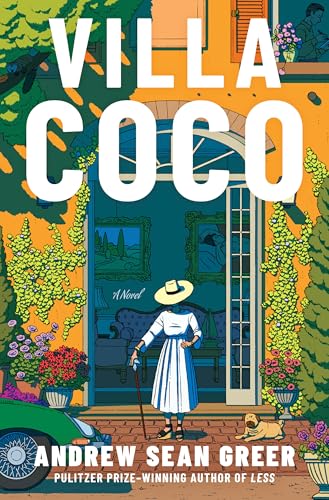
Sunlit Absurdity and Golden Escapism: Introduction
When Pulitzer Prize-winning novelist Andrew Sean Greer releases a new book, the literary world leans in, expecting his trademark blend of wistful melancholy and sparkling comedic timing. In Villa Coco, Greer trading the globe-trotting anxieties of Arthur Less for a hyper-focused, beautifully chaotic summer in the rolling hills of Tuscany. Evoking the elegant, farcical pacing of classic Merchant-Ivory films and the witty travelogues of E.M. Forster, this novel stands out as a vibrant, sun-baked exploration of youth, aging, and the beautifully unstructured journey of finding one’s true identity in a world that demands rigid definitions.
The Tuscan Ledger: Key Details
| Book Title | Genre | Target Audience | Anwar Library Rating |
|---|---|---|---|
| Villa Coco | Literary Fiction / Coming-of-Age Comedy | Lovers of witty satire, rich atmospheric settings, and character-driven prose | 4.7 / 5.0 |
The Editor’s Choice: Quick Verdict & Vibe
Andrew Sean Greer delivers a masterfully written, lighthearted yet deeply affecting novel that feels like an extended European summer vacation. While the narrative framework rests on familiar fish-out-of-water tropes, the sheer exuberance of the language and the unforgettable eccentricity of its characters anchor it as a contemporary literary triumph.
- Pros: Effortless observational humor, rich and luminous descriptions of the Italian countryside, and an extraordinary, larger-than-life matriarch figure.
- Cons: The central narrative revelation is telegraphed early on, reducing some of the late-stage mystery elements.
An Archivist in the Crumbling Hills: Plot Summary (No Spoilers)
The story introduces us to a nameless young American narrator, a fresh-out-of-college aspiring archivist who is thoroughly broke and completely directionless after an undistinguished undergraduate career. Desperate to initiate what he considers a “serious” and adult life, he responds to a vaguely worded employment advertisement looking for an “adjutant” in the Italian countryside. Soon enough, he finds himself arriving at Villa Coco, a beautifully decaying, antediluvian mansion nestled deep within the gleaming olive groves of Tuscany.
His employer is Lisabetta, widely known to her eclectic circle of friends as Coco—a fiercely independent, wildly wealthy, and supreme organizer of high-society chaos. While our young protagonist initially assumes his duties will revolve around cataloging historical family papers, he is swiftly disabused of that notion. Instead, his actual tasks involve navigating a series of increasingly bizarre domestic crises. He is charged with ridding the estate of an elusive marten, hunting down a hopelessly buried septic system, managing an unending carousel of bohemian guests, and even crashing a local funeral to subtly make off with a highly specific urn. As the hot Mediterranean weeks roll by, the narrator realizes that the true history he is unearthing is not written on paper, but etched into the shifting hearts of the villa’s inhabitants.
The Secret in the Olive Groves: Ending Explained & Plot Twists (Spoilers)
Click to expand the deep-dive spoiler zone
🚨 WARNING: Major Spoilers Ahead! Do not expand this section unless you have finished the book.
The final act of the novel beautifully unravels the true purpose behind the narrator’s bizarre summer tasks and the mysterious nature of Coco’s grand final project. It is revealed that the crumbling state of Villa Coco was not a symptom of financial neglect, but a deliberate choice. The Baronessa was secretly orchestrating a complex legal and artistic maneuver to preserve the estate as a permanent, untaxable sanctuary for local artists and eccentric misfits, defying her greedy estranged relatives who sought to bulldoze the land for high-end tourist resorts.
The stolen urn from the funeral contained old love letters and deeds that proved a long-standing, unconventional property agreement dating back decades. When the hostile nephews attempt a legal takeover during a massive, chaotic autumn gala, the narrator successfully produces the missing documentation he unknowingly helped piece together through his arbitrary archival hunts. Rather than remaining an insecure assistant, the narrator finds his voice, standing up to the corporate developers. The book concludes with Coco successfully securing the villa’s future before peacefully stepping away from the public eye, leaving our narrator not with a pristine resume, but with an enduring understanding that a meaningful life is constructed out of beautiful, purposeful chaos.
Lyrical Precision and Farcical Flow: Critical Assessment of the Novel
The “Real Talk”: Pacing, Prose, and Impact
Greer’s writing in this novel is exceptionally fluid, frescoed with figurative language that highlights his sharp eye for human foibles. The pacing mimics the natural progression of a hot summer—strolling languidly through sun-drenched afternoons before cascading into sharp bursts of comedic action during the various household capers. His metaphors are crafted with effortless elegance, transforming simple descriptions of local focaccia or a faded silk dress into profound insights on class and memory. The impact of the novel relies heavily on its tone; it is a warm-hearted, deeply affectionate satire that manages to examine the genuine sadnesses of aging and obsolescence without ever losing its inherent buoyancy.
The Unflappable Matriarch and the Nameless Youth: In-Depth Character Analysis
The dynamic between the two central figures provides the emotional spine of the narrative. The young narrator is a beautifully rendered portrait of post-grad anxiety; his obsession with starting a “serious life” acts as a hilarious shield against his profound fear of failure. His anonymity allows the reader to step directly into his oversized, metaphorical shoes. Towering over the entire story is the Baronessa Coco herself. Unflappable, supremely disorganized, and deeply magnetic, she joins the ranks of literature’s greatest eccentric mentors. Her relationship with the narrator transitions from a transactional employer-employee dynamic into a deep, life-altering friendship built on mutual recognition of each other’s hidden vulnerabilities.
Atmospheric Chemistry: Vibe Check
Sun-Drenched: The prose radiates a palpable golden warmth, making the Tuscan landscape feel like a living, breathing character.
Madcap: A continuous thread of farcical energy runs through every chapter, complete with missing items, uninvited aristocrats, and domestic disasters.
Bittersweet: Beneath the laughter lies a gentle, poignant meditation on the passage of time and the inevitable decay of historic spaces.
Authenticity Against Preservation: Themes & Motifs Deep Dive
The core thematic conflict centers on the tension between superficial perfection and authentic, chaotic preservation. The villa itself acts as a massive metaphor for the human psyche—crumbling, full of hidden secrets, boasting an ancient septic system, yet undeniably beautiful and full of life. Greer contrasts the sleek, sanitized commercialism of modern development with the messy, historical richness of a life lived fully and unconventionally. It serves as a gentle reminder that true charm is something we must stumble into, often beginning in pretense and fraud before settling into something genuinely our own.
The Literary Vacationer: Target Audience Guide
This book is tailor-made for readers who appreciate sophisticated humor that doesn’t sacrifice its heart. If you loved the self-deprecating wit of Less, or if you find yourself drawn to whimsical European travel narratives like Jess Walter’s Beautiful Ruins or the vibrant ensemble comedies of David Sedaris, this novel will serve as the ultimate reading escape. It is an ideal pick for book clubs looking for a substantial yet thoroughly delightful discussion piece.
Curated Choices: If You Loved This Drama: Similar Recommendations
Beautiful Ruins by Jess Walter: Explores a similarly brilliant, multi-generational intersection of romance, Hollywood glamour, and a gorgeous Italian coastal setting.
The Enchanted April by Elizabeth von Arnim: A timeless classic focusing on the transformative, healing magic of an Italian castle on fractured human spirits.
Still Life by Sarah Winman: Perfect for readers who want to dive deeper into an expansive, beautifully written, and art-infused ode to mid-century Tuscany and chosen family.
The Summer Read Phenomenon: Cultural Impact and Reader Reactions
Since its release, the novel has dominated literary picking lists, earning widespread acclaim on BookTok and Goodreads as the defining “summer read” of the season. Critics from major publications like The Atlantic and Vogue have lauded its ability to balance high-brow erudition with unpretentious entertainment. Readers frequently express a deep fondness for the Baronessa, with many noting that the book acts as an immediate psychological vacation from mundane daily routines.
Biography Tag: About the Author: Andrew Sean Greer
Andrew Sean Greer is the highly acclaimed author of several bestselling works of fiction, including The Confessions of Max Tivoli, The Impossible Lives of Greta Wells, and the beloved comic novels Less (winner of the 2018 Pulitzer Prize for Fiction) and its hit sequel, Less Is Lost. A recipient of a Guggenheim Fellowship and an NEA grant, Greer is celebrated globally for his exceptional style, rich characterizations, and his unique ability to locate profound human truths within the frameworks of farcical comedy.
Query Resolutions: Frequently Asked Questions (FAQ)
Is Villa Coco connected to the Less series?
No, it is an entirely standalone novel featuring a completely new cast of characters, a fresh narrator, and a unique Italian setting.
What does the title refer to?
The title refers to the beautiful, crumbling Tuscan mansion owned by the eccentric Baronessa Lisabetta (Coco), which serves as the central setting for the entire story.
Does this book feature a romantic subplot?
Yes, the novel features a charming, slow-burn romantic comedy element as the narrator navigates his feelings amidst the whirlwind of guests visiting the estate.
Commercial Actions: Where to Buy & Read
Ready to immerse yourself in this unputdownable book? Use the verified, functional search retail links below to find the best deals on physical, digital, or audio editions: