
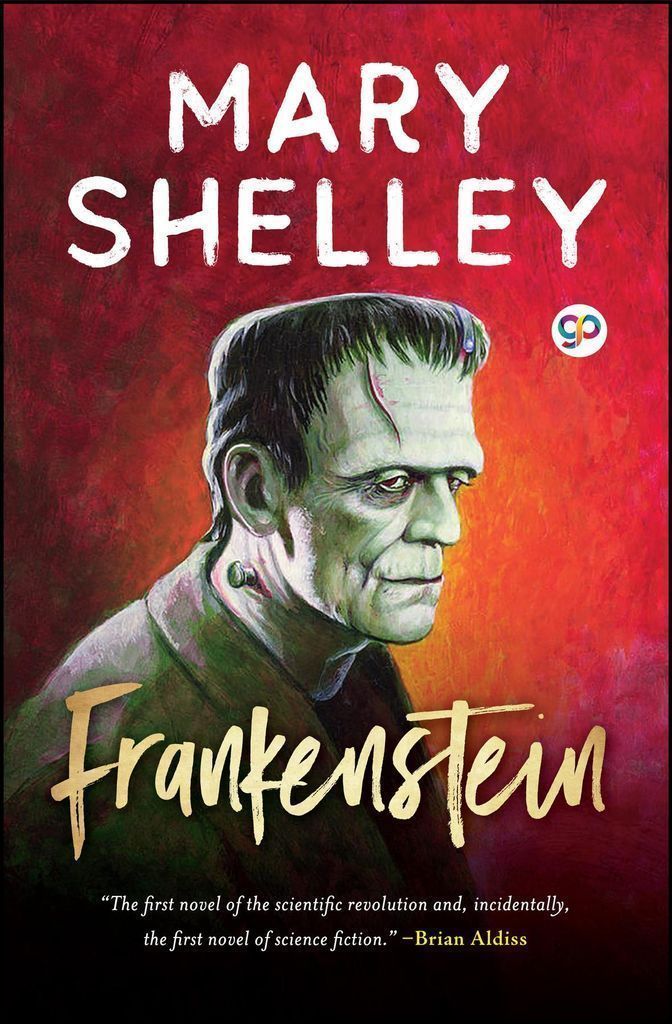
Introduction to Frankenstein
In the annals of world literature, few works have reached the mythic status of Frankenstein by Mary Shelley. Originally published in 1818, Frankenstein is often cited as the first true work of science fiction, blending elements of the Gothic tradition with a cautionary tale about scientific hubris. Written by the visionary Mary Shelley during a rainy summer in Switzerland, the novel Frankenstein challenged the Enlightenment’s blind faith in progress and presented a haunting look at the consequences of playing God. Over two centuries later, Frankenstein by Mary Shelley continues to serve as a mirror for our contemporary fears regarding artificial intelligence, biotechnology, and the ethical boundaries of innovation. In this comprehensive guide, we explore the depths of Frankenstein to understand why Mary Shelley‘s creation remains so terrifyingly relevant today.
Detailed Plot Summary
The narrative of Frankenstein by Mary Shelley is structured as a frame story, beginning with the letters of Captain Robert Walton, an explorer seeking a passage to the North Pole. Walton rescues a freezing, emaciated man named Victor Frankenstein from the ice. Victor begins to recount his life story as a warning to Walton. Victor describes his obsessive studies in natural philosophy at the University of Ingolstadt, where he discovers the secret to imparting life into inanimate matter. Using scavenged body parts, he constructs a large, humanoid being. However, when the being finally opens its eyes, Victor is repulsed by its hideous appearance and flees, abandoning his creation in Frankenstein.
The abandoned Creature, as depicted in Frankenstein by Mary Shelley, wanders the world alone. Though born with an innate kindness, he is met with nothing but horror and violence from every human he encounters. He eventually finds shelter near a cottage, where he secretly observes the De Lacey family. Through them, he learns to speak, read, and understand the depth of human emotion. He finds Victor’s journal in his pocket, discovering the circumstances of his own “birth.” When the De Laceys eventually reject him out of fear, the Creature’s heart turns to bitterness and revenge. He travels to Geneva and murders Victor’s younger brother, William, framing a family servant for the crime to punish the creator who abandoned him in Mary Shelley‘s masterpiece.
The climax of Frankenstein by Mary Shelley occurs when the Creature finds Victor and demands that Victor create a female companion for him, promising to disappear forever if he does. Victor initially agrees but, fearing a “race of devils,” destroys the female creature before completion. Enraged, the Creature vows to be with Victor on his wedding night. He follows through on this threat, murdering Victor’s best friend Henry Clerval and eventually his bride, Elizabeth Lavenza. The rest of Frankenstein follows Victor as he chases the Creature across Europe and into the Arctic wastes. Victor eventually dies of exhaustion on Walton’s ship, and the Creature, discovering his creator’s corpse, expresses immense remorse and vows to end his own life by fire.
Character Analysis
The characters in Frankenstein by Mary Shelley represent the various facets of human ambition and suffering:
- Victor Frankenstein: The tragic protagonist. In Frankenstein, Victor represents the dangers of unfettered intellectual ambition and the failure of parental and moral responsibility.
- The Creature: Often wrongly called “Frankenstein” in pop culture, Mary Shelley creates him as an eloquent, suffering being who is driven to evil by societal rejection and loneliness.
- Elizabeth Lavenza: Victor’s adoptive sister and later his wife. In Frankenstein, she represents innocence and domestic light, which is eventually extinguished by Victor’s mistakes.
- Robert Walton: The narrator of the frame story. His parallels to Victor highlight Mary Shelley‘s theme of the dangerous pursuit of glory.
- Henry Clerval: Victor’s childhood friend who serves as a foil to Victor’s brooding nature, representing a more balanced and humane approach to life in Frankenstein.
Thematic Analysis
A central theme of Frankenstein by Mary Shelley is the Responsibility of the Creator. By abandoning his creation, Victor commits the ultimate sin, suggesting that knowledge without morality is destructive. Mary Shelley also explores the theme of Nature vs. Nurture; the Creature is not born a monster but is made one by a world that refuses to look past his deformities. This underscores the social critique in Frankenstein regarding how we treat those who are different.
The theme of The Sublime and the Natural World is prevalent throughout Frankenstein. Mary Shelley uses the grand, terrifying landscapes of the Alps and the Arctic to reflect the internal states of her characters. Symbols such as Light and Fire are dual-edged in Frankenstein; light represents the clarity of discovery, but fire—as in the subtitle “The Modern Prometheus”—represents the power to destroy. Through these motifs, Mary Shelley crafts a narrative that warns against the “Promethean” desire to steal fire from the gods.
Reader Reactions & Cultural Impact
Readers have been mesmerized by Frankenstein by Mary Shelley for over two hundred years. It has transitioned from a scandalous “shilling shocker” to a staple of academic study and a foundational text for the horror genre. On social media, Frankenstein is often the subject of discussions regarding “Who is the real monster?”—a question Mary Shelley left intentionally ambiguous. The cultural impact of Frankenstein is visible in countless film adaptations, from the 1931 Boris Karloff classic to modern reinterpretations, proving that Mary Shelley‘s story of the “Modern Prometheus” is truly immortal.
About Mary Shelley
Mary Shelley (1797–1851) was the daughter of two radical thinkers, Mary Wollstonecraft and William Godwin. She was married to the Romantic poet Percy Bysshe Shelley. Mary Shelley was only 18 when she began writing Frankenstein, drawing on her own experiences of loss and birth. While Frankenstein remains her most famous work, Mary Shelley was a prolific writer of essays, biographies, and other novels like The Last Man, which is considered one of the earliest examples of post-apocalyptic fiction.
Where to Buy Frankenstein by Mary Shelley
Find your copy of the classic Frankenstein by Mary Shelley at these retailers: