
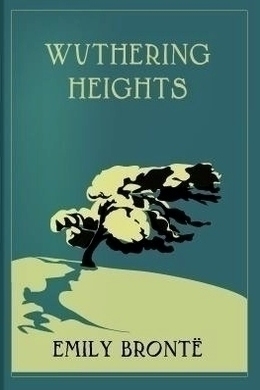
Summary of Wuthering Heights
Emily Brontë’s only novel unfolds through a layered narrative structure beginning in 1801, when Mr. Lockwood, the new tenant of Thrushcross Grange, visits his landlord Heathcliff at the remote farmhouse Wuthering Heights. Forced to stay overnight due to a snowstorm, Lockwood discovers a decades-old diary belonging to Catherine Earnshaw and witnesses something far more disturbing: the ghost of Catherine begging to be let in through the window. This opening sequence immediately establishes why any serious Wuthering Heights book review must grapple with the novel’s Gothic elements—the supernatural intrusion serves not as mere atmosphere but as the psychological key to understanding Heathcliff’s eighteen-year obsession with his lost love.
Wuthering Heights Book Review
Returning to the Grange ill, Lockwood asks his housekeeper Nelly Dean to explain the strange household’s history. Nelly’s story forms the heart of the novel, spanning thirty years of tragic entanglement between two neighboring families, the Earnshaws and the Lintons.
The story begins when Mr. Earnshaw returns from a trip to Liverpool with a dark-skinned orphan boy he names Heathcliff. While Earnshaw’s daughter Catherine immediately befriends the boy, his son Hindley resents him bitterly. After Mr. Earnshaw dies, Hindley reduces Heathcliff to a servant, but Catherine’s bond with him only strengthens as they roam the moors together.
When Catherine is bitten by the Lintons’ dog during a spying expedition, she stays at Thrushcross Grange for five weeks, returning transformed into a proper young lady. She becomes infatuated with Edgar Linton, yet confesses to Nelly that her soul is fundamentally connected to Heathcliff. When Heathcliff overhears Catherine say it would “degrade” her to marry him, he flees Wuthering Heights.
Catherine marries Edgar, but Heathcliff returns three years later, mysteriously wealthy and educated. His revenge unfolds systematically: he marries Edgar’s sister Isabella to torment the family, inherits Wuthering Heights after Hindley’s death, and raises Hindley’s son Hareton as an uneducated servant. Catherine dies after giving birth to her daughter Cathy, but her ghost haunts Heathcliff for eighteen years.
The second generation continues the pattern. Heathcliff forces his sickly son Linton to marry young Cathy, securing ownership of Thrushcross Grange. After Linton’s death, Cathy remains trapped at Wuthering Heights, initially despising the uncivilized Hareton. Gradually, however, she teaches him to read, and their growing love breaks the cycle of cruelty. Heathcliff, tormented by Catherine’s ghost, stops eating and dies with a strange smile on his face. The novel ends with Cathy and Hareton planning their wedding, having escaped the hatred that consumed their predecessors.
Critical Feedback and Analysis
Upon its 1847 publication, Wuthering Heights received scathing reviews. Critics called it “coarse” and “disagreeable,” disturbed by its violence and unsentimental portrayal of human cruelty. Charlotte Brontë later defended her sister’s work in an introduction, explaining that Emily’s mind “would of itself have grown like a strong tree” against the moors she loved.
Modern readers remain equally divided. The novel holds a 3.8 rating on Goodreads, which initially seems low for a literary masterpiece. However, as one reviewer notes, this reflects a fundamental misunderstanding: many readers expect a sweeping romance and instead encounter something far darker. The relationship between Catherine and Heathcliff isn’t meant to be aspirational—it’s a study in obsession, codependency, and the destruction passionate people can wreak on each other and everyone around them.
What makes Wuthering Heights remarkable is its psychological depth. Emily Brontë understood human nature with uncanny precision, depicting how abused individuals become abusers. Heathcliff’s transformation from victim to tormentor is rendered without sentimentality or excuse. He digs up Catherine’s grave eighteen years after her death, has the side of her coffin removed so their remains can decompose together, and spends his final years seeing her ghost everywhere.
The narrative structure itself deserves praise. By filtering the story through Nelly Dean to Lockwood, Brontë creates an unreliable narrator situation that adds fascinating ambiguity. How much of Nelly’s account is accurate? Does she portray herself more favorably than she deserves? Some readers have noted that Nelly seems to know Heathcliff is overhearing Catherine’s crucial confession about loving him, suggesting she deliberately orchestrated the misunderstanding that drives the plot forward.
The second generation storyline, often omitted in adaptations, provides the novel’s redemptive arc. Cathy and Hareton’s love develops gradually through small kindnesses—she leaves books open for him to read, apologizes for her cruelty, and teaches him patiently. Their relationship suggests that cycles of abuse can be broken through deliberate choice and forgiveness.
Joseph, the Bible-obsessed servant, speaks in a thick Yorkshire dialect that many readers find impenetrable. Yet this linguistic choice demonstrates Brontë’s commitment to authenticity and her ability to give even minor characters distinctive voices. As one reviewer notes, deciphering Joseph’s speech becomes part of the reading experience, adding texture to the world Brontë created.
About Author Emily Brontë
Emily Brontë was born in 1818 in Thornton, Yorkshire, the fifth of six children. After their mother’s death, the Brontë children—Charlotte, Branwell, Emily, and Anne—created elaborate imaginary worlds to escape their isolated life at Haworth Parsonage. Emily and Anne invented Gondal, a fictional island that served as the setting for many of their early writings.
Growing up relatively isolated on the Yorkshire moors, Emily developed a deep connection to the landscape that would become the spiritual backdrop for Wuthering Heights. Unlike her sister Charlotte, who sought out society, Emily was intensely private and rarely left Haworth. She worked briefly as a teacher but found the experience miserable and quickly returned home.
In 1846, the three sisters published a joint collection of poetry under male pseudonyms: Currer (Charlotte), Ellis (Emily), and Acton (Anne) Bell. The book sold only two copies, but the sisters continued writing. Emily’s only novel, Wuthering Heights, was published in 1847—the same year Charlotte’s Jane Eyre appeared to immediate success.
Unlike Jane Eyre, Wuthering Heights received harsh reviews that deeply wounded Emily. She died of tuberculosis in December 1848 at age thirty, never knowing that her novel would eventually be recognized as one of the greatest in English literature. She never wrote the introduction her sister later penned defending her work, nor did she see the book’s eventual triumph.
That Emily Brontë produced such a psychologically complex, structurally innovative work with no precedent in her reading experience (she had access to few books beyond her father’s theological library) and no subsequent novels to develop her craft makes Wuthering Heights even more astonishing. As one reviewer observed, “She may have only written one book, but that’s all she needed to do—it changed literature.”
Wuthering Heights Book vs 2026 Movie Comparison
The 2026 adaptation directed by Emerald Fennell, starring Jacob Elordi as Heathcliff and Margot Robbie as Catherine, represents the latest attempt to translate Brontë’s novel to screen. Like most adaptations, it makes significant changes—some effective, others questionable.
Major Differences
- Second generation omitted: The film cuts the entire storyline involving young Cathy, Linton, and Hareton, ending with Catherine’s death. This halves the novel’s content and removes its redemptive arc.
- Character combinations: Hindley is eliminated entirely; his role as abuser is transferred to Catherine’s father, making Heathcliff’s mistreatment more straightforward but reducing the novel’s complex family dynamics.
- Nelly’s role expanded: The movie portrays Nelly as actively manipulative—she deliberately lets Heathcliff overhear Catherine’s degrading comment, withholds information, and fails to summon help when Catherine falls ill. While this diverges from the book’s surface, it aligns with deeper readings that question Nelly’s reliability as narrator.
- Tone shift: Fennell transforms the story into a sexy, tragic romance, dialing down both Catherine and Heathcliff’s cruelty to make them more sympathetic. Heathcliff’s abuse of Isabella becomes consensual if disturbing roleplay rather than the book’s outright torture.
- Modern aesthetic: Despite its period setting, the film employs contemporary stylistic choices, including an infamous scene where Edgar shows Catherine a bedroom with walls made to resemble her skin—a horror-movie touch that divided viewers.
What Works
The film’s opening brilliantly connects love and death, revealing that sounds suggesting sex are actually a man being hanged, with spectators becoming aroused by the violence. This thematic thread continues throughout—death brings Catherine and Heathcliff together (her father’s funeral triggers their affair) and tears them apart (his threat to kill Edgar ends it).
Margot Robbie and Jacob Elordi deliver compelling performances, and the costumes and sets are visually stunning. The film incorporates several of the novel’s most famous lines, including Heathcliff’s plea to Catherine’s ghost: “Be with me always—take any form—drive me mad! Only do not leave me in this abyss, where I cannot find you!”
What’s Lost
By stopping at Catherine’s death, the film misses the novel’s central point: that cycles of abuse can be broken. Young Cathy and Hareton’s love, built on forgiveness and patient teaching, provides the hope entirely absent from the first generation’s destructive passion. Their relationship suggests that while Heathcliff and Catherine were doomed, their successors can choose differently.
The film also abandons the ghostly elements that permeate the book. Catherine’s ghost haunts not only Heathcliff’s imagination but the narrative itself, appearing to Lockwood and reportedly walking the moors with Heathcliff after death. This supernatural dimension adds Gothic depth that Fennell’s more grounded approach sacrifices.
Adaptation History Context
The 2026 version actually resembles the 1939 William Wyler adaptation more than the book—both stop at the halfway point and romanticize the central relationship. Viewers seeking fidelity should watch the 1992 film starring Ralph Fiennes, which includes the second generation and remains the most complete adaptation to date. The 1998 version with Robert Cavanah and the 2009 ITV production with Tom Hardy also attempt fuller adaptations, though none fully capture the novel’s complexity.
As one reviewer notes, “Wuthering Heights is such an intrinsic, dense, and deep book that you can do your best with a film, but the book is just a beast—it’s such a beast. The way it’s told makes it quite hard to adapt because the format is from a couple different narrators, and the way it’s done in the book is just unparalleled.”
Where to Buy and Download
Wuthering Heights is in the public domain and available through multiple sources:
Free Digital Editions
- Project Gutenberg: Multiple ebook formats including EPUB, Kindle, and plain text
- Standard Ebooks: Carefully formatted, beautiful digital edition
- Librivox: Free public domain audiobooks read by volunteers
Print Editions
- Penguin Classics: Includes introduction and notes by Pauline Nestor, widely considered the standard edition
- Oxford World’s Classics: Scholarly edition with extensive notes and contextual materials
- Everyman’s Library: Beautiful cloth-bound edition with introduction by Catherine Frank—a collector’s choice
- Barnes & Noble Leatherbound Classics: Gorgeous illustrated edition perfect for gifting
Audiobooks
- Audible: Multiple versions including narrations by Patricia Routledge and Michael Kitchen
- Libro.fm: Supports local bookstores with each purchase
- Spotify: Includes several audiobook versions for premium subscribers
Comparative Chart: Book vs 2026 Movie
| Aspect | Book (1847) | 2026 Film Adaptation |
|---|---|---|
| Narrative structure | Layered frames via Lockwood and Nelly | Linear narrative |
| Second generation | Full storyline with Cathy Jr., Linton, Hareton | Completely omitted |
| Hindley Earnshaw | Key antagonist, abuses Heathcliff | Combined with father character |
| Heathcliff’s cruelty | Extreme—abuses Isabella, Hareton, Cathy Jr. | Dialed down to maintain sympathy |
| Catherine’s character | Genuinely cruel and selfish | More sympathetic, trapped by circumstances |
| Nelly Dean | Implied unreliable narrator | Actively manipulative plot driver |
| Ghosts | Central—Catherine’s ghost appears | No supernatural elements |
| Isabella’s marriage | Horrific abuse, immediate regret | Disturbing but consensual dynamic |
| Love vs obsession theme | Explored through multiple generations | Focused on tragic romance |
| Redemption arc | Cathy and Hareton break the cycle | None—ends with Catherine’s death |
| Tone | Gothic, dark, psychological | Stylized, sexy, artsy |
| Fidelity to source | N/A | Loose interpretation |
Reader’s Guide: Who Should Read Wuthering Heights
This Wuthering Heights book review wouldn’t be complete without addressing who might appreciate this challenging novel. If you enjoy:
- Psychological complexity and unreliable narrators
- Gothic atmosphere and supernatural elements
- Stories about cycles of abuse and generational trauma
- Beautiful, quotable prose about love and loss
- Characters who are genuinely difficult to like
- Structural innovation and layered storytelling
…then Wuthering Heights will reward your attention.
However, if you prefer:
- Clear heroes and heroines to root for
- Straightforward romances with happy endings
- Easy reading without needing to track characters
- Morally unambiguous situations
…you may struggle with what Brontë created.
As one reviewer aptly noted, reading classics requires “being in a certain mentality to enjoy the book as you go through it but also appreciate the struggle that comes with it.” Wuthering Heights demands active engagement—your mind wandering for a few pages means missing crucial information. Two characters share the name Catherine. Characters are referenced by first or last names interchangeably. Joseph’s dialect requires deciphering.
But for readers willing to invest the effort, the rewards are immense. Emily Brontë created something unprecedented: a novel about the darkest aspects of human nature that nonetheless ends with hope. Her understanding of psychology, her poetic prose, and her structural ambition produced a work that continues to challenge and move readers nearly 180 years later.
Whether you’re reading for the first time or returning to the moors, Wuthering Heights offers something rare in literature—a story that changes as you change, revealing new depths with each rereading. As one reviewer put it, the book “really does need to be reread quite a lot because to really get into the depths of what this book truly means is only met by rereading it numerous times.”
The ghosts of Catherine and Heathcliff walk not only the Yorkshire moors but the landscape of English literature itself, eternal reminders of love’s power to destroy and, occasionally, to redeem.