
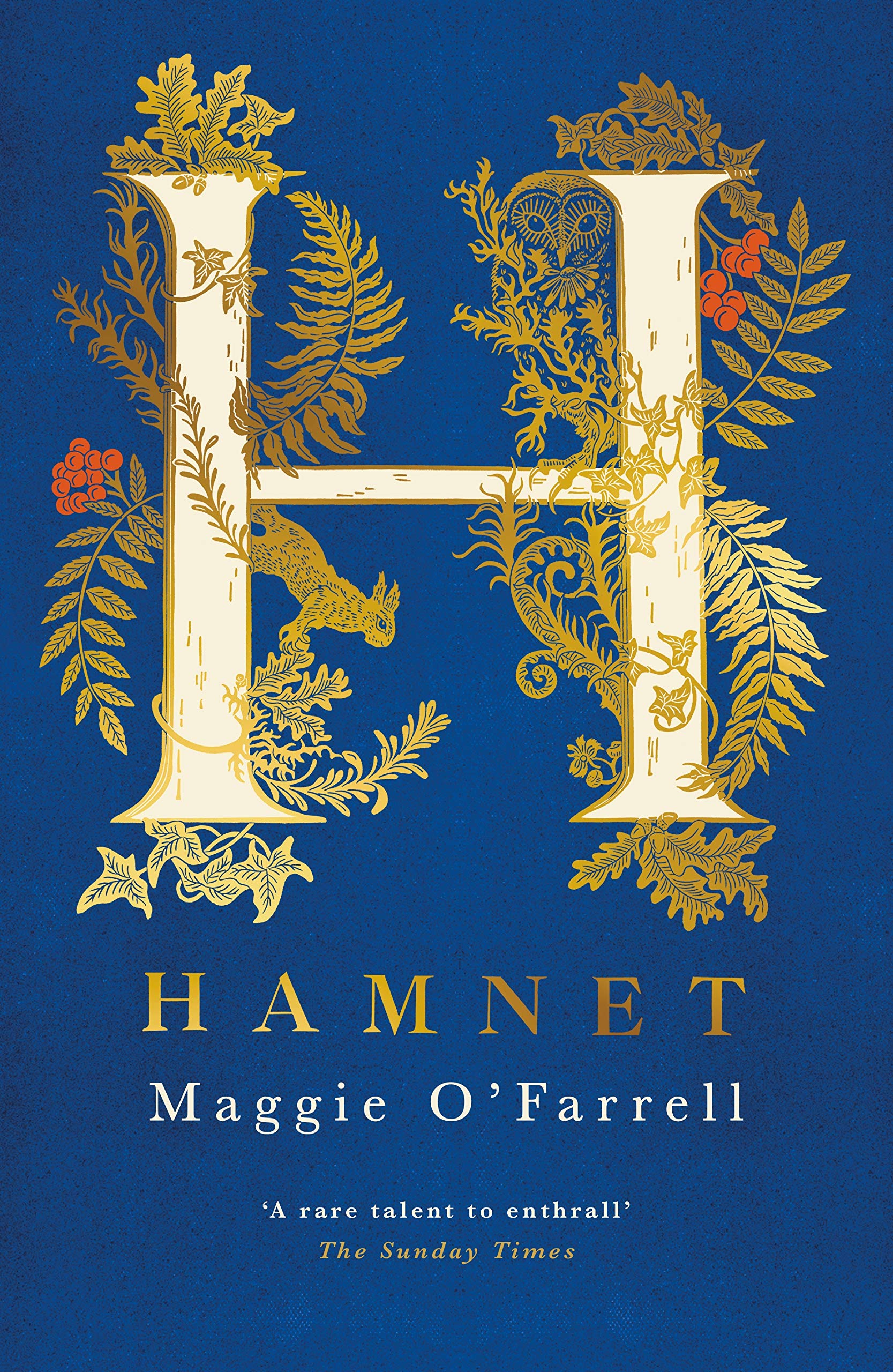
Few novels manage to reshape historical footprints into a deeply personal, breathing reality as beautifully as Hamnet by Maggie O’Farrell. Published to widespread critical acclaim, this historical fiction masterpiece steps away from the grand stages of London to anchor itself in the domestic, wild, and heartbreaking world of Warwickshire in the late 16th century. While the world remembers the timeless plays of William Shakespeare, O’Farrell turns her magnifying glass toward the devastating personal loss that quietly fueled his greatest tragedy.
By centering the narrative on the domestic life of the playwright’s family, the novel serves as a luminous exploration of marriage, maternal instinct, the visceral shock of bereavement, and how untamable grief eventually transforms into timeless art. It is a story where the famous playwright is never explicitly named, referred to instead as the husband, the father, or the Latin tutor, allowing the focus to remain firmly on his family—particularly his extraordinary wife and their ill-fated son.
Quick Book Overview
| Book Title | Genre | Target Audience | Anwar Library Rating |
|---|---|---|---|
| Hamnet | Historical Fiction / Literary Fiction | Fans of lyrical prose, historical drama, and deep psychological character studies. | 4.8 / 5.0 |
Detailed Plot Summary
The narrative of the novel moves fluidly between two primary timelines. The first tracks a terrifying, frantic day in the summer of 1596, when eleven-year-old Hamnet discovers his twin sister, Judith, has suddenly fallen ill with a sudden and severe fever. The pestilence, known dreadfully as the Black Plague, has found its way to their doorstep in Stratford. With their mother away tending to her bees and herbs at a distant property, and their father working in the bustling theaters of London, Hamnet is left to navigate the terrifying realization that his twin’s life is slipping away.
The parallel timeline offers a rich back-story, detailing the unusual courtship and early marriage of a penniless Latin tutor—the son of a fierce, abusive glove-maker—and Agnes, a fiercely independent, ethereal young woman who roams the woods with a kestrel on her wrist. Agnes is perceived by the townspeople as eccentric, strange, or perhaps even dangerous due to her profound spiritual intuition and her uncanny knowledge of medicinal plants and natural remedies. Despite societal expectations and family objections, a powerful bond forms between them, leading to a marriage that soon expands with the birth of their daughter, Susanna, followed by the twins, Hamnet and Judith.
As the two timelines inevitably converge, the family faces an unimaginable tragedy. In an extraordinary act of sibling love and metaphysical trade, Hamnet attempts to trick death to save his twin sister. The sudden, agonizing aftermath of this loss ripples through the household, fracturing the relationship between the grieving mother in Stratford and the grieving father who seeks refuge in his theatrical work across the country. The final act of the novel follows Agnes as she travels to London, driven by a mixture of resentment and confusion, only to witness how her husband has channeled their mutual, unspoken agony into a theatrical triumph named after their lost boy.
The “Real Talk”: Honest Critique
Let’s be completely honest: this book is an absolute emotional powerhouse, but its pacing requires patience. Maggie O’Farrell does not rush her story. Instead, she writes with an incredibly rich, sensory-heavy prose that lingers on the scent of dried lavender, the precise mechanics of glove-making, and the flight patterns of fleas across continents. For readers who prefer fast-paced, plot-driven historical thrillers, the first half of the book might feel overly descriptive or slow.
However, the deliberate build-up is precisely what makes the second half so devastatingly effective. The prose is lyrical, poetic, and sharp all at once. O’Farrell’s portrayal of maternal grief is perhaps some of the most visceral and devastating writing in modern contemporary literature. You do not merely read about Agnes’s pain; you feel it like a physical weight in your chest. If there is any flaw, it is that the playwright himself occasionally feels too distant, a shadow floating on the periphery of the story, though this was undoubtedly a conscious structural choice by the author to keep the spotlight on Agnes.
Character Analysis & Growth
- Agnes (Anne Hathaway): The true protagonist of the novel. Agnes is a magnificent creation—a woman deeply attuned to the natural world, possessing a quiet authority that defies the patriarchal constraints of Elizabethan England. Her growth throughout the novel is a painful trajectory from an untamed, intuitive girl of the woods to a fiercely protective mother, and finally, to a broken woman who must learn how to survive a grief that defies natural order.
- Hamnet: Though his time in the book is cut tragically short, Hamnet is drawn with immense warmth and clarity. He is depicted as a sensitive, somewhat forgetful boy, deeply attached to his twin sister. His ultimate sacrifice highlights a profound innocence and a deep capacity for love that serves as the emotional anchor of the entire narrative.
- The Husband (William Shakespeare): Kept nameless to prevent his historical celebrity from overshadowing the domestic tragedy. He is portrayed as a man torn between two worlds: the suffocating, abusive atmosphere of his father’s house in Stratford and the liberating, creative chaos of London. His grief is quiet, internalized, and ultimately externalized through his immortal words on the stage.
- Judith: Hamnet’s twin sister. She carries a profound guilt and confusion after surviving the plague that took her brother. Her bond with Hamnet shows the unique, almost telepathic connection shared by twins, making his absence a literal missing piece of her own identity.
Vibe Check
If this book were an experience, it would be a cold, misty morning in an ancient forest, smelling of damp earth, woodsmoke, and wild honey, suddenly interrupted by a sharp, heartbreaking cry. The dominant vibes are: Lyrical, Bittersweet, Visceral, Haunting, and Atmospheric.
Thematic Analysis & Symbolism
At its core, the novel is an intense meditation on Grief and Bereavement. O’Farrell masterfully deconstructs the anatomy of a grieving household, illustrating how the same loss can pull a married couple apart into separate, isolated spheres of sorrow. Agnes’s grief is physical, tied to the empty spaces of her home and the clothes her son left behind, while her husband’s grief is expansive, transformed into art on a London stage.
Another profound theme is the Interconnectedness of the World. In one of the most celebrated chapters of the book, O’Farrell traces the journey of the pestilence from a flea on a monkey in Alexandria, across trading ships and ports, all the way to a small dressmaker’s shop in Stratford. This sequence serves as a powerful metaphor for how small, unseen forces can irrevocably alter human destinies across the globe.
Nature and Healing also stand as central motifs. Agnes’s connection to her bees, her kestrel, and her garden represents an alternative form of knowledge and power. The bees, in particular, symbolize the domestic hearth and continuity; their behavior mirrors the health and emotional state of the household, acting as silent witnesses to the family’s changing fortunes.
Reader Reactions & Cultural Impact
Since its release, the novel has become a massive favorite across literary circles, winning the prestigious Women’s Prize for Fiction and the National Book Critics Circle Award. On platforms like Goodreads and BookTok, readers frequently warn newcomers to keep a box of tissues nearby, celebrating the book for its ability to provoke genuine tears. The cultural impact extends beyond the page, reviving public interest in the real historical figure of Hamnet Shakespeare and prompting a critical re-evaluation of Anne Hathaway’s historical reputation, moving her away from the unfair narrative of an unwanted older wife to a woman of immense depth and capability.
Frequently Asked Questions (FAQs)
Is Hamnet based on a true story?
Yes, the novel is based on real historical facts. William Shakespeare and Anne Hathaway (Agnes in the book) did have a son named Hamnet who died at the age of eleven in August 1596, likely from the bubonic plague. A few years later, Shakespeare wrote his famous tragedy, Hamlet, a name that was virtually interchangeable with Hamnet in Elizabethan records.
Do I need to be familiar with Shakespeare’s plays to enjoy this book?
Not at all. The book purposefully avoids using Shakespeare’s name and focuses entirely on the domestic life, relationships, and emotional landscapes of his family. It functions perfectly as a standalone family drama and historical novel.
Is this book suitable for young adult readers?
While the writing style is sophisticated and literary, mature young adults who enjoy historical fiction, deep themes, and poetic prose will find it deeply rewarding. Parents should note that the book deals heavily with the death of a child and intense grief.
Where to Buy & Read
Find your copy of this incredible historical novel through the functional links below: