
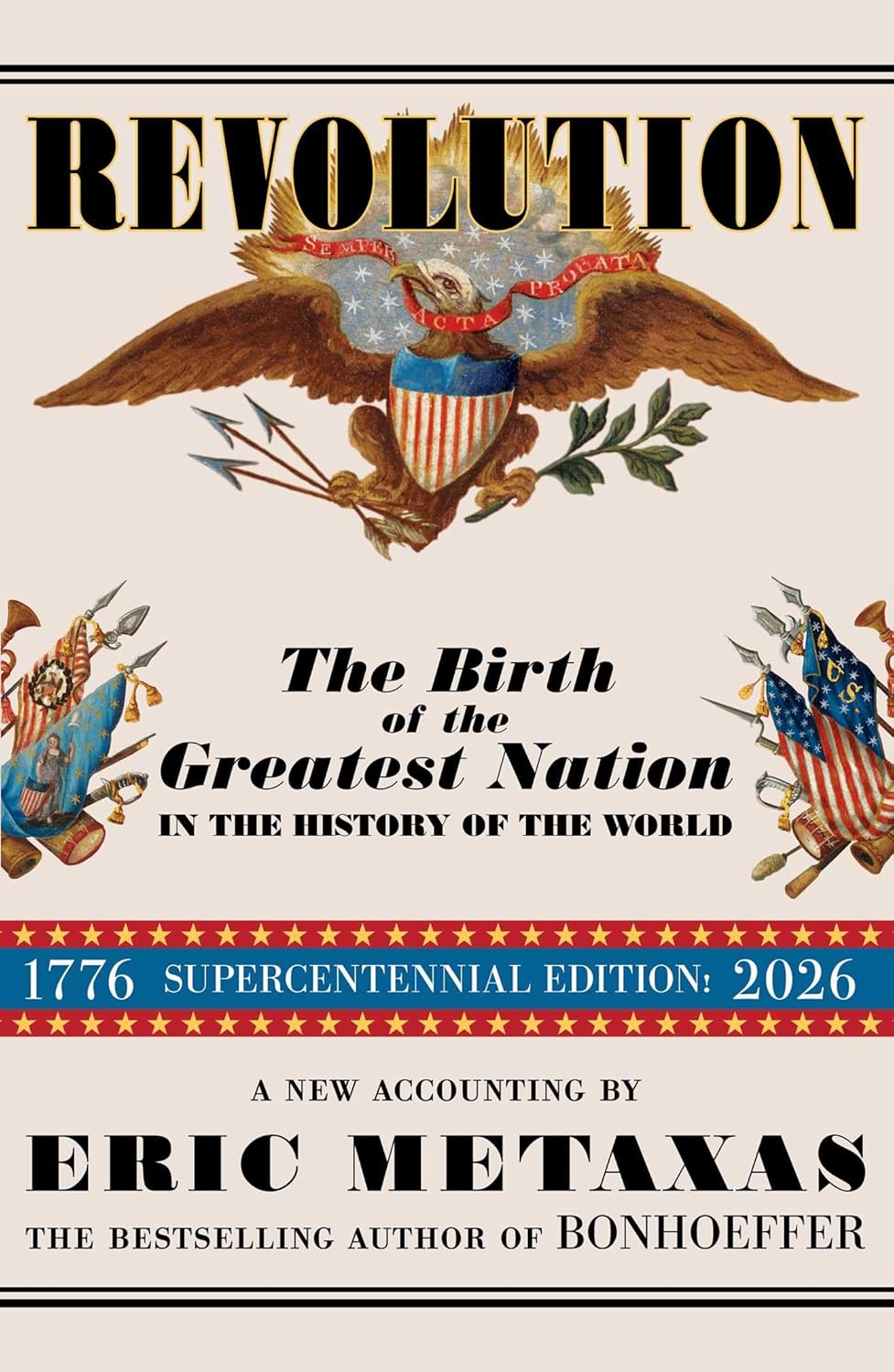
The Battle for the Soul of Civilization: An Introduction
Every era faces a defining moment where the collective landscape shifts beneath its feet. In Revolution, best-selling author and cultural commentator Eric Metaxas delivers a provocative, high-stakes examination of the ideas shifting modern society. Drawing historical parallels that recall the intellectual weight of Os Guinness’s The Dust of Death and the biographical precision of Metaxas’s own groundbreaking work, Bonhoeffer, this book functions as both a warning siren and an ideological map. Metaxas presents a thesis arguing that contemporary cultural upheavals are not random, isolated events, but rather the culmination of historical undercurrents that challenge the core foundations of Western civilization.
Revolution At a Glance: Key Details
| Book Title | Genre | Target Audience | Anwar Library Rating |
|---|---|---|---|
| Revolution | Non-Fiction / Cultural Commentary / History | Readers of historical analysis, religious philosophy, and socio-political critiques | 4.4 / 5.0 |
The Anatomy of Modern Upheaval: Plot Summary of Revolution (No Spoilers)
As a work of non-fiction, Revolution does not trace a fictional narrative arc, but instead builds a structured, chronological argument dissecting historical and philosophical paradigms. Metaxas begins his exploration by defining what a true revolution entails—contrasting movements that established liberty with those that devolved into authoritarian control. He anchors his framework in the ideological shifts of the Enlightenment, tracing how specific philosophical movements gradually decoupled human freedom from absolute moral frameworks, leading to the complex sociopolitical climate observed today.
The core of the book systematically analyzes the institutions currently undergoing radical transformations: higher education, corporate media, religious bodies, and family structures. Metaxas details how traditional principles within these spaces have been systematically deconstructed and replaced by secular alternative frameworks. Rather than merely listing cultural grievances, the text acts as an intellectual detective story, tracing modern slogans and policy shifts back to their historical roots in European academic movements of the nineteenth and twentieth centuries. The book closes its analytical chapters by presenting a choice to the reader regarding the preservation of cultural inheritance versus compliance with sweeping ideological currents.
The Pen as an Ideological Shield: Critical Assessment of the Novel
The “Real Talk”: Pacing, Prose, and Impact
Eric Metaxas writes with a distinctive, high-energy prose style that balances dense philosophical history with a conversational, accessible tone. The pacing of the book is deliberate; Metaxas avoids rushing through complex ideological concepts, ensuring that readers without a background in political theory or theology can follow the connective tissue between historical events and modern realities. His ability to distill complex historical turning points into memorable anecdotes keeps the text engaging, preventing it from reading like a dry academic textbook.
However, the book’s unapologetic, direct stance means it functions as a highly polarizing text. Metaxas does not adopt a detached, neutral posture; he writes with the urgent conviction of an intellectual participant in the culture wars. Readers looking for an exhaustive, secular sociology study may find his overt integration of a classical Christian worldview limiting. Conversely, for readers seeking a bold framework that connects faith, history, and modern political shifts, the sharpness and lack of rhetorical compromise in his arguments provide immense clarity and impact.
Architects of the Mind: In-Depth Character Analysis
Because Revolution is a historical and cultural analysis, the “characters” are the real-world historical figures, philosophers, and institutional leaders whose ideas have sculpted the modern mind. Metaxas evaluates these figures through their philosophical motivations and the long-term societal consequences of their actions.
The Dissidents and Reformers: Metaxas frequently highlights historical figures who stood against tyrannical cultural tides, using their lives as case studies in psychological and moral courage. These figures are analyzed not as flawless icons, but as individuals driven by a deep conviction in absolute truth, acting as foils to the prevailing spirit of their respective eras.
The Secular Ideologues: The book provides an in-depth critique of the thinkers behind radical secular movements. Metaxas analyzes their academic motivations, exploring how their desire to reconstruct human nature independent of traditional frameworks ultimately birthed systemic institutional control. He focuses heavily on their intellectual legacy, showing how their theories migrated from isolated academic spaces into mainstream cultural dominance.
Atmospheric Chemistry: Vibe Check
Urgent: The text carries a palpable sense of historical gravity, warning the reader that cultural shifts possess compounding, long-term consequences.
Intellectual: The narrative relies heavily on philosophical genealogies, requiring the reader to engage with systemic, foundational ideas rather than superficial headlines.
Convicted: Every chapter is saturated with the author’s firm, unshakeable worldview, creating a robust framework that demands a clear response from the reader.
Provocative: Metaxas intentionally challenges mainstream cultural narratives, aiming to disrupt standard assumptions regarding societal progress.
Foundations and Fault Lines: Themes & Motifs Deep Dive
The primary theme driving Revolution is the **inevitable consequences of ideas**. Metaxas fiercely argues that abstract philosophies discussed in academic halls eventually manifest as real-world policies, legal realities, and cultural norms. He utilizes the motif of the “foundation” throughout the text, illustrating that a society’s laws and human rights structures cannot stand if the metaphysical framework that birthed them is thoroughly hollowed out.
Another prominent theme is **the distinction between true liberty and radical autonomy**. Metaxas contrasts the historical revolutions that sought to align human freedom with moral responsibility against those that sought to destroy all boundaries. The book demonstrates that when liberty is redefined as absolute, unrestricted self-will, it paradoxically creates an ideological vacuum that invites authoritarian systems to regulate human behavior.
Who Belongs in the Arena: Target Audience Guide
This book is explicitly designed for readers of serious cultural commentary, historical analysis, and political theology. If you appreciate the sweeping historical narratives and worldview critiques found in the works of Francis Schaeffer, Carl Trueman, or Douglas Murray, Metaxas’s arguments will resonate deeply with you. It is an essential read for individuals seeking to understand the historical roots beneath modern institutional shifts and those looking for a robust, intellectually grounded defense of classical Western values and traditional faith frameworks within the public square.
If You Loved This Drama: Similar Recommendations
The Rise and Triumph of the Modern Self by Carl R. Trueman: An excellent companion piece that provides a detailed historical and philosophical look into how expressive individualism came to dominate Western culture.
Live Not by Lies by Rod Dreher: For readers who want a practical, highly atmospheric exploration of how to preserve faith and personal truth in the face of soft totalitarianism, backed by stories of Soviet-era dissidents.
Letter to the American Church by Eric Metaxas: If you want to explore the immediate ideological predecessor to this book, where Metaxas delivers a sharp, historical comparison between modern institutional silence and the German church’s passivity in the 1930s.
From Intellectual Circles to Podcasting Waves: Cultural Impact and Reader Reactions
Upon publication, Revolution generated intense discussion across literary, political, and theological media platforms. It quickly climbed conservative and religious bestseller charts, becoming a central point of discussion on major talk shows and podcasts. Within faith-based and classical intellectual circles, the book was highly praised for its courage, historical scope, and its refusal to rely on safe rhetorical platitudes. Conversely, mainstream secular critics often reacted strongly against Metaxas’s sharp characterization of progressive movements, sparking vibrant debates online across Goodreads and alternative media outlets regarding the intersection of faith and political philosophy.
About the Author: Eric Metaxas
Eric Metaxas is a prominent American author, speaker, and conservative radio host. He graduated from Yale University, where he edited the Yale Record, and has since authored multiple New York Times bestsellers, including the critically acclaimed biographies Bonhoeffer: Pastor, Martyr, Prophet, Spy and Amazing Grace: William Wilberforce and the Heroic Campaign to End Slavery. His writing has appeared in The New York Times, The Washington Post, and The Atlantic. Metaxas is also the founder and host of “Socrates in the City,” an acclaimed monthly event series based in New York City that hosts conversations on faith, science, and the big questions of life.
Frequently Asked Questions (FAQ)
What is the core premise of Revolution by Eric Metaxas?
The book argues that modern cultural and institutional upheavals are not accidental shifts, but are part of a historical, systematic revolution aimed at deconstructing the classical Christian and philosophical foundations of Western civilization.
How does Revolution compare to Metaxas’s previous books?
While his biographies like Bonhoeffer focus on individual lives within a historical crisis, Revolution is a direct work of cultural and philosophical criticism, analyzing broad institutional movements rather than a single biographical narrative.
Is Revolution strictly a political book?
No. While it addresses socio-political issues, the book analyzes them primarily through the lenses of history, philosophy, theology, and the long-term societal impact of abstract ideas.
Where to Buy & Read
Ready to immerse yourself in this unputdownable book? Use the verified, functional search retail links below to find the best deals on physical, digital, or audio editions: