
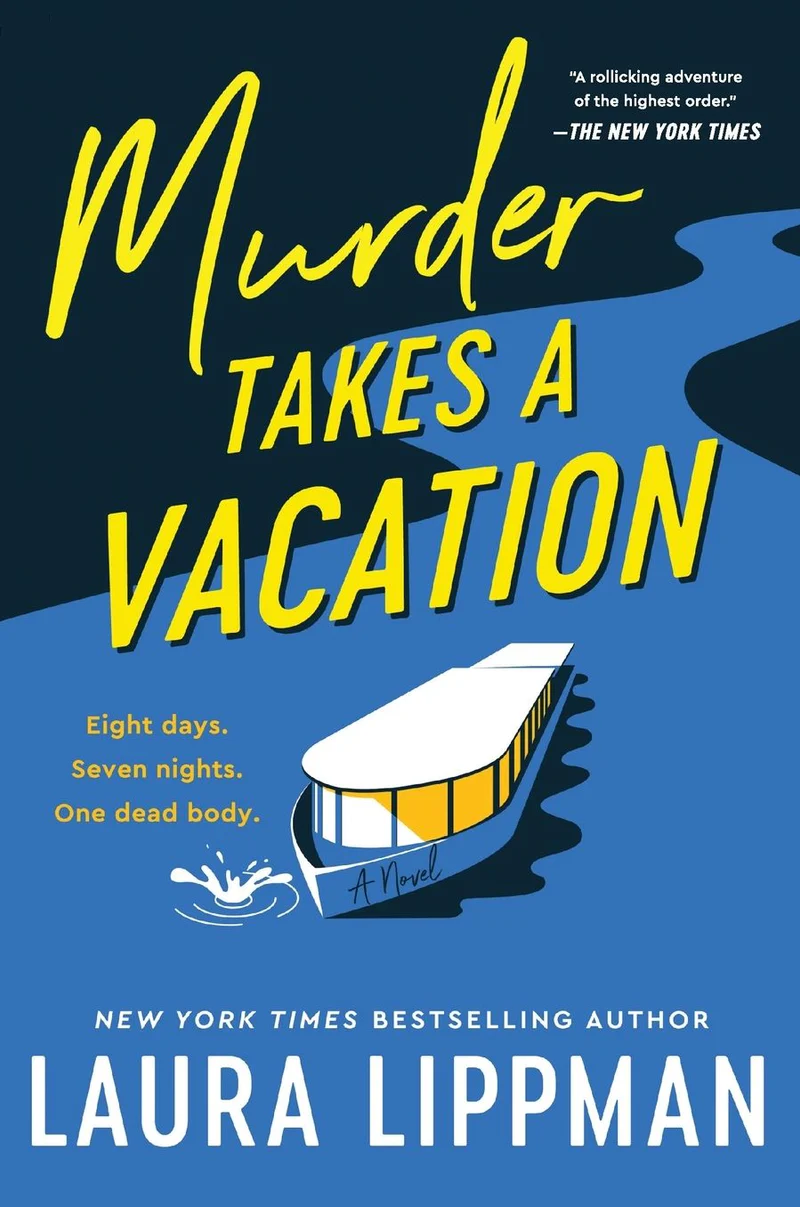
The Poisoned Paradise: Introduction
When a master of gritty, localized noir decides to pack a bag and head somewhere warm, the results are bound to be deliciously volatile. In Murder Takes a Vacation, bestselling author Laura Lippman shifts her razor-sharp focus away from her familiar Baltimore streets to deliver a sun-drenched, deceptively breezy psychological thriller. Evoking the classic structural tension of Agatha Christie’s And Then There Were None while maintaining the sharp, modern social commentary found in Lucy Foley’s The Guest List, Lippman builds a pressure cooker of a novel. She proves that no matter how luxurious the destination, human malice, unresolved secrets, and historical grievances have a way of slipping through customs unchecked.
Anwar Library Review Archive: Key Details
| Book Title | Genre | Target Audience | Anwar Library Rating |
|---|---|---|---|
| Murder Takes a Vacation | Psychological Thriller / Mystery | Fans of locked-room mysteries, complex ensemble casts, and character-driven crime fiction | 4.5 / 5.0 |
The Quick Verdict: Pros & Cons
Murder Takes a Vacation delivers an incredibly sharp, socially conscious update to the classic isolated-resort mystery structure. Lippman trades her usual dark alleyways for a brilliant exploration of interpersonal friction under the sun, though the sheer depth of the character backstories occasionally slows down the central investigation.
- Pros: Exceptionally sharp dialogue that exposes class tensions; a masterfully executed locked-room structure; vivid, highly atmospheric descriptions of the luxury setting.
- Cons: A sprawling ensemble cast that requires close attention in the opening chapters; a mid-book pacing dip dedicated entirely to historical character exposition.
The Golden Cage of Secrets: Plot Summary of Murder Takes a Vacation (No Spoilers)
The premise of the novel kicks off with what should have been the ultimate luxury getaway. A group of long-time friends, professional colleagues, and a few unexpected tagalongs assemble at an exclusive, ultra-private Caribbean island resort. The vacation is funded by a charismatic, wealthy tech entrepreneur whose true motives for gathering this specific group of people remain obscured behind expensive champagne and breezy excursions. The setting is flawless, the staff is highly trained, and the island is completely cut off from the mainland, offering absolute privacy.
However, beneath the veneer of expensive linen and tropical cocktails lies a web of deep-seated resentment, financial desperation, and romantic betrayals. Each guest carries an invisible burden, and it quickly becomes apparent that their host knows far more about their personal secrets than he lets on. As the initial days unfold, subtle mind games turn into overt confrontations, splitting the group into fragile alliances. The atmosphere shifts from a relaxing retreat to a psychological minefield where every conversation feels like an interrogation.
The breaking point arrives when a sudden tropical storm rolls in, knocking out the island’s satellite communications and preventing any watercraft from leaving or approaching the resort. That very night, a prominent member of the group is found dead inside a locked room under highly suspicious circumstances. With no outside help available, no law enforcement to take charge, and a killer explicitly trapped on the island with them, the remaining vacationers must navigate their own paranoia to uncover the truth before the body count rises.
The Ruined Cabana of Truth: Murder Takes a Vacation Ending Explained & Plot Twists (Spoilers)
Click to expand the deep-dive spoiler zone
🚨 WARNING: Major Spoilers Ahead! Do not expand this section unless you have finished the book.
The final act of the novel unravels the carefully constructed facade of the entire vacation group. As the survivors frantically try to piece together the timeline of the locked-room murder, the narrator uncovers a hidden surveillance system installed by their wealthy host. The cameras reveal that the murder was not a crime of sudden passion, but a meticulous execution tied to a corporate cover-up from the group’s college years—a scandal that resulted in a classmate’s ruin.
The ultimate twist reveals that the killer was none other than the quiet, seemingly detached tagalong who had been brought along as an assistant. She was actually the younger sister of the ruined classmate, working in tandem with the host, who wanted to force a confession out of his old friends. However, the plan spiraled completely out of control when the victim threatened to expose the host’s own financial fraud, forcing the assistant to act prematurely to protect her vengeful agenda.
In a thrilling, rain-slicked confrontation on the resort’s helipad, the remaining survivors manage to disarm the killer just as the storm breaks. The book wraps up with a cynical, haunting look at the aftermath: while the mystery is technically solved, the survivors return to the mainland permanently altered, their relationships completely shattered, and the realization that wealth can buy isolation, but it can never truly bury the past.
Sizzling Satire vs. Methodical Detection: Critical Assessment of the Novel
The “Real Talk”: Pacing, Prose, and Impact
Laura Lippman shines brightest when she is peeling back the layers of polite society to show the rot underneath. Her prose in this book is incredibly sharp, dripping with a dry wit that perfectly satirizes the hyper-wealthy and the aspirational middle class trying to keep up with them. The dialogue feels organic, sharp, and constantly double-edged, making even the quietest dinner scenes feel fraught with danger.
However, the pacing might split opinions among hardcore thriller purists. Lippman spends a massive amount of real estate on the front-end building up the psychological dynamics of her cast before the first drop of blood is spilled. For readers who love deep character studies and slow-burn domestic suspense, this is a masterclass. Those expecting a fast-paced, action-heavy procedural might find themselves checking the page count before the storm finally hits.
The Fractured Mirror of Privilege: In-Depth Character Analysis
The strength of this novel rests heavily on its deeply flawed, fascinatingly complex characters. The host acts as a brilliant modern-day Gatsby figure—excessively generous yet fundamentally hollow, using his immense wealth as a shield against accountability. His interactions with the rest of the cast drive the underlying tension, as he constantly dangles financial lifelines over his desperate friends.
The standout character arc belongs to the primary viewpoint protagonist, who serves as the moral anchor of the story. As a self-made professional who feels perpetually out of place among old money, her perspective provides a grounded, cynical commentary on the group’s behavior. Her journey from trying to fit in to actively dismantling the group’s collective lies forms the true emotional core of the narrative.
Atmospheric Chemistry: Vibe Check
Sun-Drenched: The bright, vivid descriptions of the tropical paradise create a stunning contrast with the dark, ugly deeds happening in the shadows.
Paranoid: Once the isolation sets in, every glance, half-spoken sentence, and locked door becomes a source of extreme anxiety for the cast.
Cynical: The overarching tone is a sharp, unsparing look at how far people will go to protect their social standing and financial security.
The Cost of Complicity: Themes & Motifs Deep Dive
The primary thematic battleground of the text is the intersection of wealth, privilege, and historical accountability. Lippman uses the isolated resort setting as a microcosm of society, showing how economic dependence can breed absolute moral complicity. The characters are completely paralyzed not just by the fear of a killer, but by the terrifying prospect of losing their access to wealth and influence.
Another major motif is the concept of the “vacation” itself as a psychological delusion. The characters mistakenly believe that changing their physical location will allow them to escape their real-world problems. Lippman systematically dismantles this idea, proving that geographical isolation only strips away the distractions that keep people from confronting their truest, ugliest selves.
The Luxury Thriller Enthusiast: Target Audience Guide
This book is a must-read for fans who love high-society drama mixed with dark, atmospheric crime elements. If your reading list is full of titles by Liane Moriarty, Lucy Foley, or Ruth Ware, this will fit perfectly on your shelf. It is an ideal beach read that challenges your intellect while providing a deliciously tense escape.
If You Loved This Drama: Similar Recommendations
The Club by Ellery Lloyd: A highly addictive, dark thriller set inside an ultra-exclusive luxury celebrity resort located on a private island off the English coast where things go horribly wrong.
Reckless Girls by Rachel Hawkins: A atmospheric, sun-soaked gothic suspense novel about a group of young travelers who maroon themselves on a beautiful, haunted Pacific atoll with a dark history.
One by One by Ruth Ware: For readers who want to experience the exact opposite climate but the identical locked-room dread, this thriller traps an alpine tech corporate retreat inside a luxury chalet during a deadly avalanche.
The Summer Reading Rush: Cultural Impact and Reader Reactions
The book has generated immense buzz across BookTok and Goodreads, instantly securing its spot on numerous “Ultimate Summer Thriller” lists. Readers consistently praise Laura Lippman for her ability to breathe fresh, contemporary life into the traditional locked-room mystery formula, noting that the social commentary elevates it far above standard popcorn thrillers.
About the Author: Laura Lippman
Laura Lippman is a highly acclaimed, New York Times bestselling American author who spent twenty years working as a journalist, including a distinguished tenure at The Baltimore Sun. Her journalistic background gives her fiction a distinct edge of social realism and structural precision. She has won almost every major award in mystery writing, including the Edgar, Anthony, and Agatha awards, solidifying her status as a titan of modern crime fiction.
Frequently Asked Questions (FAQ)
Q: Is Murder Takes a Vacation part of a series?
A: No, this is a completely standalone psychological thriller, making it a perfect entry point for readers new to Laura Lippman’s work.
Q: How gory or violent is the book?
A: The novel focuses far more on psychological suspense, character dynamics, and intellectual detective work than on explicit violence or gore.
Q: Does the book have a definitive resolution?
A: Yes, unlike minimalist existential fiction, this mystery provides a complete, logical resolution to the central locked-room puzzle by the end of the story.
Where to Buy & Read
Ready to immerse yourself in this unputdownable book? Use the verified, functional search retail links below to find the best deals on physical, digital, or audio editions: