
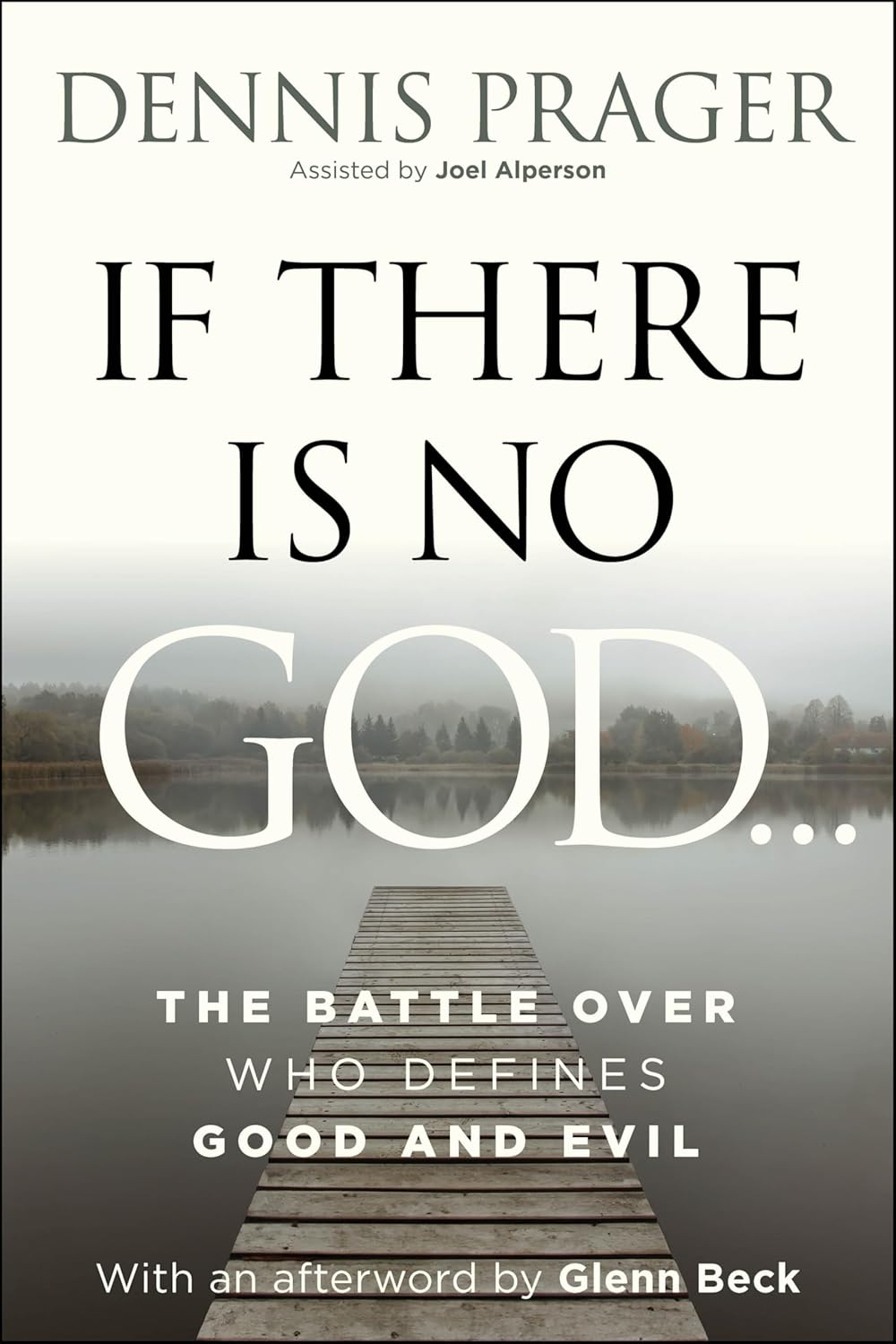
In the intellectual arena where faith meets reason, Dennis Prager stands as a formidable voice. In his provocative work, If There Is No God, Prager distills decades of theological study and radio commentary into a concise, hard-hitting argument about the necessity of a divine foundation for objective morality. This is not just a book for the religious; it is a challenge to the secular world-view, asking the fundamental question: Can goodness survive without a Transcendent source?
Book Comparison at a Glance
| Book Title | Genre | Target Audience | Rating |
|---|---|---|---|
| If There Is No God | Philosophy / Apologetics | Thinkers, Skeptics, & Believers | 4.7 / 5 |
Key Arguments Summary
If There Is No God is structured as a series of logical progressions rather than a traditional narrative. Prager begins with the premise that if there is no God, morality is entirely subjective—a matter of opinion, like choosing a favorite color. He argues that without a “Commander” (a Higher Power), there are no objective “Commands.”
The book delves into the consequences of a Godless universe, exploring how secularism struggles to define human value. Prager asserts that if humans are merely sophisticated biological accidents, then human life has no intrinsic sanctity beyond what we decide to give it. He meticulously separates the idea of “being a good person” from “objective morality,” acknowledging that an atheist can be a saintly individual while arguing that their moral framework lacks a solid, unchanging foundation.
The “Real Talk”: A Critical Deep Dive
Let’s cut to the chase: Prager’s writing is punchy, unapologetic, and designed to provoke. He doesn’t waste time with flowery academic jargon. The strength of this book lies in its clarity; even if you disagree with his premise, you cannot misunderstand his point.
However, critics often point out that Prager relies heavily on the “consequentialist” argument—that we need God for society to function, which isn’t the same as proving God exists. For readers looking for scientific proofs of the Divine, this isn’t that book. This is a work of social and moral philosophy. The emotional impact comes from Prager’s urgency; he writes as if the very survival of Western civilization depends on the ideas within these pages.
Thematic Deep Dive: Morality vs. Secularism
The central theme is Moral Relativism. Prager argues that secular societies inevitably slide into a state where “murder is wrong” is reduced to “I personally dislike murder.” He uses historical examples to show how secular ideologies (like Nazism or Communism) filled the vacuum left by the departure of God with catastrophic results.
Another major theme is the Sanctity of Life. Prager posits that human rights are “endowed by their Creator,” not granted by governments. If the state gives you rights, the state can take them away. This theme resonates deeply in contemporary political discourse, making the book feel highly relevant to modern readers. For a deeper historical exploration of these metaphysical shifts, you can read our comprehensive rachel wilson occult feminism review to see how these spiritual transformations directly manifested in political movements.
Vibe Check
- Intellectually Challenging
- Conviction-Driven
- Sobering
- Direct
Logic and Character of Prose
Prager uses what he calls “Ethical Monotheism” as his guiding light. The prose is structured like a legal brief—point by point, anticipating counter-arguments before they are even made. There is a certain “tough love” quality to his writing; he isn’t here to soothe the reader but to wake them up to the logical ends of their own beliefs.
Reader Reactions & Cultural Impact
The book has a polarized reception, typical of Prager’s work. On platforms like Goodreads, it maintains a high rating from those who appreciate its clarity and defense of traditional values. On “BookTok” and secular forums, it is often a catalyst for intense debate regarding the definition of secular humanism. Regardless of the side, it is widely cited as a definitive text for understanding the “Moral Argument” for theism in the 21st century.
About Dennis Prager
Dennis Prager is an American conservative radio talk show host and writer. He is the founder of PragerU, a digital media organization that creates short videos on various topics from a conservative perspective. He is a scholar of Jewish history and the Torah, and his work often focuses on the intersection of religion, politics, and daily life. His notable works include The Rational Bible and Happiness Is a Serious Problem.
Frequently Asked Questions
Q: Is this book only for religious people?
A: Not at all. It is primarily written for those who are curious about the logical foundations of morality, including atheists and agnostics.
Q: Does Prager use the Bible to prove his points?
A: While his worldview is biblical, he uses reason and logic to make his case, rather than simply quoting scripture as an absolute authority.
Q: How long is the book?
A: It is a relatively short and concise read, focusing on density of thought rather than page count.