
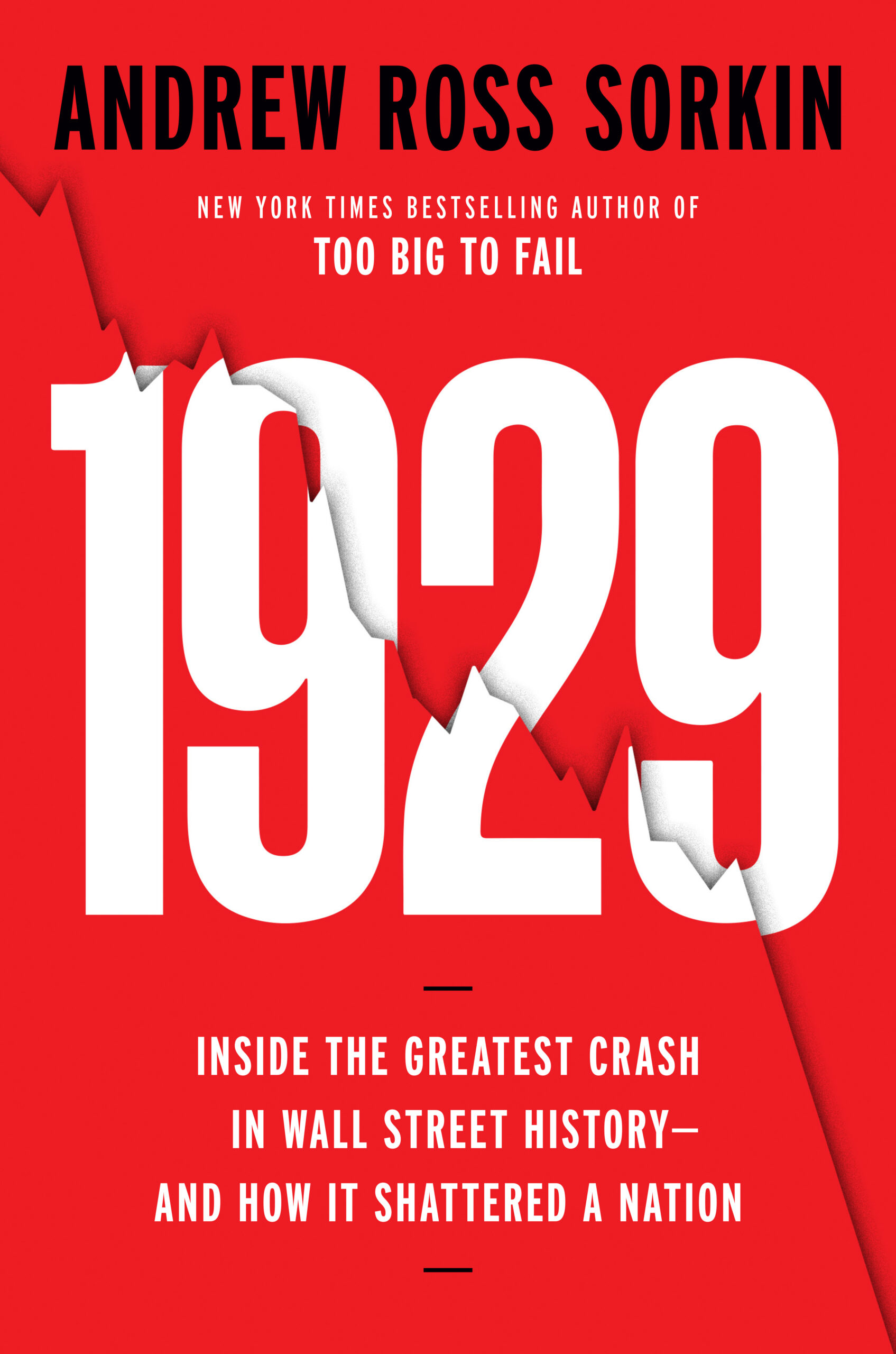
TL;DR: The Verdict
Must-Read. Andrew Ross Sorkin delivers a masterful financial thriller with 1929. Moving seamlessly from his iconic Too Big to Fail framework, Sorkin combines forensic historical research with white-knuckle prose, transforming dead archival records into a vivid human tragedy of greed, delusion, and systemic collapse. A brilliant blueprint for understanding modern economic cycles.
Financial History Comparison
| Title | Genre | Difficulty Level | Final Score |
|---|---|---|---|
| 1929: Inside the Greatest Crash in History | Narrative Financial History | Intermediate | 9.6 / 10 |
| Too Big to Fail | Modern Corporate Finance | Advanced | 9.8 / 10 |
| The Great Crash, 1929 (Galbraith) | Academic Economics | Advanced | 9.0 / 10 |
Comprehensive Plot Summary
For years, readers tracking andrew ross sorkin books wondered if the acclaimed CNBC anchor and Billions co-creator would ever look backward instead of analyzing contemporary market crises. After eight years of grueling research, Sorkin answers with 1929: Inside the Greatest Crash in Wall Street History—and How It Shattered a Nation.
The book’s chronological trajectory begins on February 1, 1929, roughly seven months before the catastrophic collapse of the New York Stock Exchange. Sorkin guides us through the final, intoxicating peaks of the Roaring Twenties, where the Dow Jones Industrial Average soared to an unprecedented high of 381.17. We watch as a hyper-connected network of corporate titans, speculative stock pools, and institutional enablers create an artificial economic paradise built on ten percent margin requirements and toxic leverage.
Without relying on dry economic jargon, Sorkin charts the systematic countdown to Black Thursday and Black Tuesday. The narrative details how unvetted optimism blindsided Washington regulators and caused the Federal Reserve to hesitate until the market’s internal architecture fractured under immense margin calls. The book does not stop at the panic on the exchange floor; it traces the cascading fallout across a four-year window, ending on June 31, 1933. By documenting the early, painful dawn of economic recovery, Sorkin provides a holistic 1929 andrew ross sorkin summary that explores how a localized Wall Street panic transformed into a global societal catastrophe.
The “Real Talk”: Critical Review
When assessing an andrew ross sorkin review, readers expect a microscopic focus on the psychological motivations of billionaires and policy architects. Sorkin brings the same signature “fly-on-the-wall” reporting that defined his too big to fail andrew ross sorkin summary archives into a period piece, making events from nearly a century ago feel as immediate and urgent as a breaking news notification on CNBC.
Sorkin’s prose is exceptionally agile. He transforms cold data points into a breathless narrative by leveraging personal diaries, local weather conditions, architectural blueprints, and obscure personal correspondence. The pacing mirrors the volatile nature of the market itself—stretching out during the euphoric summer of 1929 to build anticipation, and accelerating into frantic, hour-by-hour sequences when the ticker tapes fall behind real-time trading volumes.
However, an honest critique reveals a minor weakness in Sorkin’s approach. His historical perspective remains heavily concentrated on the upper crust of society. We spend countless chapters in smoke-filled private clubs, luxury yacht suites, and corporate boardrooms. While this technique effectively exposes the elite hubris that catalyzed the crash, the devastating economic reality of the working class can feel like background static. The book argues that societal inequality was a structural cause of the disaster, yet its emotional core remains tied to the spectacular fall from grace of the era’s financial elite rather than the systemic suffering of ordinary citizens.
Character Deep-Dive & Wall Street Hubris
A compelling aspect of this narrative is 1929 andrew ross sorkin characters and their deep psychological profiles. Rather than painting these historical figures as distant monuments, Sorkin captures them as flawed, vulnerable, and dangerously naive individuals operating within a feedback loop of unearned confidence.
- Charles Edwin Mitchell: The Chairman of National City Bank who emerges as the definitive symbol of institutional overconfidence. Driven by an uncompromising belief in continuous market growth, Mitchell expanded retail stock sales to ordinary citizens, tying public financial security directly to speculative corporate pools.
- Thomas William Lamont: The elegant face of the House of Morgan. Lamont attempts to repeat the historic market interventions executed by J.P. Morgan during the 1907 crisis. His character arc captures the realization that the scale of modern industrial speculation had outgrown the stabilizing capabilities of private banking consortia.
- William Crapo Durant: The legendary founder of General Motors turned rogue market speculator. Durant represents the chaotic vanguard of the “stock pool” era, manipulating equity prices through artificial trades and intentional press leaks to lure small retail investors into vulnerable market positions.
- Jesse Livermore: The famous “Boy Plunger” who stands as the book’s tragic, isolated visionary. Disliked by the optimistic financial establishment for his short positions, Livermore correctly identified the market’s unsustainable trajectory, securing a historic hundred-million-dollar fortune while losing his psychological stability in the process.
Vibe Check
If you want to know what reading this book feels like, here is the quick vibe check: Cinematic, Claustrophobic, Ominous, Sophisticated, and Cautionary. It reads like an archival cross-examination crossed with a high-stakes corporate political drama.
Thematic Analysis & Today’s Resonance
The core theme of 1929 is the seductive danger of the phrase, “this time is different.” Sorkin explores how institutional memory degrades over time, allowing speculative manias to rebrand themselves across successive generations. The asset bubbles of 1929 mirror modern real estate anomalies, tech market valuations, and digital currency expansions.
Sorkin also highlights the complex, adversarial relationship between Wall Street and Washington. The book portrays a federal government paralyzed by ideological indecision, anxious about interfering with economic growth, and structurally incapable of regulating innovative financial mechanisms. It is an exploration of accountability, showing how easily risks can be socialized while rewards remain concentrated among institutional insiders.
Beyond the pages of economic history, public curiosity often surrounds the authors themselves, tracking trends ranging from an andrew ross sorkin book tour to discussions about his andrew ross sorkin eye condition or distinctive eyes on television. This broad interest underscores Sorkin’s status not merely as a financial historian, but as a prominent cultural commentator whose work bridges the gap between historical analysis and modern media commentary.
Reader Reactions: BookTok & Goodreads
On andrew ross sorkin goodreads communities and financial literature forums, early reviews praise the book’s deep investigative scope and narrative accessibility. Readers frequently compare it to Too Big to Fail, noting that while the 2008 account relied on direct personal interviews, 1929 successfully achieves a similar level of forensic detail using purely historical archives.
On broader social channels like BookTok, readers highlight the chilling contemporary relevance of the text. Users often share striking quotes from 1920s asset managers that match modern retail trading rhetoric. While academic economists argue that the book focuses heavily on character drama rather than macroeconomic modeling, the general reading public appreciates its focus on human psychology and institutional dynamics.
Frequently Asked Questions (FAQ)
Is Andrew Ross Sorkin’s 1929 a standalone book?
Yes. While it shares structural similarities and thematic elements with his work on the 2008 financial crisis, it is a fully self-contained narrative focusing entirely on the historical parameters of the Great Crash.
How long did it take to research and write this book?
Sorkin spent eight years researching and writing the manuscript, compiling over one hundred pages of extensive notes, references, and previously unanalyzed archival documents.
Does the book explain how to predict modern market crashes?
While it is not an investment manual, the book serves as a structural blueprint by highlighting recurring behavioral indicators, regulatory failures, and speculative vulnerabilities that typically precede major systemic corrections.
Is there a German translation available for this book?
With high international demand, readers tracking terms like andrew ross sorkin 1929 deutsch or deutsche übersetzung will find that European editions and localized translations are distributed through major global publishing networks.
Where to Buy
Secure your copy of this definitive narrative history through the verified distribution links below: