
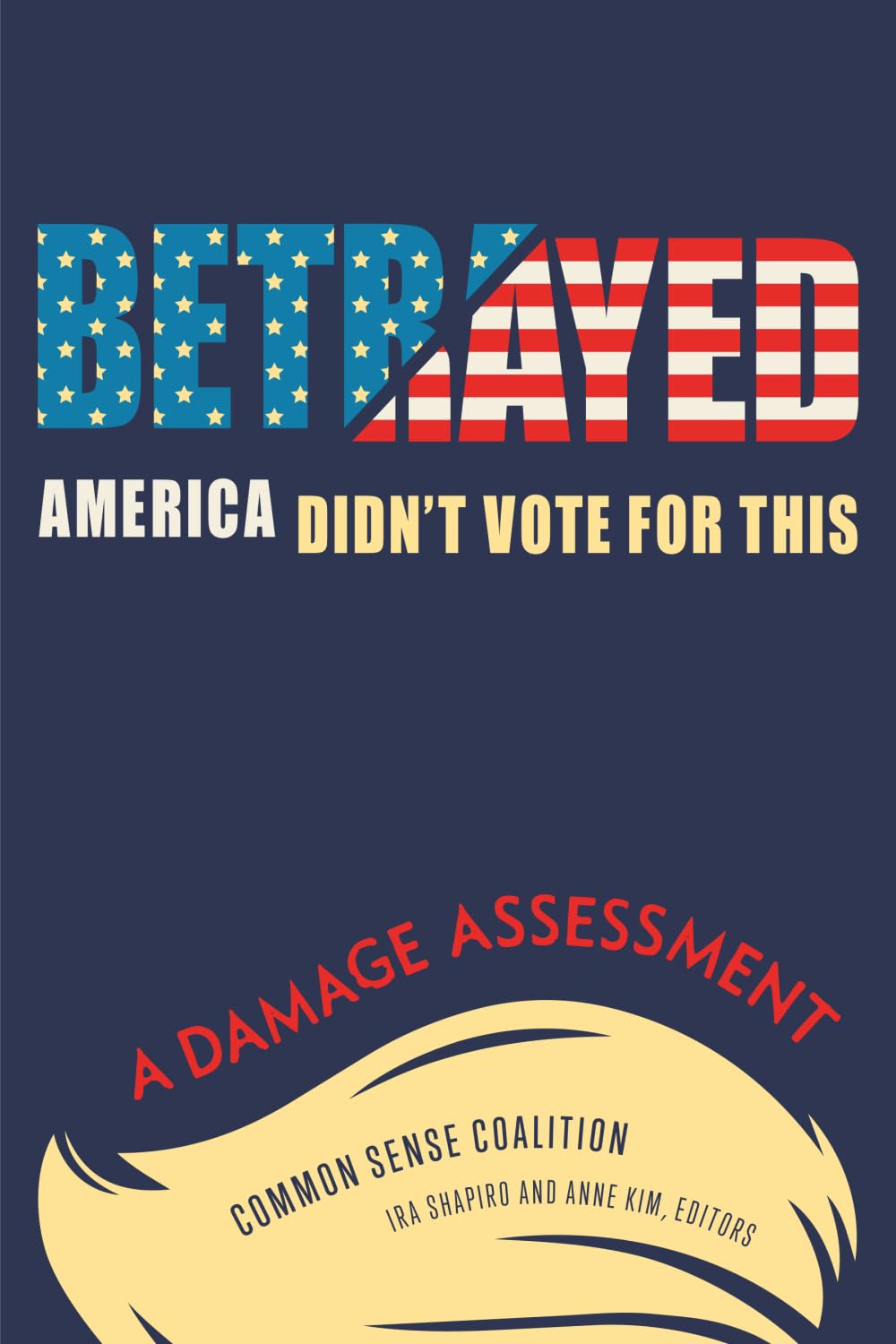
The Anatomy of Civic Disenchantment: Introduction
Stepping into the arena of contemporary political manifestos requires a willingness to confront a landscape defined by deep polarization and structural exhaustion. In Betrayed: America Didn’t Vote for This by the Common Sense Coalition, readers find themselves presented with a systematic indictment of modern governance that echoes the populist frustrations of our era. This collective text functions less like a standard academic overview and more like an analytical grievance ledger, drawing thematic comparisons to the institutional critiques of writers like Thomas Frank or the urgent systemic warnings found in Christopher Lasch’s foundational sociological essays. The Common Sense Coalition approaches the American political ecosystem not as an ideological battleground, but as a system experiencing structural drift, where the desires of the electorate have become uncoupled from actual policy outcomes.
Betrayed: America Didn’t Vote for This At a Glance: Key Details
| Book Title | Genre | Target Audience | Anwar Library Rating |
|---|---|---|---|
| Betrayed: America Didn’t Vote for This | Political Nonfiction / Current Affairs | Readers interested in institutional reform, policy analysis, and systemic political critique. | 3.9 / 5.0 |
The Diagnostics of Institutional Failure: Plot Summary of Betrayed: America Didn’t Vote for This (No Spoilers)
As a work of political nonfiction, the text does not follow a fictional narrative arc or individual protagonists; instead, it establishes a logical roadmap investigating the widening gap between campaign rhetoric and governing reality. The book outlines how specific legislative priorities, economic strategies, and bureaucratic transformations have shifted away from the explicit mandates expressed by the voting public during recent election cycles. The authors compile data across various sectors—including domestic manufacturing, fiscal management, and institutional transparency—to argue that a professional managerial class has effectively insulated policy-making from democratic accountability.
The chapters trace the evolution of this institutional detachment, examining how special interest groups, lobbying networks, and regulatory capture combine to distort original legislative intents. Rather than laying blame solely at the feet of a single political party, the Common Sense Coalition examines systemic incentives that cause elected officials to prioritize partisan consolidation over structural representation. The core analysis moves toward a detailed investigation into how modern media structures and digital communication frameworks exacerbate this dynamic, keeping the electorate distracted by culture wars while foundational public policies are altered without broad public consensus.
Rhetorical Rigor vs. Polemical Friction: Critical Assessment of the Novel
The “Real Talk”: Pacing, Prose, and Impact
Evaluating this book review requires an objective assessment of how effectively the text balancing its underlying passion with empirical evidence. The writing style is direct, clear, and unembellished, relying heavily on data visualization, policy case studies, and accessible economic metrics to make its arguments. This directness ensures that complex regulatory changes are easy for a general reader to digest. However, the structural pacing encounters friction in the central chapters, where the text relies on repetitive assertions regarding institutional betrayal to hammer home its points. While these repetitions serve to unify the collective authors’ voices, they occasionally overshadow the more nuanced policy analyses that give the book its genuine intellectual weight. The book succeeds as a catalyst for discussion, though its polemical framework may cause readers seeking a detached, purely scholastic overview to find its tone overly urgent.
The Electorate and the Institution: In-Depth Character Analysis
In the framework of macro-political nonfiction, individual characters are replaced by structural entities that drive the book’s thesis forward. The primary “protagonist” of the text is the American Electorate—depicted as a diverse, ideologically complex, yet consistently marginalized body searching for economic stability and civic transparency. The authors trace the psychological impact of sustained institutional disappointment on this group, showing a trajectory that moves from hopeful civic participation to profound cynicism.
The “antagonist” is framed as the Institutional Deep-State or the Interconnected Bureaucratic Elite. This entity is analyzed not as a theatrical conspiracy, but as an organic accumulation of regulatory bodies, career consultants, and corporate donors whose primary motivation is self-preservation and the maintenance of the status quo. The book focuses on how this system neutralizes populist reforms by processing them through endless legalistic delays and bureaucratic reinterpretations.
Atmospheric Chemistry: Vibe Check
Urgent: The text maintains a high-stakes, direct tone designed to provoke immediate awareness and civic re-examination.
Analytical: Backed by white papers, policy timelines, and structural charts that ground the rhetoric in verifiable events.
Populist: Driven by a consistent focus on defending the everyday citizen against distant, consolidated administrative power.
The Currency of Democratic Consent: Themes & Motifs Deep Dive
The foundational theme of Betrayed: America Didn’t Vote for This is the decay of representation within modern democratic republics. The authors use the metaphor of a broken contractual agreement to explain how modern governance functions, illustrating how the “votes” of citizens are treated as capital during campaigns but discarded during actual legislative sessions. A recurring motif throughout the text is the “bureaucratic blind spot”—the structural inability of isolated metropolitan decision-makers to comprehend the material realities of working-class communities. The book also provides an analysis of linguistic distortion, showing how terms like “comprehensive reform” are often used in legislative naming conventions to obscure policies that actively run counter to public preference.
The Citizens’ Assembly Guide: Target Audience Guide
This text is specifically crafted for readers who appreciate independent political commentary that challenges mainstream party narratives. If your reading history includes the systemic critiques of figures like Glenn Greenwald, Matt Taibbi, or historical commentators like political scientist political analysts, the Common Sense Coalition’s collaborative approach will fit comfortably on your shelf. It appeals directly to individuals who favor structural institutional reform over cosmetic electoral changes and those looking for an accessible entry point into modern policy analysis.
If You Loved This Drama: Similar Recommendations
Listen, Liberal by Thomas Frank: Offers an equally sharp, data-driven look into how political institutions can gradually drift away from their traditional blue-collar bases.
The Revolt of the Public by Martin Gurri: A brilliant analysis of how the expansion of digital information networks has permanently eroded public trust in traditional institutions.
Coming Apart by Charles Murray: Provides a detailed sociological investigation into the growing cultural and economic divide separating everyday Americans from the managerial elite.
Independent Forums and Grassroots Echoes: Cultural Impact and Reader Reactions
As an independent, coalition-driven release, the book has generated significant grassroots discussion across alternative media networks, Substack communities, and political podcast circuits. On platforms like Goodreads, reviewers celebrate the book for avoiding partisan traps, noting that its critiques apply equal pressure to leadership across the political aisle. Conversely, some traditional academic reviews argue that the book’s broad-brush critique of regulatory bodies oversimplifies the technical complexities involved in managing a modern industrialized state.
About the Author: Common Sense Coalition
The Common Sense Coalition is an independent, non-partisan collective comprising policy analysts, legal scholars, investigative journalists, and former civic representatives. Formed out of a shared concern over declining institutional trust and the insulation of federal decision-making, the coalition aims to demystify complex government data for general audiences. By publishing collaborative white papers, citizen guides, and long-form manifestos, the group works to encourage decentralized civic engagement and promote structural accountability models within local and national legislative bodies.
Frequently Asked Questions (FAQ)
Is this book affiliated with a specific political party?
No, the Common Sense Coalition operates as an independent collective. The book’s analysis is non-partisan, examining systemic failures, regulatory capture, and institutional insulation that occur under both major political parties.
Does the text provide actual solutions, or is it purely a critique?
While the first two-thirds of the book focus on identifying and analyzing systemic policy failures, the final third outlines explicit proposals for institutional reform, focusing heavily on term limits, lobbying transparency, and decentralizing regulatory power.
How technical is the policy analysis inside the chapters?
The authors write for a general audience. While the book refers to specific pieces of legislation and economic data, it defines technical terms inline and uses straightforward language to explain the broader socio-economic impacts of those policies.
Where to Buy & Read
Ready to immerse yourself in this unputdownable book? Use the verified, functional search retail links below to find the best deals on physical, digital, or audio editions: