
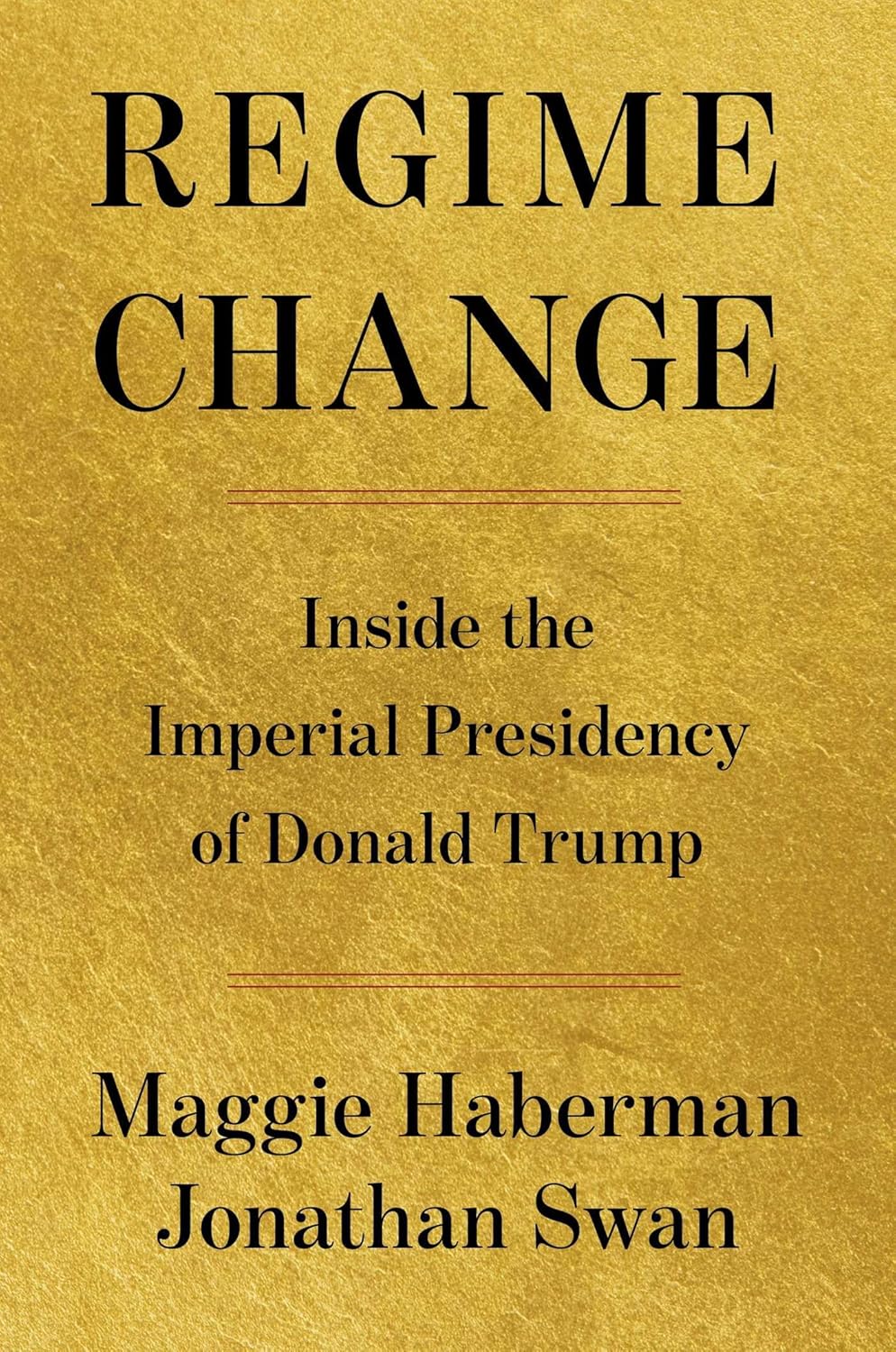
The Anatomy of Power: Introduction
Few journalists have captured the erratic pulse of modern American governance quite like Maggie Haberman. In Regime Change, Haberman delivers a clinical, unblinking dissection of political isolation, shifting allegiances, and institutional volatility that rivals classic political chronicles like Bob Woodward’s All the President’s Men or the razor-sharp observational prose of Joan Didion. Rather than merely rehashing daily news cycles, this text serves as a definitive architectural blueprint of an era defined by structural fragmentation. It is an exploration not just of policy decisions, but of the deeply human vulnerabilities, ego trips, and relational mechanics that drive the highest offices in the world.
Regime Change At a Glance: Key Details
| Book Title | Genre | Target Audience | Anwar Library Rating |
|---|---|---|---|
| Regime Change | Non-Fiction / Political Journalism | Students of modern history, political junkies, and media analysts | 4.7 / 5.0 |
The Fractured Inner Circle: Plot Summary of Regime Change (No Spoilers)
As a non-fiction work rooted in real-world history, Regime Change documents the closing chapters of an administration navigating unprecedented domestic and international pressures. The narrative traces the breakdown of communication pipelines within the executive branch, demonstrating how policy was frequently sidelined by personal grievances and reactive strategies. Haberman systematically catalogs the friction between institutional traditionalists who sought to maintain established norms and a rising guard of disruptors who favored chaotic, direct-to-consumer political maneuvering.
The core conflict of the book centers on the psychological and operational isolation of the chief executive. Readers are taken inside high-stakes meetings, late-night telephone exchanges, and backroom negotiations where historical decisions were altered by the whims of interpersonal dynamics. By focusing heavily on the structural mechanisms of the West Wing, Haberman illustrates how institutions decay from the inside out when loyalty is prioritized above expertise, leaving the reader at the precipice of a historical paradigm shift that reshaped global politics.
The Reporter’s Scalpel vs. Analytical Distance: Critical Assessment of the Novel
The “Real Talk”: Pacing, Prose, and Impact
Maggie Haberman’s prose is notable for its declarative, almost forensic economy. She avoids the temptation of florid prose or sensationalist moralizing, choosing instead to let accumulated, hyper-detailed anecdotes build a steady sense of claustrophobia. The pacing reflects the chaotic atmosphere of the era it covers—shifting quickly from staff overhauls to sudden policy reversals via social media. This fast-paced narrative delivery successfully mimics the internal experience of working within an unstable system, though at times the sheer volume of names, dates, and administrative roles may overwhelm casual readers who are not intimately familiar with the political ecosystem.
The primary strength of this work lies in its objective detachment. Haberman writes with the authority of someone who spent years on the receiving end of leaks and midnight phone calls, utilizing her access to provide unprecedented depth. However, this proximity sometimes cuts both ways. While the granular focus on specific conversations provides immense value for historical documentation, it occasionally leaves less room for broader macro-economic or socio-political analysis, treating the internal drama of Washington as a self-contained universe rather than a reflection of systemic cultural fractures across the country.
The Theater of Ego: In-Depth Character Analysis
The individuals filling the pages of Regime Change are not presented as flat heroes or caricatured villains; instead, Haberman paints them as highly complex, deeply compromised figures operating under extreme pressure. The central executive figure is depicted as an isolated transactional strategist, motivated primarily by an intense desire for validation and public victory, turning political relationships into fluid assets that can be discarded at a moment’s notice. This psychological posture turns the inner circle into an unpredictable landscape where survival requires constant self-reinvention.
In contrast, the supporting cast consists of institutionalists trapped in an existential paradox. Figures trying to preserve historical norms find themselves gradually hollowed out by a system that views compromise as weakness. Haberman excels at capturing the quiet desperation of career civil servants and political appointees who convince themselves that their presence prevents total systemic failure, even as they are systematically stripped of authority. This professional degradation highlights a core theme: the slow, transactional erosion of institutional integrity.
Atmospheric Chemistry: Vibe Check
Claustrophobic: The narrative remains tightly bound to the corridors of power, creating an intense, pressure-cooker atmosphere where outside reality rarely penetrates.
Forensic: Every claim is backed by meticulous timeline tracking and cross-referenced testimony, reading like a complex legal brief or investigative dossier.
Sardonic: A subtle, dry undercurrent runs beneath the administrative updates, exposing the profound absurdity that often characterizes high-level bureaucratic infighting.
The Transactional Imperative: Themes & Motifs Deep Dive
At its heart, Regime Change is an extended meditation on the nature of loyalty in modern political systems. Haberman shows how traditional concepts of ideological or institutional allegiance were replaced by a purely transactional dynamic. In this environment, loyalty was treated not as a two-way street or a shared commitment to governance, but as a one-way mechanism designed to protect the executive from accountability. This thematic focus illuminates how easily democratic norms can be undermined when personal fidelity takes precedence over constitutional responsibility.
Another major motif is the weaponization of information and media narratives. Haberman explores how the deliberate creation of administrative chaos was used as a deliberate tool to disorient institutional gatekeepers and keep rivals off-balance. The book illustrates a world where public perception mattered far more than administrative reality, and where internal policy papers were consistently defeated by the raw emotional resonance of a televised appearance or a carefully timed leak. In examining this dynamic, this work echoes the broader analysis of cultural shifts found in our review of Occult Feminism by Rachel Wilson, which similarly explores how changing social power dynamics and structural systems reshape authority and influence across different spheres of public discourse.
The Political Scholar’s Roadmap: Target Audience Guide
This book is highly recommended for readers who value granular, fly-on-the-wall historical reporting and want to understand the mechanics of executive governance. If you appreciate the investigative depth of journalists like Michael Schmidt, Ronan Farrow, or the institutional focus of standard political biographies, Haberman’s sharp-witted reporting will prove deeply satisfying. It is less suited for readers looking for a broad-strokes, philosophical overview of American history, or those who prefer highly emotional, partisan narratives over objective, clinical journalism.
If You Loved This Drama: Similar Recommendations
Confidence Man by Maggie Haberman: The natural companion piece to this work, offering a broader look at the foundational history, psychological development, and business background that shaped the methods documented in her later reporting.
Peril by Bob Woodward and Robert Costa: A compelling deep dive into the specific institutional guardrails and military pressures that defined the late stages of the administration, serving as an excellent counterweight to Haberman’s focus on media and staff dynamics.
The Room Where It Happened by John Bolton: An inside-the-room memoir that provides a first-hand perspective on the foreign policy friction and executive decision-making processes that Haberman analyzes from a journalistic distance.
The Polarized Echo Chamber: Cultural Impact and Reader Reactions
Upon its debut, Regime Change immediately shot to the top of the New York Times Bestseller list and generated massive engagement across political subreddits and Goodreads forums. On professional literary platforms, the book was widely praised by historians for its dense documentation and invaluable primary-source contributions to the public record. Conversely, on social media platforms like BookTok and X, public reactions reflected deep broader cultural divisions. Some readers criticized Haberman for holding back critical details for book publication rather than sharing them during active news cycles, while others lauded her unparalleled ability to break through administrative secrecy and deliver a definitive historical account.
About the Author: Maggie Haberman
Maggie Haberman is a senior political correspondent for The New York Times and a political analyst for CNN. Over her distinguished career, which includes prominent roles at The New York Post and Politico, she has established herself as one of the most influential and widely cited Washington journalists of the modern era. Haberman was part of the reporting team that received the Pulitzer Prize for National Reporting in 2018 for their deeply sourced coverage of the administration’s hidden relationships and foreign entanglements. Her work is defined by an extensive network of sources and an uncompromising commitment to factual accuracy and investigative depth.
Frequently Asked Questions (FAQ)
Does Regime Change focus more on policy or personal drama?
The book focuses primarily on the intersection of personal drama and executive policy, showing how interpersonal relationships, internal staff rivalries, and individual egos directly impacted major national policy outcomes.
How does this book differ from Haberman’s previous book, Confidence Man?
While Confidence Man serves as a comprehensive biography tracking a lifelong career from New York real estate to the presidency, Regime Change functions as a targeted forensic investigation into the specific systemic breakdowns, communication failures, and staff isolations of the final governing phase.
Is Maggie Haberman’s Regime Change review objective?
Yes, Haberman maintains a neutral, journalistic tone throughout the work, relying on verifiable timelines, official memos, and multiple corroborating sources rather than editorializing or relying on partisan rhetoric.
Where to Buy & Read
Ready to immerse yourself in this unputdownable book? Use the verified, functional search retail links below to find the best deals on physical, digital, or audio editions: