
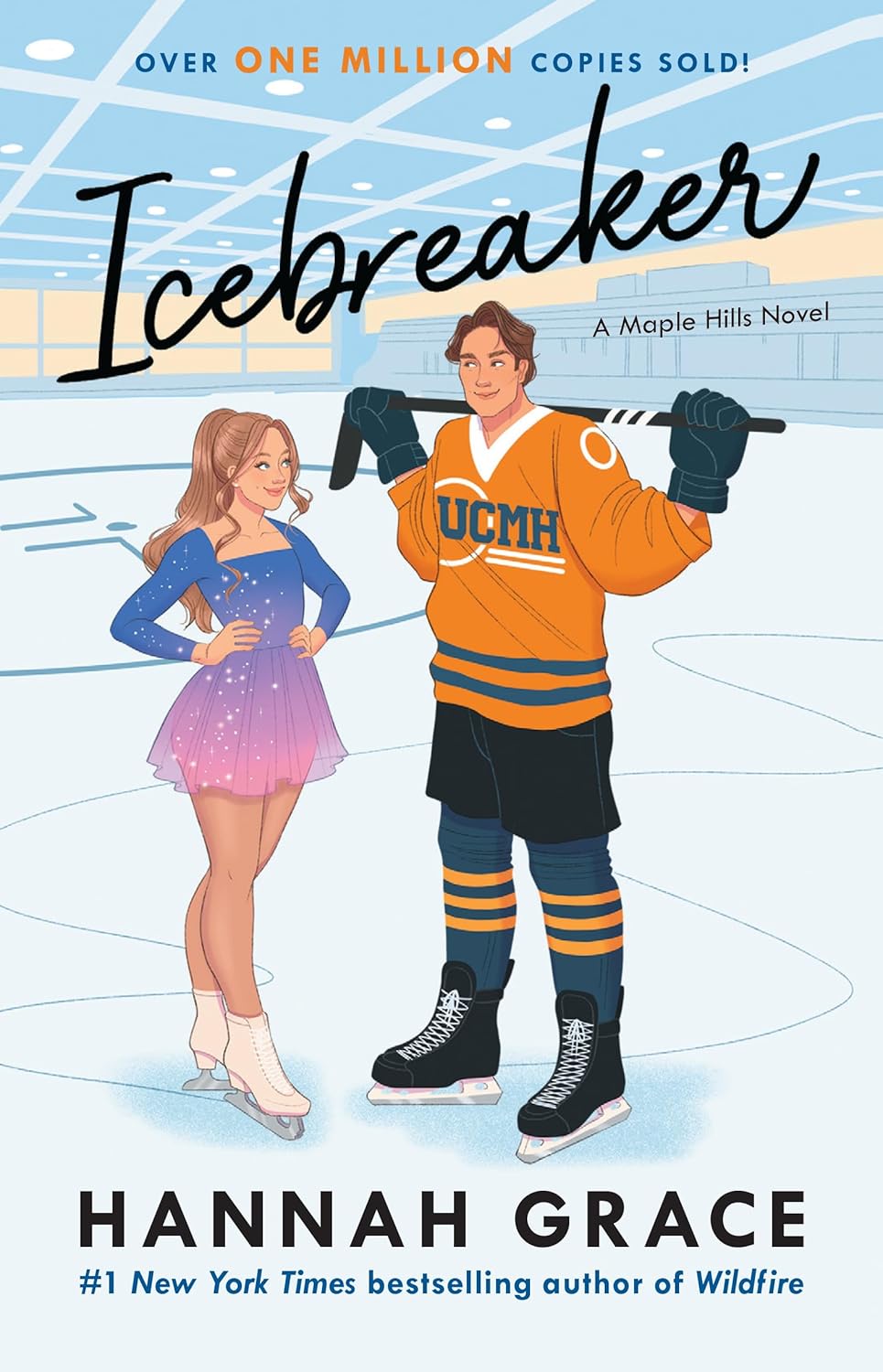
Friction on the Rink: Introduction
Few contemporary sports romance novels have disrupted the digital literary landscape quite like Icebreaker by Hannah Grace. Originally exploding across social media platforms like TikTok, this contemporary romance positions itself at the intersection of high-stakes athletic ambition and intense personal proximity. Moving beyond standard genre conventions, the novel serves as a modern blueprint for the “forced proximity” and “enemies-to-lovers” tropes, drawing structural comparisons to popular new adult romances by Elle Kennedy while maintaining a distinct, character-driven identity that balances high-heat intimacy with modern discussions on mental health and boundaries.
Icebreaker At a Glance: Key Details
| Book Title | Genre | Target Audience | Anwar Library Rating |
|---|---|---|---|
| Icebreaker | Sports Romance / New Adult | Fans of contemporary romance, sports tropes, and high-heat fiction | 4.2 / 5.0 |
A Frozen Compromise: Plot Summary of Icebreaker (No Spoilers)
The narrative unfolds at the fictional Maple Hills University, focusing on Anastasia Allen, a fiercely determined competitive figure skater who has structured her entire life around securing a spot on Team USA. Anastasia is hyper-organized, utilizing rigorous scheduling to balance her grueling training sessions, academic commitments, and social life. Her carefully curated universe is thrown into structural disarray when a facility misunderstanding results in a catastrophic scheduling conflict at the campus ice rink.
Enter Nathan Hawkins, the charismatic captain of the university’s hockey team. Unlike the typical aggressive sports protagonist, Nathan bears the weight of keeping his team unified, focused, and out of trouble. When a malicious prank by another student damages the secondary hockey facility, the athletic department forces the figure skaters and the hockey team to share the primary rink. The immediate collision of their contrasting worlds creates instant friction: Anastasia views the hockey team as a disruptive chaotic force threatening her Olympic trajectory, while Nathan finds himself intrigued by Anastasia’s uncompromising discipline and sharp defenses.
As the narrative progresses, the forced proximity shifts from daytime ice scheduling conflicts to unexpected social overlaps. When Anastasia’s skating partner, Aaron, faces unexpected logistical complications that threaten their competitive season, Nathan steps forward in ways that challenge Anastasia’s deep-seated trust issues and rigid control systems. The tension builds as both protagonists try to compartmentalize their growing personal attachment while navigating intense institutional pressure, competitive deadlines, and toxic interpersonal dynamics within their respective athletic circles.
The Gold Medal Breakdown: Icebreaker Ending Explained & Plot Twists (Spoilers)
Click to expand the deep-dive spoiler zone
🚨 WARNING: Major Spoilers Ahead! Do not expand this section unless you have finished the book.
The climax of Icebreaker centers on the complete unmasking of Aaron, Anastasia’s long-term skating partner, whose behavior shifts from overprotective to explicitly manipulative and emotionally abusive. Throughout the novel, Aaron subtly undermines Anastasia’s autonomy, policing her diet, gaslighting her choices, and attempting to isolate her from Nathan and the rest of the hockey team to maintain control over their athletic partnership. The turning point arrives when Aaron fakes an injury to manipulate Anastasia’s schedule and emotional state, a deception that eventually collapses under scrutiny.
When Aaron’s toxic behavior reaches a breaking point, he leaves Anastasia without a partner right before a crucial competitive showcase. Nathan, showing his characteristic adaptability and dedication, leverages his own skating proficiency to step in as her temporary skating partner. This narrative twist subverts the standard sports romance dynamic by having the hockey player literally learn figure skating choreography to preserve the heroine’s professional dreams.
In the final chapters, Anastasia formally severs her professional and personal ties with Aaron, reclaiming full agency over her body and career. Nathan and Anastasia navigate the high-stress transition, leading to a successful performance that secures her future athletic prospects. The book concludes with a flash-forward epilogue showing their long-term stability: Anastasia successfully pursues her professional skating goals without sacrificing her personal happiness, and Nathan transitions into professional hockey, with the pair establishing a mutually supportive, healthy relationship that rejects the toxic dynamics of their past.
Polished Ice and Rough Edges: Critical Assessment of the Novel
The “Real Talk”: Pacing, Prose, and Impact
From an architectural standpoint, Hannah Grace’s prose is highly accessible, conversational, and structurally optimized for rapid consumption. The dual-perspective narrative framework, alternating between Anastasia and Nathan, is executed with distinct tonal voices that prevent character bleeding. Grace excels at drafting organic dialogue, particularly the quick-witted banter between the hockey team members, which provides authentic comic relief and grounds the collegiate setting.
However, the novel’s pacing encounters minor friction in the middle act. The transition from enemies-to-lovers occurs relatively early in the timeline, causing the central narrative tension to shift from external romantic conflict to internal psychological processing and relationship maintenance. While this choice allows for an extended exploration of healthy relationship communication, readers seeking prolonged romantic angst might find the mid-book stabilization slightly linear. Additionally, the explicit nature of the romance is frequent and intense; while highly praised by its target demographic for its sex-positive framing, the volume of these scenes occasionally slows the progression of the secondary sports plotlines.
Shattering the Archetypes: In-Depth Character Analysis
Anastasia Allen is a compelling study in high-functioning anxiety and control. Her reliance on planners and strict routines is not merely a personality trait but a defense mechanism against a demanding sport and an emotionally draining skating partner. Her character arc is defined by learning to yield control without losing her identity, transforming from a defensive individualist into a woman capable of accepting vulnerable partnership.
Nathan Hawkins represents a significant departure from historical “alpha-male” romance protagonists. While physically imposing and professionally dominant as a hockey captain, his psychological profile is characterized by emotional intelligence, active listening, and a lack of fragile masculinity. He does not seek to fix Anastasia’s problems through dominance; instead, he offers structural support, validating her boundaries while consistently showing up as a reliable counterweight to her chaotic environment.
Aaron Carlisle serves as the narrative’s primary human antagonist. His character is carefully drawn to reflect the subtle, insidiously realistic progression of emotional abuse within competitive pairings. His evolution from a demanding partner to a malicious saboteur highlights the psychological dangers of unchecked codependency in professional athletics.
Atmospheric Chemistry: Vibe Check
Hyper-Competitiveness: The overarching background environment is dominated by early-morning ice times, physical exhaustion, caloric tracking, and the intense pressure of collegiate athletic scholarships.
Found-Family Cozy: The chaotic, deeply loyal camaraderie of the hockey house provides a warm, supportive emotional safety net that contrasts sharply with the cold isolation of the figure skating world.
High-Heat Sensuality: The romantic progression features explicit, uninhibited sexual dynamics that emphasize mutual consent, exploration, and emotional vulnerability.
Boundaries on and off the Rink: Themes & Motifs Deep Dive
The core thematic architecture of Icebreaker centers on the reclamation of personal autonomy. Anastasia’s body is constantly treated as a corporate asset by her coach and her skating partner, Aaron. Her romantic development with Nathan acts as a catalyst for her understanding that her value is not tied exclusively to her athletic performance or compliance with others’ expectations.
Another major motif is the contrast between institutional structures and organic communities. The university athletic department operates on rigid, often cold administrative logic, forcing different subcultures together without support. In contrast, the community built within the hockey team represents organic teamwork, showing that true leadership—such as Nathan’s captaincy—is rooted in empathy, mutual respect, and emotional transparency rather than fear or strict hierarchy.
Navigating the Trope Map: Target Audience Guide
This novel is specifically engineered for readers who appreciate modern, high-heat contemporary romances that do not shy away from explicit content while maintaining a strong emotional core. If you enjoy the collegiate sports dynamics found in the works of Kennedy Fox, Sarina Bowen, or Mariana Zapata, Icebreaker will resonate with your reading preferences. It is perfectly suited for audience segments looking for the “golden retriever boyfriend” dynamic paired with a highly independent, ambitious heroine.
If You Loved This Drama: Similar Recommendations
The Deal by Elle Kennedy: A foundational text in the modern college hockey romance sub-genre, exploring themes of mutual academic and athletic assistance alongside deep emotional healing.
From Lukov with Love by Mariana Zapata: For readers who want a slower-burning, deeply analytical look at the grueling world of competitive figure skating paired with intense character development.
Kulti by Mariana Zapata: A masterclass in sports romance that focuses on the professional intersections of athletes navigating personal growth, public media scrutiny, and romantic synchronization.
Digital Renown and Viral Waves: Cultural Impact and Reader Reactions
Icebreaker stands as an economic and cultural case study in the power of algorithmic word-of-mouth marketing. Upon its viral ascent on social media platforms, the novel rapidly crossed over from indie self-publishing spaces into traditional print dominance, culminating in prominent positioning on the New York Times Best Seller list. Community feedback on Goodreads highlights a deep appreciation for Nathan’s supportive demeanor, though some readers note that the sheer volume of explicit scenes can occasionally overshadow the development of the athletic plots.
About the Author: Hannah Grace
Hannah Grace is an English author who has established a significant footprint in the contemporary romance sector. Known affectionately by her readers as the purveyor of “fluffy comfort books with high heat,” her background features a strong focus on character-driven formatting and modern relationship dynamics. Icebreaker serves as the debut installment of her highly successful Maple Hills series, cementing her reputation as an expert architect of the modern sports romance genre.
Frequently Asked Questions (FAQ)
Q: Is Icebreaker a standalone novel or part of a series?
A: Icebreaker functions as a complete standalone romance regarding its main characters, but it serves as the foundational book in the Maple Hills series. Subsequent books in the universe follow Nathan’s teammates through their own independent romantic journeys.
Q: How explicit is the romantic content in Icebreaker?
A: The novel features a high frequency of explicit romantic and sexual content. It is categorized within the new adult/mature romance sector and is intended for adult audiences due to its explicit language and themes.
Q: What are the main romance tropes used in the book?
A: The primary tropes featured in the novel are forced proximity (due to the shared ice rink), sports romance (hockey meets figure skating), and a light enemies-to-lovers progression that transitions into deep mutual support.
Where to Buy & Read
Ready to immerse yourself in this unputdownable book? Use the verified, functional search retail links below to find the best deals on physical, digital, or audio editions: