
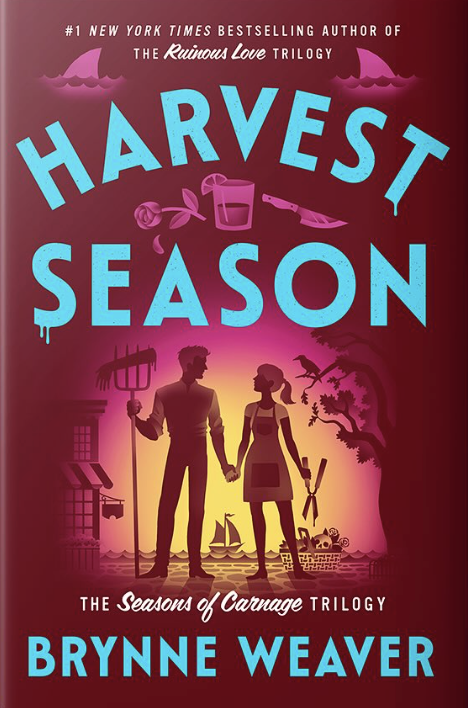
Visceral Venues and Macabre Miracles: Introduction
When contemporary publishing shifted toward subverting traditional romantic tropes, few authors rode the wave of stylized carnage as successfully as Brynne Weaver. Standing as the grand, highly anticipated, blood-soaked finale to her hit Ruinous Love Trilogy, Harvest Season by Brynne Weaver masterfully weaponizes pitch-black humor against a backdrop of deep psychological intimacy. Following the thematic footsteps of its explosive predecessors, Butcher & Blackbird and Leather & Lark, this narrative operates like Dexter wrapped in a feverish, high-stakes indie romantic comedy. It tackles a dangerous balancing act: presenting characters who commit heinous acts of vigilante violence while ensuring the audience remains desperately rooted in their emotional salvation.
Within the broader digital ecosystem of modern publishing, the book occupies a unique space, challenging how mainstream readers categorize transgressive fiction. For readers tracking the evolution of the genre, this final installment echoes the raw, unapologetic subversion found in our review of Vicious Devil, where moral grey zones are transformed from mere character traits into structural plot drivers. Weaver does not merely ask her audience to tolerate the darkness of her protagonists; she demands that they pull up a chair and enjoy the harvest.
Harvest Season At a Glance: Key Details
| Book Title | Genre | Target Audience | Anwar Library Rating |
|---|---|---|---|
| Harvest Season | Dark Romantic Comedy / Romantic Suspense | Enthusiasts of vigilante justice, slow-burn spicy romance, and high-contrast dark humor | 4.8 / 5.0 |
A Ticking Clock of Crimson and Clay: Plot Summary of Harvest Season (No Spoilers)
The operational framework of Harvest Season drops readers into a world where corporate safety is a myth and private vengeance is the only currency that retains its value. The story revolves around two highly competent, deeply traumatized professionals operating within an underground syndicate designed to clean up the systemic rot that legal institutions routinely fail to fix. As autumn sets in, their meticulous routines are completely shattered by the arrival of an external threat—a brilliant, predatory force that begins mirroring their own hunting patterns, turning the ultimate stalkers into panicked prey.
As the narrative engine builds momentum, the primary conflict shifts from a localized game of survival to an expansive, high-stakes defense of their entire chosen family. Forced proximity turns from an operational hazard into a dangerous catalyst for undeniable emotional vulnerability. The characters must cross treacherous geographic and psychological terrains, balancing their burning internal obsession with the constant, external threat of total exposure. Weaver builds the tension line by line, leaving casual pre-readers dangling on a razor’s edge just before the explosive threshold of the final act.
The Abattoir on the Hill: Harvest Season Ending Explained & Plot Twists (Spoilers)
Click to expand the deep-dive spoiler zone
🚨 WARNING: Major Spoilers Ahead! Do not open this section unless you have finished reading the book or actively seek full structural breakdowns.
The climax of Harvest Season brings the multi-layered syndicate mystery of the Ruinous Love Trilogy to a devastating, cinematic resolution. The massive plot twist reveals that the shadowy antagonist orchestrating the hunt against the vigilante couple was not a rogue government agent, but an internal founding member of their own cleanup network. This traitor had been meticulously manipulating communication logs to pit the vigilantes against one another, aiming to clear out the old guard and monetize the syndicate’s infrastructure on the international black market.
In a blood-drenched, thrilling final confrontation set inside a decaying, isolated rural facility during a torrential autumn storm, our protagonists utilize their complementary skill sets to outmaneuver the traitor’s mercenaries. The heroine executes a highly calculated, poetic trap that mirrors the exact methods used by the villain to hunt her family early in the book. The epilogue skips forward six months, providing an absolute, deeply satisfying happily-ever-after (HEA) that features a domestic, albeit delightfully twisted, life of rural isolation, mutual obsession, and the quiet continuation of their vigilante operations under a new, uncompromised banner.
Razor Wit vs. Visceral Violence: Critical Assessment of the Novel
The “Real Talk”: Pacing, Prose, and Impact
Brynne Weaver’s prose operates with the savage efficiency of a serrated blade. What sets Harvest Season completely apart from standard contemporary dark romance is its near-flawless tonal calibration. It is an extraordinary literary tightrope walk to shift seamlessly from an explicit, gory description of anatomical disassembly to a laugh-out-loud witty banter scene over diner pancakes within a single page—yet Weaver pulls it off with apparent ease. The pacing is breathless, structurally maintaining an urgent momentum that ensures the reader never experiences the traditional mid-book pacing slump often found in over-extended series entries.
However, from a strict critical perspective, the density of the plot requires unyielding focus. The sheer volume of secondary characters and converging syndicate subplots means that the narrative occasionally threatens to boil over. Readers who prefer a highly isolated, claustrophobic focus on the central romantic pair may find the broader institutional action elements slightly distracting. Yet, for those who appreciate world-building that matches the intensity of the character dynamics, the payoff is profoundly resonant, violent, and emotionally cathartic.
Architects of Carnage and Tenderness: In-Depth Character Analysis
The psychological architecture of the protagonists elevates Harvest Season from a simple genre exercise into a compelling study of functional madness. The hero is crafted as a beautiful contradiction: a master of hyper-rational control whose meticulous inner world is completely leveled by an unhinged, protective devotion to his counterpart. His evolutionary arc hinges on the terrifying process of letting go of operational control to allow a real, messy, unpredictable emotional partnership to take root.
The heroine provides the perfect, electric foil. Her character journey rejects the traditional victim-to-survivor pipeline; instead, she embraces her dark instincts with a radical, refreshing level of self-acceptance. The professional alignment of the pair as vigilante cleanup specialists mirrors their psychological integration. They do not save each other from their respective shadows; they validate those shadows, constructing a rare, fiercely loyal partnership where nothing—no matter how macabre—needs to be hidden or excused. This dynamic matches the character evolution we frequently dissect in contemporary dark fiction, mirroring the intense emotional stakes found in our analysis of Her Dominant Era.
Atmospheric Chemistry: Vibe Check
To fully understand the aesthetic texture of this novel before diving into the deep end, let us run an atmospheric chemistry breakdown:
- Macabre: The background environments are dripping with sensory, shadow-drenched details of underground execution spaces and visceral cleanup operations.
- Sardonic: The dialogue cracks like a whip, serving up dark, cynical humor that punctures the intense tension at the exact moment the reader needs to breathe.
- Sultry: The physical and emotional chemistry is an untamed, slow-burning fire that eventually explodes into an uninhibited, deeply committed display of devotion.
- Cathartic: The moral execution of actual monsters provides an intensely satisfying sense of poetic cosmic retribution that rewards the reader’s investment.
Vigilante Justice and Chosen Kin: Themes & Motifs Deep Dive
At its philosophical core, Harvest Season serves as a brutal interrogation of the dividing line between law and cosmic justice. Weaver uses her characters as living thought experiments: Can acts of unspeakable violence be morally redeemed if they are weaponized exclusively to shield the innocent from systemic failure? The motif of the “harvest” operates on multiple semantic levels throughout the text—it signifies the literal turning of the natural seasons, the collection of evidence, and the inevitable, bloody reaping of consequences by those who thought they were untouchable.
Another dominant theme is the deliberate construction of chosen family among social outcasts. The characters within this universe are, by definition, monsters cut off from conventional human society. Yet, through shared trauma and total transparency, they build an unyielding, fiercely protective familial unit that redefines traditional concepts of loyalty. The recurring symbols of clean knives, fresh soil, and warm fires continually emphasize the delicate, dangerous balance between total destruction and domestic warmth.
When the Shadow Fits Perfectly: Target Audience Guide
This book is engineered specifically for readers who demand high-stakes thriller elements woven directly into the fabric of their adult romance. If your reading tastes lean toward the dangerous, hyper-competent worlds built by authors like RuNyx, H.D. Carlton, or Sophie Lark, Weaver’s precise cocktail of humor and blood will satisfy your appetite immediately. It is ideal for readers who adore the “touch her and the entire world burns” trope, executed alongside an intelligent heroine who is entirely capable of handling her own blade in a crisis.
If You Loved This Drama: Similar Recommendations
If reaching the final page of Harvest Season has left a gaping void on your e-reader, consider immersing your senses in these highly compatible titles from our curated library:
- The Mindf*ck Series by S.T. Abby: A legendary vengeance arc tracking a brilliant female serial killer hunting her past abusers while falling deeply for the FBI profiler assigned to the case.
- There Are No Saints by Sophie Lark: An intense, artistically driven dark romance that pits two dangerous, competitive minds against each other in a deadly game of cat-and-mouse.
- Frozen Heart by Neva Altaj: For readers seeking another masterclass in intense possessiveness paired with high-stakes survival, check out our comprehensive review of Frozen Heart, which explores similar themes of protective isolation.
BookTok Brawls and Universal Praise: Cultural Impact and Reader Reactions
The global literary community has responded to Harvest Season with immense digital enthusiasm. Across major platforms like BookTok, Instagram, and Goodreads, the novel has consistently trended in dark romance and romantic suspense circles. Creators heavily praise Weaver for executing a complex, multi-layered finale without sacrificing the dark comedic charm that made the universe a viral sensation in the first place.
The critical discourse surrounding the release emphasizes the book’s ability to cross over from niche subgenre spaces into mainstream commercial chart success. Readers consistently highlight specific dialogue sequences and the emotional depth of the epilogue as standout elements, securing the book’s position on numerous independent “Best Dark Fiction of the Year” lists and cementing Weaver’s reputation as a dominant force in modern romantic suspense.
About the Author: Brynne Weaver
Brynne Weaver is an exceptionally gifted, New York Times and USA Today bestselling author who has redefined the modern dark romantic comedy landscape. Known for her unique ability to blend intense emotional vulnerability with pitch-black comedy and intricate suspense plots, Weaver has cultivated a massive, fiercely loyal global readership. With a professional background that enriches her meticulous character development and sharp pacing, she continues to push the boundaries of transgressive fiction, creating complex worlds where unconventional monsters are granted the complex, unconditional love stories they deserve.
Frequently Asked Questions (FAQ)
Q: Can Harvest Season be read as a standalone novel?
A: No. Harvest Season functions as an intricate, direct continuation of the overarching syndicate plotlines and character relationships established throughout the previous entries in the series. Reading the preceding books is essential for complete narrative comprehension.
Q: What is the explicit content and spice rating for this book?
A: The book features a very high spice rating, containing multiple explicit, consensual adult sequences that are deeply integrated into the emotional and psychological development of the central relationship.
Q: Does Harvest Season contain a definitive happily ever after?
A: Yes. Despite the extreme external danger, graphic violence, and psychological trauma explored throughout the plot, the narrative concludes with a firm, unambiguous, and satisfying happily-ever-after for the main couple.
Where to Buy & Read
Ready to immerse yourself in this unputdownable book? Use the verified, functional search retail links below to find the best deals on physical, digital, or audio editions: