
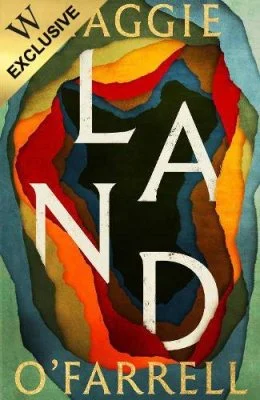
TL;DR: The Verdict
Must-Read. Land is an absolute masterpiece of historical fiction that cements Maggie O’Farrell’s status as a generational talent. Visceral, haunting, and deeply moving, this novel is an unforgettable hymn to the Irish landscape, exploring the intergenerational ripples of trauma, colonization, and survival in the wake of the Great Hunger.
Book Comparison Grid
| Title | Genre | Difficulty Level | Final Score |
|---|---|---|---|
| Land | Historical / Literary Fiction | Advanced Intermediate | 9.7 / 10 |
| The Marriage Portrait | Renaissance Historical Fiction | Intermediate | 9.0 / 10 |
| Hamnet | Tudor Literary Fiction | Intermediate | 9.6 / 10 |
Plot Summary: Mapping the Ghosts of Ireland
Set in 1865, just over a decade after the devastating trauma of the Great Hunger, Land takes readers to a windswept Irish peninsula jutting out into the brutal Atlantic. Here we meet Tomás, a proud but taciturn surveyor and cartographer, and his ten-year-old son, Liam. They are contracted by the British Ordnance Survey—represented by the disliked “scarlet-jacketed soldiers”—to systematically map the country.
While the British military seeks to categorize, ownership-map, and scientifically sterilize the landscape, Tomás harbors a quiet, defiant mission. He wants his maps to be a living, breathing record of the disaster. He intends to mark the hollowed-out villages, the abandoned ridges, and the names of those the Great Famine swallowed whole, ensuring the empire cannot simply erase Irish tragedy from history.
However, the trajectory of their lives shatters during an expedition. While wandering into an ancient copse, Tomás drinks from a sacred, spirit-inhabited spring and falls into a profound, mystical trance. When he returns to his senses, he is fundamentally altered. Young Liam is terrified by the sudden mental fissures opening up in his father. Left to carry the physical weight of finishing the maps to secure their payment, Liam must navigate his father’s strange metamorphosis, triggering a multigenerational journey that spans decades and continents, from the quiet hills of Ireland to the bustling streets of Rome, India, and Canada.
The “Real Talk”: Style, Pacing, and Prose
As a seasoned literary reviewer, I approach any new release from a highly acclaimed writer with a healthy dose of skepticism. Fortunately, the author of hamnet new book does not just live up to her heavy reputation—she surpasses it. O’Farrell’s prose is incredibly rich, sensory, and deeply textured. She has a signature ability to write about natural spaces in a way that makes the environment feel like a dynamic protagonist rather than a static background. The mosses, wind, tides, and historical soil thrive under her pen.
The structural pacing of the book is unique and might challenge some casual readers. True to the untamed nature of the landscape she describes, O’Farrell chooses to eschew traditional chapter breaks. The narrative flows seamlessly from one character’s subconscious stream to another. While this can occasionally make it difficult to find a clean pausing point, it mirrors the fluid, overlapping nature of time, memory, and history that the novel explores.
The emotional resonance is devastatingly precise. O’Farrell avoids the trap of excessive melodrama. Instead of shouting the grief of post-Famine Ireland at the reader, she whispers it through the quiet spaces of her characters’ lives—a missing family member’s empty chair, a sudden burst of fiddle music, or a dog’s unwavering loyalty.
Character Deep-Dive: Cracks in the Cartographer
The heart of Land rests upon its profoundly flawed, deeply human cast of characters. O’Farrell expertly operates in the gray areas of human morality and survival, refusing to paint anyone with simplified strokes.
- Tomás: The unyielding patriarch whose dedication to preservation boundaries borders on obsession. His psychological descent after the encounter in the copse is heartbreaking. He represents the collective trauma of a nation trying to map its survival while carrying the structural weight of its ghosts.
- Liam: Ten years old at the story’s open, Liam’s forced maturation is the emotional anchor of the first half of the book. His blend of fear, duty, and deep love for his fractured father is written with staggering empathy. His later evolution into a Jesuit priest searching for meaning across the globe feels like a natural extension of a boy who grew up chasing invisible boundaries.
- Enda: Tomás’s headstrong daughter who finds her voice through the strings of a fiddle. Enda represents the fierce, untamable spirit of rebellion and artistic survival, eventually carrying the music of her ancestors across the ocean to the rugged landscapes of Canada.
Vibe Check
If you want to know what it actually feels like to turn these pages, the vibe check yields four distinct qualities: Hauntingly atmospheric, geologically vast, fiercely melancholic, and deeply comforting. It feels like listening to an old, forgotten fairytale next to a dying hearth while the autumn rain beats against the windows.
Thematic Analysis: Memories Bound to the Earth
The central thematic thesis of Land is clearly spoken by one of its characters: “You will never understand how the land remembers, how deep the roots grow.” O’Farrell brilliantly juxtaposes the scientific, imperialistic act of cartography with the fluid, spiritual realities of indigenous memory.
Mapping is exposed as an act of colonization—an attempt by the British Empire to control, dominate, and rewrite the Irish landscape. Tomás’s rebellion is a counter-mapping movement, a refusal to let the landscape forget its true names and historical scars. Furthermore, the inclusion of a stunning 30-page interlude tracing the endless generations of human existence that walked the land before Tomás (including an ancient girl named Brith) highlights the sheer scale of geological time, showing that empires rise and fall, but the soil retains every drop of blood and sweat poured into it.
Reader Reactions: What BookTok & Goodreads Say
Early advanced reader copies (ARCs) have sent waves through the literary community. On Goodreads, users are praising the immense depth of the family portrait O’Farrell paints, with many stating it rivals Hamnet in its emotional execution. The lack of standard chapters has drawn minor complaints from readers who prefer structured pacing, but most agree it adds to the dreamlike, fluid quality of the story.
Over on BookTok, aesthetics-driven readers are obsessing over the novel’s dark-fairytale tone, the rich historical prose, and the prominent presence of a “particularly loyal dog” that has already stolen the hearts of thousands of pre-release reviewers.
Frequently Asked Questions (FAQ)
- Is Land a standalone novel?
- Yes, Land is a completely standalone historical fiction novel. It requires no prior reading of O’Farrell’s previous works.
- Does the book have chapters?
- No, the book does not utilize traditional numbered chapters. It uses narrative breaks and perspective shifts to transition through time and space, creating a fluid reading experience.
- Is there a romantic subplot?
- While the book explores profound familial love, marital dynamics, and deep human connections, it is fundamentally a literary family saga and historical epic rather than a romance novel.
- What is the primary historical setting?
- The story begins in Ireland in 1865, roughly a decade after the conclusion of the Great Famine (the Great Hunger), and spans the subsequent two decades across multiple global locations.
Where to Buy
Secure your copy of this remarkable new release via the official book retailer links below: