
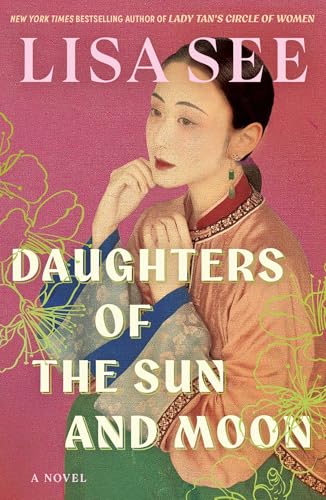
The Crimson Thread of Fate: Introduction
Few authors map the intricate, often painful geometry of female relationships with the precision of Lisa See. In Daughters of the Sun and Moon, See returns to the sweeping landscapes of East Asian history, weaving an emotional and meticulously researched epic that commands comparison to literary monuments like Pearl S. Buck’s The Good Earth and Amy Tan’s The Joy Luck Club. This novel stands as a brilliant examination of matriarchal strength survival amidst geopolitical earthquakes. Rather than following a straight line through history, See captures the cyclical nature of trauma and triumph across generations of women, matching the ambitious scale of historical world-building and character agency that we analyzed in our review of Cleopatra by Saara El-Arifi.
The Ancestral Archive: Key Details
| Book Title | Genre | Target Audience | Anwar Library Rating |
|---|---|---|---|
| Daughters of the Sun and Moon | Historical Fiction / Family Saga | Lovers of immersive historical fiction, multi-generational dramas, and rich feminist narratives | 4.8 / 5.0 |
Bloodlines and Bamboo Curtains: Plot Summary of Daughters of the Sun and Moon (No Spoilers)
Set against the tumultuous transformation of mid-twentieth-century Asia, Daughters of the Sun and Moon tracks the convergent destinies of two cousins, Yan-mei and Kui, born under a shared prophecy but separated by class, ideology, and war. Yan-mei is raised within the fading, insular luxury of a traditional silk-merchant estate, taught the delicate arts of compliance and embroidery. Kui, conversely, grows up in a rugged mountain village, learning the harsh realities of agricultural survival and the whispering promises of revolutionary change. When shifting political currents rupture the old social order, their paths cross and collide in unexpected ways.
As empires crumble and new political regimes rise, both women are pushed to their absolute limits. The narrative carefully explores the weight of keeping centuries-old family secrets while building a life from nothing in a rapidly industrializing society. Forced into a series of compromises to preserve their family line, Yan-mei and Kui must navigate the dangerous space between personal desire and collective duty. See builds a slow-burning tension as old grudges, hidden letters, and long-buried identities threaten to tear apart the fragile peace the younger generation has struggled to secure, stopping just short of the ultimate revelation that redefines their entire lineage.
The Confluence of Sun and Moon: Daughters of the Sun and Moon Ending Explained & Plot Twists (Spoilers)
Click to expand the deep-dive spoiler zone
🚨 WARNING: Major Spoilers Ahead! Do not expand this section unless you have finished the book.
The climax of the novel resolves the central mystery surrounding the “Sun and Moon” heirloom pendants, which were broken apart during the dynamic evacuation of 1949. In a brilliant final act twist, it is revealed that Kui’s supposed daughter, Meiling, is actually the biological child of Yan-mei, swapped at birth to save the infant from political execution during the agrarian purges. Kui had carried this dangerous secret for over three decades, absorbing the social stigma and political targeting meant for Yan-mei’s aristocratic bloodline.
When the elder matriarch passes away, a hidden compartment within a lacquered dowry chest exposes the original adoption papers along with letters that rewrite the family’s historical narrative. The final emotional confrontation occurs at the ruins of the old silk farm, where Meiling learns the truth of her identity. Rather than fracturing the family, this revelation cements the profound sacrifice that defined the cousin’s bond. The book ends on a symbolic note of reconciliation, with the younger generation rebuilding the destroyed mulberry fields, demonstrating that while political regimes are fleeting, the matriarchal foundation remains unbreakable.
Meticulous Research vs. Melodramatic Currents: Critical Assessment of the Novel
The “Real Talk”: Pacing, Prose, and Impact
Lisa See’s prose operates with the steady, detailed rhythm of a master weaver. Her descriptive depth regarding historical settings—from the fragrant, humid air of the silkworm rearing rooms to the stark, cold realities of rural work camps—is incredibly vivid. She balances historical accuracy with deep emotional resonance, ensuring the setting never feels like a dry museum display. The pacing is deliberate, taking its time to establish generational shifts, which pays off beautifully in the book’s second half, though the dense historical context in early chapters may require patience from readers looking for a fast-paced plot.
Where the novel occasionally falters is its reliance on historical coincidence to drive the third-act resolution. The convenient timing of certain letters being discovered or characters crossing paths in massive cities can push the boundaries of realism. However, See’s deep psychological understanding of her characters prevents these moments from sliding into cheap melodrama. The emotional stakes always feel earned, and the prose remains sharp and elegant throughout, successfully avoiding sentimental clichés while delivering a powerful emotional punch.
Silken Armor and Granite Wills: In-Depth Character Analysis
The character arcs of Yan-mei and Kui provide a brilliant study in psychological contrast and adaptation. Yan-mei begins her journey as an fragile idealist, but her transformation into a fierce protector of her family’s industrial survival is one of the most compelling aspects of the book. Her growth is subtle; she does not shed her traditional upbringing, but instead weaponizes it, using the quiet diplomacy she learned as a wealthy daughter to outmaneuver bureaucratic gatekeepers in an autocratic system.
Kui represents the heavy toll of ideological disillusionment. Initially driven by a passion for social justice, her arc explores the painful realization that revolutions often duplicate the cruelties they sought to erase. Her decision to sacrifice her own reputation and safety to protect Yan-mei’s child shows a deep moral evolution that transcends political dogmas. The complex relationship between these two women forms the emotional spine of the story, showing how shared trauma can forge an unbreakable bond that outlasts political regimes.
Atmospheric Chemistry: Vibe Check
Luminous: The prose shines with vibrant cultural descriptions, sensory details of traditional crafts, and glowing natural landscapes.
Haunting: The lingering shadows of war, political displacement, and lost love create a poignant, reflective atmosphere that stays with the reader.
Resilient: A powerful undercurrent of endurance runs through every chapter, focusing on the indomitable power of the human spirit to rebuild after devastation.
The Weight of Silk and Stone: Themes & Motifs Deep Dive
At its core, Daughters of the Sun and Moon examines how systemic political shifts impact domestic spaces and family structures. See uses the motif of silkworm cultivation as an elegant metaphor for the lives of women: trapped within restrictive cocoons, subjected to intense heat, yet capable of producing threads of incredible strength and beauty. This economic and cultural symbol illustrates how female labor and creativity often sustain societies through major crises, even as their contributions are marginalized in official histories.
Another major theme is the tension between individual identity and collective survival. Both Yan-mei and Kui are forced to bury their personal desires, romantic loves, and true names to protect their children and preserve their family line. The book asks a fundamental question: how much of oneself can be stripped away before the core identity is lost? In exploring these themes of women navigating institutional barriers and preserving their historical legacy, this text shares deep thematic connections with our review of We the Women by Norah O’Donnell, which documents the enduring power of trailblazing women who reshaped societal structures across generations.
The Historical Connoisseur’s Map: Target Audience Guide
This novel is perfectly tailored for readers who love dense, highly immersive historical fiction that focuses on domestic and matriarchal histories rather than military campaigns. If you appreciate the sweeping scope of Min Jin Lee’s Pachinko, the delicate emotional landscapes of Gail Tsukiyama, or Lisa See’s own previous masterpieces like Snow Flower and the Secret Fan and The Island of Sea Women, this book will be a deeply satisfying addition to your shelf. It is less suited for readers who prefer fast-paced, plot-driven historical thrillers or light contemporary romances.
If You Loved This Drama: Similar Recommendations
The Island of Sea Women by Lisa See: A stunning companion read that explores a unique matriarchal culture of female divers on Jeju Island, focusing on themes of intense sisterhood, historical trauma, and deep forgiveness across decades of political upheaval.
Lady Tan’s Circle of Women by Lisa See: This book offers a fascinating look into historical Chinese medicine and female solidarity during the Ming Dynasty, exploring how women carve out spaces of professional expertise within rigid social structures.
Pachinko by Min Jin Lee: A phenomenal multi-generational epic that charts the struggles of a Korean family in Japan, capturing the same themes of displacement, maternal sacrifice, and cultural endurance found in See’s work.
The Digital Literary Circle: Cultural Impact and Reader Reactions
Upon publication, Daughters of the Sun and Moon quickly became a favorite across BookTok and Bookstagram historical fiction circles, praised for its emotional depth and meticulous attention to historical detail. On Goodreads, readers frequently highlight the intense emotional resonance of the book’s final chapters, noting that See’s ability to render complex family dynamics remains unmatched. While a small minority of critics felt the dual-perspective structure occasionally slowed the narrative momentum, the general public reception has been overwhelmingly positive, with many independent bookstores selecting it as a premier book club pick for its rich discussion potential regarding ancestral history and feminist resilience.
About the Author: Lisa See
Lisa See is an acclaimed American author whose work consistently explores the complex histories and cultural identities of Chinese and Chinese-American communities. With an extensive background in journalism and historical research, See has authored numerous national bestsellers that are celebrated for their vivid historical accuracy and deep empathy. Her unique perspective is informed by her own family history, which she documented in the critically acclaimed memoir On Gold Mountain. See’s dedication to uncovering forgotten or marginalized female histories has earned her numerous awards, including recognition from the Organization of Chinese Americans, solidifying her voice as a cornerstone of contemporary historical fiction.
Frequently Asked Questions (FAQ)
Is Daughters of the Sun and Moon a standalone novel or part of a series?
While it features the rich world-building characteristic of Lisa See’s historical epics, it functions as a complete, standalone multi-generational novel that resolves all its central plot lines by the final chapter.
How historically accurate is the background setting of the book?
True to Lisa See’s reputation, the novel is backed by extensive archival research, oral histories, and on-site geographical studies, providing a highly precise and accurate depiction of mid-century social and economic transformations.
What is the symbolic meaning behind the title Daughters of the Sun and Moon?
The title references the central heirloom pendants and a foundational family prophecy, symbolizing the complementary yet contrasting paths of the two main characters—one navigating the public, bright world (the Sun) and the other operating within the hidden, reflective spaces of survival (the Moon).
Where to Buy & Read
Ready to immerse yourself in this unputdownable book? Use the verified, functional search retail links below to find the best deals on physical, digital, or audio editions: