
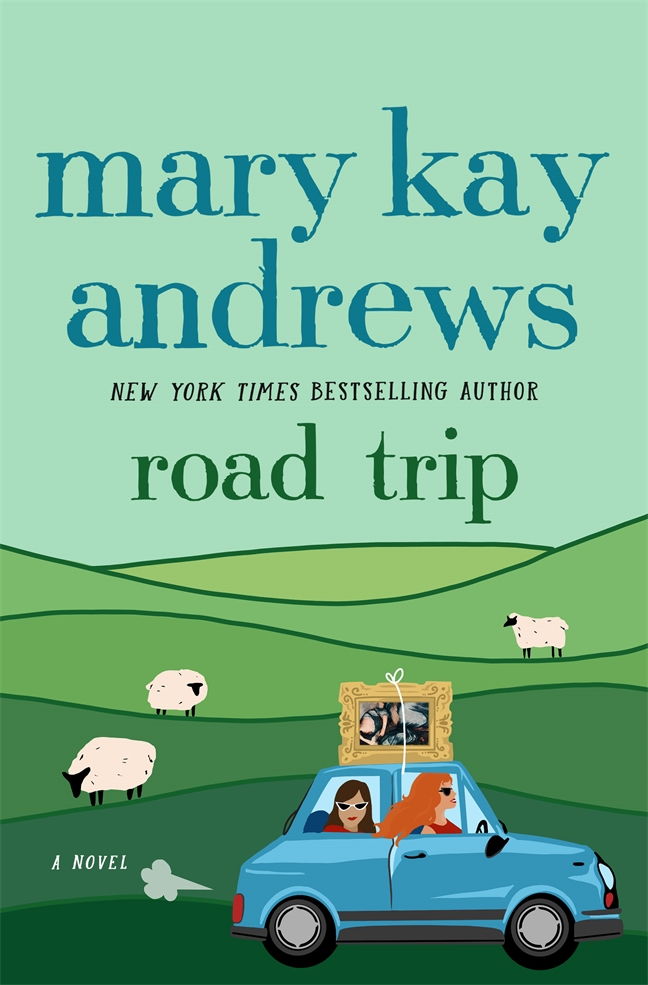
Irish Mist and Savannah Southern Charm: Introduction
Few authors understand the heavy emotional geography of female reinvention quite like the undisputed queen of summer beach reads. In Road Trip, Mary Kay Andrews shifts her narrative horizon from the familiar coastal landscapes of the American South to the winding, fog-laden lanes of rural Ireland. This transition marks a fascinating evolution in her storytelling. Reminiscent of the sharp sibling dynamics in Elin Hilderbrand’s domestic dramas and the generational mystery pacing of Kristin Hannah, this novel balances breezy charm with a deeply calculated mystery. Andrews asks a fundamental question that anchors the entire narrative: can a shared history of grief and a multi-million dollar painting bridge the emotional chasm between two sisters who have spent a lifetime pulling apart?
Road Trip At a Glance: Key Details
| Book Title | Genre | Target Audience | Anwar Library Rating |
|---|---|---|---|
| Road Trip | Contemporary Women’s Fiction / Romantic Mystery | Fans of character-driven family mysteries, travel fiction, and emotional sisterhood arcs | 4.5 / 5.0 |
An Anglo-Irish Portrait and Two Fractured Lives: Plot Summary of Road Trip (No Spoilers)
The architecture of the story rests entirely on the shoulders of the Dunigan sisters, Maeve and Therese. Raised under the same roof in Savannah, Georgia, they are textbook polar opposites: Maeve is the tightly wound rule-follower balancing on the edge of financial ruin, while Therese is the unapologetic, free-spirited rebel running from her own set of consequences. The two haven’t spoken in years, their estrangement frozen by time and unaddressed resentments. However, the sudden death of their mother forces a mandatory ceasefire, pulling them back to their childhood home where they inherit more than just collective grief.
Among their mother’s modest possessions is an enigmatic, old portrait of an Anglo-Irish aristocrat. When an initial appraisal hints that this painting might be an authentic masterpiece worth millions, it presents an unexpected lifeline to keep the wolves from their respective doors. There is just one massive catch: the painting might be an elaborate fake, an artifact from a historical crime. To prove its legitimacy and discover how an aristocratic Irish portrait ended up in a working-class Savannah home, Maeve and Therese must fulfill their mother’s final wish: pack their bags and embark on a literal and emotional road trip across Ireland. Navigating twisty coastal lanes, colorful villages, local pubs, and a series of increasingly complicated secrets, the sisters must solve a cold case that spans generations before their internal conflicts tear their mission apart.
The Stolen Masterpiece and the Sovereign Truth: Road Trip Ending Explained & Plot Twists (Spoilers)
Click to expand the deep-dive spoiler zone
🚨 WARNING: Major Spoilers Ahead! Do not expand this section unless you have finished the book.
The climax of Road Trip deftly weaves together the historical Irish timeline of 1926 with the modern-day quest of the Dunigan sisters. As Maeve and Therese dig deeper into the origins of the portrait, they uncover an intricate historical web involving an IRA art heist, an unyielding grandmother (Lady Geraldine), and a secret family lineage. The grand revelation drops when they discover that their own grandmother, Kathleen, was actually an illegitimate daughter of the Rossington estate who fled to America with the original painting to escape institutional and financial ruin, leaving a clever forgery behind in Ireland.
The final third-act twist turns the legal stakes upside down: the modern art world investigators hunting the painting are revealed to be working on behalf of a fraudulent branch of the old estate trying to cover up decades of elder financial abuse. By uncovering the original historical documents hidden inside the lining of the portrait’s frame, Maeve and Therese don’t just prove the painting’s authenticity—they establish their rightful, legal ownership of the lineage. Rather than selling the masterpiece to a billionaire collector, the sisters make a pact to return it to a public Irish heritage trust, securing a massive finder’s annuity that saves them financially while permanently healing the generational rift between them.
Cozy Travel Whimsy Versus Emotional Pacing: Critical Assessment of the Novel
The “Real Talk”: Pacing, Prose, and Impact
Mary Kay Andrews delivers exactly what her audience craves, but with a noticeably sharper edge in her execution. Her prose remains highly accessible and conversational, yet it displays an impressive level of structural control when transitioning between the sunny, slow-paced atmosphere of Savannah and the rich, atmospheric rain of the Irish countryside. The banter between Maeve and Therese is arguably the book’s greatest strength; it feels entirely organic, capturing that hyper-specific blend of deep-seated irritation and unconditional love that defines complicated sibling relationships.
If there is a valid criticism to be made in this Road Trip review, it lies in the structural multitasking of the plot. At times, the book stretches itself thin by attempting to be a cozy travelogue, a dual romantic comedy, an IRA historical art heist mystery, and a serious look at family grief all at once. This narrative crowding causes the middle chapters to lean a bit heavily into convenient coincidences, particularly regarding how easily the sisters stumble upon crucial historical clues in local pubs. Nevertheless, the sheer emotional momentum of the sisters’ reconciliation and the vivid, sensory-rich descriptions of Irish culture ensure the story lands with a highly satisfying, heartwarming impact.
The Rule-Follower and the Rebel: In-Depth Character Analysis
Maeve Dunigan’s character arc is a masterful study in the exhaustion of perfectionism. As the sister who stayed behind and followed every rule, her rigidity is slowly exposed not as a sign of strength, but as a defensive shield against failure. Her professional project-manager mindset is tested by the chaotic nature of international travel, making her eventual willingness to let go of control feel incredibly earned and deeply satisfying.
Therese Dunigan provides the perfect energetic counterweight. On the surface, she plays the classic role of the irresponsible rebel, but Andrews quickly subverts this trope. Therese’s external defiance hides a profound fear of vulnerability and a belief that she is inherently unlovable. Watching her utilize her sharp intuition and street-smarts to unravel the historical mystery allows her to reclaim her sense of worth, transforming her from a flighty wanderer into a grounded, powerful co-architect of her family’s future.
Atmospheric Chemistry: Vibe Check
Evocative: The narrative drips with sensory details, from the scent of turf fires and stale stout in local Irish pubs to the sharp, salty air of the Dingle Peninsula.
Comforting: Despite dealing with themes of death and family estrangement, the text maintains a foundational warmth that assures the reader they are in safe storytelling hands.
Simmering: The underlying sibling tension provides a constant, engaging emotional hum beneath every scene, preventing the travel elements from becoming too passive.
The Intersect of Inheritance and Identity: Themes & Motifs Deep Dive
The central thematic conflict of Road Trip revolves around the true definition of inheritance. Andrews constantly forces her characters to evaluate whether an inheritance is defined by material wealth—such as a potentially forged painting worth millions—or by the behavioral patterns and historical survival tactics passed down through bloodlines. The painting serves as a multi-layered metaphor; it represents both a historical secret that divided a family and the physical catalyst required to bring the modern descendants back together.
Furthermore, the book operates as an exploration of structural reinvention. Both sisters are forced to dismantle the rigid identities they constructed during childhood. By leaving their geographical comfort zones and confronting their ancestral roots in Ireland, they learn that identity is not a static prison sentence. Survival and emotional maturity require giving oneself explicit permission to redefine who you are, independent of past mistakes or childhood labels.
The Summer Escape Blueprint: Target Audience Guide
This book is highly recommended for readers who want an intellectual yet deeply comforting escape that seamlessly blends multi-generational mystery with vivid travel fiction. If you have previously enjoyed the emotional family tapestries of Susan Mallery, the witty dialogue of Jennifer Weiner, or the scenic, small-town charm of Maeve Binchy, Road Trip will prove to be an absolute delight. It is an ideal pick for book clubs looking for a narrative that sparks lively discussions about family dynamics, forgiveness, and the secrets hidden within our own family trees.
If You Loved This Drama: Similar Recommendations
The Giver of Stars by Jojo Moyes: For readers who appreciate strong women reclaiming their power and independence against a backdrop of rich, atmospheric landscapes and societal expectations.
The Book of Lost Names by Kristin Harmel: If you were captivated by the historical mystery elements, the uncovering of old family secrets, and the profound weight of artistic heritage.
The Identicals by Elin Hilderbrand: For those looking for another expertly crafted, witty look at estranged twin sisters forced to navigate a shared crisis while rediscovering their bond.
The Digital Consensus: Cultural Impact and Reader Reactions
Following its high-profile release in June 2026, Road Trip quickly climbed the ranks of major literary tracking lists, securing its place as a staple of summer reading recommendations. Across BookTok and Bookstagram, creators have widely celebrated the novel’s vivid Irish setting, with many noting that the book functions as an instant piece of armchair travel. On Goodreads, the book maintains an impressive rating, with readers heavily praising Mary Kay Andrews for infusing her classic, humorous Southern charm into an intricate historical cold case. While a few analytical reviewers commented that the dual romances feel slightly rushed in the final chapters, the overwhelming consensus highlights the emotional reconciliation of Maeve and Therese as one of the most heartwarming and satisfying character arcs of the season.
About the Author: Mary Kay Andrews
Mary Kay Andrews is a prolific, New York Times bestselling powerhouse with over thirty-four novels to her credit. A graduate of the University of Georgia’s School of Journalism, she spent fourteen years working as a newspaper reporter—including a distinguished ten-year tenure at The Atlanta Journal-Constitution—before transitioning to fiction in 1991. Initially publishing mysteries under her real name, Kathy Hogan Trocheck, she assumed her famous pen name in 2002 with the release of Savannah Blues. Known as an intrepid treasure hunter, she divides her time between Atlanta and Tybee Island, Georgia, where she restores historic beach homes and weaves narratives centered on the enduring strength of women.
Frequently Asked Questions (FAQ)
Where does Road Trip by Mary Kay Andrews take place?
The story begins in the historic coastal city of Savannah, Georgia, before quickly transitioning to an extensive international journey through the winding roads, coastal villages, and historic estates of rural Ireland.
Is Road Trip a standalone novel or part of a series?
It is a fully self-contained standalone novel, offering a complete and satisfying conclusion to both its modern-day family mystery and its historical subplots.
What is the primary focus keyword phrase of this article?
The primary focus keyword phrase utilized throughout this comprehensive literary analysis is Road Trip review.
Where to Buy & Read
Ready to immerse yourself in this unputdownable book? Use the verified, functional search retail links below to find the best deals on physical, digital, or audio editions: