
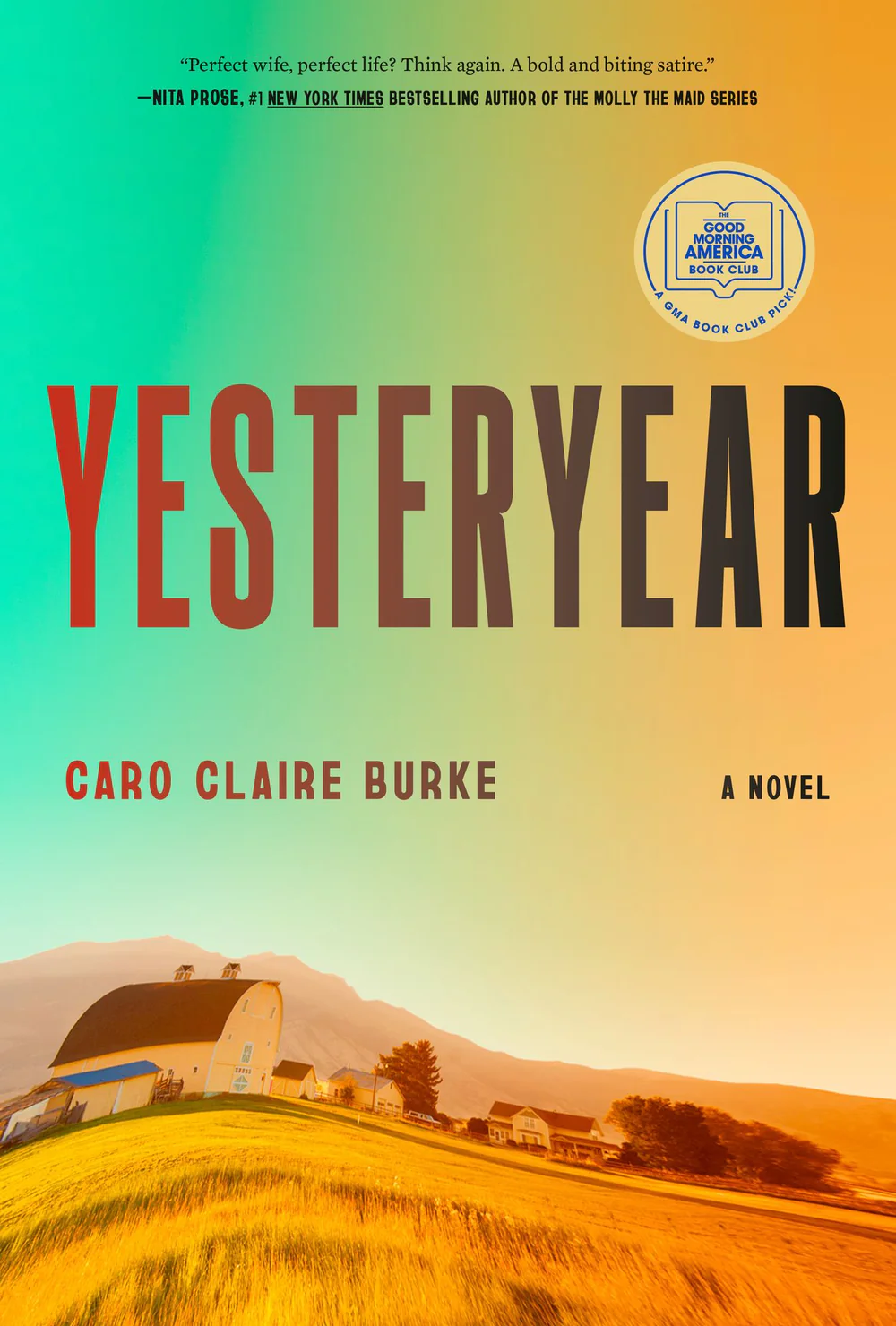
An Ocean of Time: Introduction
Every generation harbors the romantic delusion that the past was a simpler, gentler era—a pastoral sanctuary from the digital anxiety of modern existence. In Yesteryear, the striking debut novel by Caro Claire Burke, this nostalgic fantasy is systematically, brilliantly, and ruthlessly dismantled. Evoking the eerie domestic displacement of Octavia Butler’s Kindred and the atmospheric historical gravity of Outlander, Burke crafts a speculative historical fiction piece that subverts the traditional romanticism of time-travel narratives. It is an exploration of what happens when the psychological baggage of the twenty-first century collides head-on with the unyielding, visceral hardships of the nineteenth century.
Yesteryear At a Glance: Key Details
| Book Title | Genre | Target Audience | Anwar Library Rating |
|---|---|---|---|
| Yesteryear | Speculative Historical Fiction / Time-Slip | Fans of gritty historical realism, generational trauma stories, and subverted time-travel tropes. | 4.5 / 5.0 |
The Fracture of Reality: Plot Summary of Yesteryear (No Spoilers)
The story follows Alice, a modern woman suffocated by the hyper-connected, fast-paced demands of contemporary life. Plagued by a persistent sense of alienation and an ancestral curiosity, her life takes an impossible, terrifying turn when she is violently displaced through time. Instead of waking up in a grand historical romance, Alice finds herself stranded in the harsh, unforgiving rural landscape of the late 1800s. Stripped of her modern privileges, her smartphone, her medical access, and her autonomy, she is forced to adapt to a world where survival is a daily, exhausting transaction calculated in manual labor, physical endurance, and compliance with rigid societal structures.
Adopted by—and integrated into—a struggling agrarian household, Alice must conceal her true origins under the guise of an amnesiac traveler. As she learns the backbreaking realities of nineteenth-century domesticity, she realizes she is living alongside individuals whose bloodlines are inextricably linked to her own future family tree. The stakes skyrocket when Alice uncovers a dark, festering family secret that threatens to destroy the very ancestors she needs to survive, threatening a temporal paradox that could erase her own existence before she ever finds a way back home.
The Closed Temporal Loop: Yesteryear Ending Explained & Plot Twists (Spoilers)
Click to expand the deep-dive spoiler zone
🚨 WARNING: Major Spoilers Ahead! Do not expand this section unless you have finished the book.
The climax of Yesteryear delivers a devastating, emotionally resonant twist on the grandfather paradox. Alice discovers that the catastrophic fire rumored in her family history—the one that allegedly killed her great-great-grandmother—was not an accident, but a desperate act of arson meant to cover up a systemic domestic crime committed by the family patriarch. In a frantic bid to alter history and save the woman she has grown to love as a sister, Alice intervenes on the night of the fire.
The twist is beautifully tragic: Alice’s very intervention is what triggers the fire in the first place. As the barn burns, she realizes that history is immutable; her presence in the past was always factored into the timeline. She manages to drag her young ancestor to safety, ensuring her own lineage survives. In the absolute chaos of the inferno, the temporal rift reopens, snapping Alice back to the year 2026. She wakes up in a hospital bed, physically scarred from the burns, only to discover a hidden artifact in her family’s archive—a centuries-old photograph showing a faint, familiar silhouette in the background wearing modern denim thread. The loop is closed: she did not change the past; she fulfilled it.
Visceral Grime vs. Emotional Grace: Critical Assessment of the Novel
The “Real Talk”: Pacing, Prose, and Impact
Caro Claire Burke writes with a sensory-heavy, uncompromising prose style that refuses to spare the reader the less glamorous aspects of history. The pacing of the first act is intentionally disorienting, mirroring Alice’s panic and physical shock. Burke excels at describing the sensory landscape of the 1800s—not just the candlelit aesthetics, but the smell of unwashed wool, the rot of poorly preserved meat, the terrifying quiet of a night without electricity, and the agonizing ache of blisters that turn into infected wounds. This is historical fiction with dirt under its fingernails.
Where the novel occasionally stumbles is in its middle transition, where the daily routines of farm life can feel as repetitive to the reader as they do to Alice. However, this pacing choice ultimately serves the book’s thematic weight, emphasizing the monotony of historical survival over sci-fi action. The emotional payoff in the final third of the book rectifies any structural sagging, delivering a relentless, heart-wrenching crescendo that cements Burke as a master of atmospheric dread and historical empathy.
The Fractured Mirror of Identity: In-Depth Character Analysis
Alice undergoes a spectacular, agonizing transformation. She begins the novel as an anxious, somewhat passive observer of her own life, overwhelmed by modern choice paralysis. Plunged into the past, her modern cynicism is stripped away, revealing a fierce, instinctual resilience. Her psychological journey centers around the realization that her “modern problems” were a luxury, yet her modern perspective is exactly what allows her to spot the injustices her ancestors accept as normal.
The supporting historical cast is rendered with remarkable depth, completely avoiding the caricature of “quaint old-timey folks.” The family patriarch is not a cartoon villain but a product of an impoverished, deeply patriarchal society, making his cruelty feel chillingly realistic. The relationship between Alice and her ancestral grandmother forms the emotional anchor of the novel—a bond built across a century of systemic female disenfranchisement, highlighting how women have historically relied on one another to survive the structural violence of their respective eras.
Atmospheric Chemistry: Vibe Check
Suffocatingly Realistic: The pastoral setting is stripped of its romantic veneer, replaced by the relentless, exhausting grind of rural survival.
Melancholic: A heavy, lingering sense of homesickness and the existential weight of knowing how everyone’s life around you will eventually end.
Haunting: The prose leaves an echo in your mind, like looking at an old tintype photograph and watching the eyes move.
Visceral: Focuses heavily on the raw physical experiences of cold, hunger, heat, and physical labor.
The Commodity of Labor and Blood: Themes & Motifs Deep Dive
The central theme of Yesteryear is the deconstruction of pastoral nostalgia. Burke interrogates the modern longing for simpler times by showcasing how those times were built on the broken backs of marginalized individuals, particularly women and agrarian laborers. Time is treated not as a playground for adventure, but as an inescapable prison cell and a connective tissue of shared trauma.
Fire serves as a dominant, destructive motif throughout the narrative. It represents both the primitive necessity of life in the nineteenth century—used for cooking, warmth, and light—and a chaotic, cleansing force that erases historical crimes. The recurring image of family heirlooms and old photographs acts as a chilling symbol of hidden histories; they are the sterilized, silent remnants of lives that were loud, painful, and messy.
The Modern Nostalgic and the Realist: Target Audience Guide
This novel is a mandatory read for anyone who found themselves frustrated by the clean, consequence-free time travel of mainstream romance novels. If you love deep, literary historical fiction that prioritizes psychological accuracy, sociological realism, and slow-burn dread over fast-paced action, Yesteryear will stay with you for weeks. It will appeal immensely to readers of Lauren Groff’s Matrix, Margaret Atwood’s Alias Grace, and the grittier episodes of Black Mirror.
If You Loved This Drama: Similar Recommendations
Kindred by Octavia Butler: The gold standard of speculative time-slip fiction that uses historical displacement to explore systemic oppression and survival.
The Mirror & the Light by Hilary Mantel: For readers who crave an absolute immersion into the sensory realities, political dangers, and domestic details of a past era.
The Sea of Fidelity: A deeper indie dive into ancestral lineages and the invisible, haunting threads that tie modern women to the secrets of their matriarchs.
The Digital Disruption of History: Cultural Impact and Reader Reactions
Upon its debut, Yesteryear ignited a fiery wave of discussion across literary BookTok and Goodreads circles. Readers have praised Caro Claire Burke for her refusal to indulge in the “handsome blacksmith” trope that plagues traditional time-travel romances. The book has been widely celebrated on major historical fiction forums for its meticulous attention to historical accuracy and its bold, unglamorous depiction of ancestral life. It has quickly established itself as a book-club favorite, triggering intense debates regarding whether history can truly be altered or if humanity is doomed to repeat its foundational loops.
About the Author: Caro Claire Burke
Caro Claire Burke is an emerging powerhouse in speculative historical fiction. With a background rooted in historical research, archival journalism, and cultural anthropology, Burke brings an unparalleled academic rigor to her fiction. Her essays on nineteenth-century American domestic life have appeared in various literary journals, providing her with the factual foundation needed to build the incredibly vivid, dust-caked world of her debut novel. She is currently based in the United States, where she continues to research forgotten women’s histories for her upcoming projects.
Frequently Asked Questions (FAQ)
Q: Is Yesteryear a romance novel?
A: No. While it features deep interpersonal relationships and intense emotional bonds, Yesteryear is fundamentally a speculative historical drama focused on survival, identity, and generational trauma rather than a conventional romance.
Q: How does the time travel mechanism work in the book?
A: The time travel is soft sci-fi/speculative. It is triggered by emotional distress, a specific geographical location, and ancestral alignment rather than a machine or deliberate scientific method, focusing on the psychological impact rather than technical mechanics.
Q: Does Yesteryear have a happy ending?
A: The ending is bittersweet, deeply profound, and realistic. It provides complete closure to the mystery of the timeline but prioritizes thematic honesty over a tidy, perfectly joyful resolution.
Where to Buy & Read
Ready to immerse yourself in this unputdownable book? Use the verified, functional search retail links below to find the best deals on physical, digital, or audio editions: