
TL;DR – The Verdict
Rudyard Kipling’s “The Jungle Book,” a perennial classic, has recently seen a resurgence in popularity, reminding us of its profound impact. This collection of fables, starring the iconic Mowgli, delivers an unparalleled blend of adventure, moral lessons, and vivid world-building. It absolutely lives up to its legendary status, offering timeless wisdom and thrilling narratives that resonate across generations. It’s a definitive Must-Read for anyone seeking a journey into the wild heart of humanity and nature.
Comparison Table
| Title | Genre | Difficulty Level | Final Score |
|---|---|---|---|
| The Jungle Book – Book | Children’s Literature/Adventure | Beginner/Intermediate | 9.5/10 |
| The Call of the Wild | Adventure/Classic | Intermediate | 9.0/10 |
| Black Beauty | Children’s Literature/Classic | Beginner/Intermediate | 8.5/10 |
Plot Summary
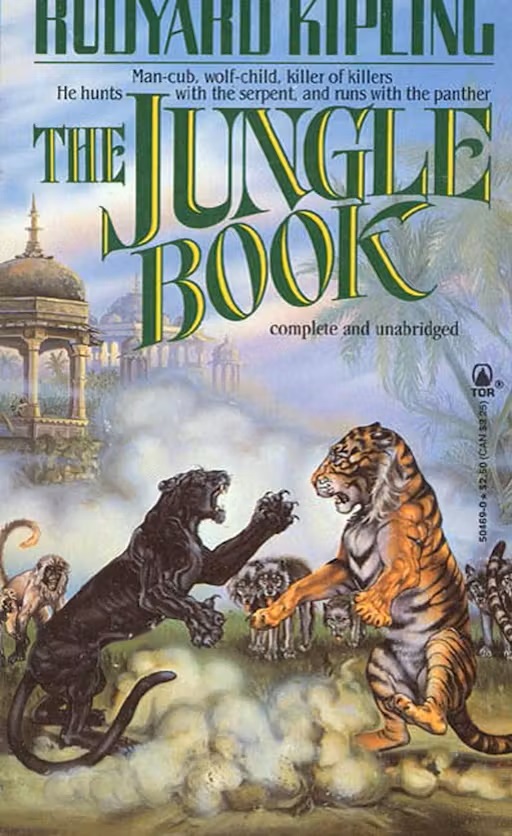
“The Jungle Book” is not a single continuous narrative but a collection of interconnected short stories and fables, predominantly focusing on Mowgli, a human child raised by wolves in the Indian jungle. Discovered as an infant, Mowgli is adopted into a wolf pack, mentored by the wise black panther Bagheera and the stern but loving bear Baloo, who teach him the ‘Law of the Jungle.’ His idyllic, albeit challenging, upbringing is constantly threatened by Shere Khan, the fearsome tiger who views Mowgli as his rightful prey. The stories explore Mowgli’s coming-of-age, his struggle to find his place between the animal kingdom and human civilization, and his eventual confrontation with his nemesis. Beyond Mowgli’s tales, the book also features other standalone fables, such as “Rikki-Tikki-Tavi,” the heroic mongoose, and “Toomai of the Elephants,” each offering unique insights into courage, loyalty, and the complex relationship between man and beast. These narratives collectively paint a vibrant, dangerous, yet ultimately harmonious picture of life in the jungle, governed by ancient laws and primal instincts.
The ‘Real Talk’
Approaching “The Jungle Book” as a recent release, one is immediately struck by its enduring power and Kipling’s masterful prose. The language is rich, evocative, and surprisingly sophisticated for what is often categorized as children’s literature. It’s not a ‘fast-paced’ modern thriller; instead, it invites the reader to immerse themselves in its rhythm, much like the jungle itself. The pacing is deliberate, allowing for deep character development and intricate world-building. Emotionally, the book is a rollercoaster – from the tender bonds within Mowgli’s adopted family to the palpable tension of his encounters with Shere Khan, and the poignant moments of self-discovery. The hype around its recent re-evaluation is well-deserved. Kipling’s ability to imbue animals with distinct personalities and to weave complex moral dilemmas into seemingly simple fables is extraordinary. While some aspects might reflect colonial-era perspectives, the core themes of identity, belonging, and the balance of nature transcend time, making it a powerful and thought-provoking read even today.
Character Deep-Dive
Mowgli, the ‘man-cub,’ is the heart of “The Jungle Book.” His journey is one of profound growth, from a vulnerable infant to a cunning young man caught between two worlds. He grapples with his human instincts versus the strictures of the jungle law, often feeling like an outsider in both. His flaws include a youthful impulsiveness and a struggle with human anger, which sometimes puts him at odds with his animal family. Yet, his loyalty, courage, and innate sense of justice make him incredibly compelling. Bagheera, the sleek black panther, serves as Mowgli’s pragmatic and protective mentor, offering wisdom and a realistic view of the jungle’s dangers. Baloo, the sleepy brown bear, is the embodiment of the jungle’s gentler side, teaching Mowgli the songs and ways of the wild with loving patience. Shere Khan, the scarred tiger, is a formidable antagonist, representing unchecked arrogance and a violation of jungle law. His relentless pursuit of Mowgli provides consistent tension, highlighting the fragile peace of the jungle and the constant threat of chaos.
Vibe Check
Mythic, Adventurous, Profound, Poignant, Wild.
Thematic Analysis
“The Jungle Book” is rich with thematic depth. A central theme is the exploration of identity and belonging. Mowgli’s internal conflict – is he man or wolf? – resonates deeply, touching on the universal human quest for self-discovery and acceptance. The ‘Law of the Jungle’ is another crucial theme, representing a complex ethical code that governs the animal society. It’s not merely about survival of the fittest but also about respect, responsibility, and the delicate balance of nature. Kipling uses the jungle as a microcosm for society, exploring themes of justice, leadership, and the consequences of breaking established rules. Furthermore, the stories delve into the intricate relationship between humanity and the natural world, questioning where the boundaries lie and how co-existence is possible. The inevitable clash between civilization and wilderness, and the inherent dangers and beauties of both, are explored with nuanced understanding, providing rich fodder for philosophical reflection.
Reader Reactions
The recent re-engagement with “The Jungle Book” has sparked a vibrant conversation across platforms like BookTok and Goodreads. Many new readers are discovering its depth beyond the beloved Disney adaptations, praising Kipling’s sophisticated storytelling and the complex moral landscape. There’s significant appreciation for the nuanced character arcs, particularly Mowgli’s struggle with identity. On BookTok, aesthetic edits celebrating the bond between Mowgli, Baloo, and Bagheera have gone viral, drawing in a younger audience. However, some contemporary readers have raised valid criticisms regarding the book’s colonial undertones and anthropocentric viewpoints, leading to discussions about historical context versus modern sensibilities. Despite these critiques, the overwhelming sentiment is one of awe at the book’s timeless appeal and its ability to provoke thought on themes of nature, law, and what it truly means to belong. It’s clear that even a century after its publication, “The Jungle Book” continues to captivate and challenge its audience.
FAQ
Is The Jungle Book – Book a standalone or part of a series?
“The Jungle Book” is a collection of standalone stories, but it was followed by “The Second Jungle Book,” which continues some of Mowgli’s adventures and introduces new fables.
Does it have a happy ending?
Mowgli’s arc concludes with him finding his place, but it’s a bittersweet resolution as he must ultimately choose between the jungle and the world of men. The ending is more about acceptance and growth than a simple ‘happy ever after.’
What’s the spice/romance level?
There is no romance or ‘spice’ in “The Jungle Book.” It focuses entirely on adventure, survival, and the bonds of family and friendship within the animal kingdom and Mowgli’s interactions with it.
Who would enjoy this book?
Readers who appreciate classic adventure stories, animal fables, coming-of-age narratives, and rich, descriptive prose will find immense joy in this book. It’s suitable for older children and adults alike.
Is there an audiobook version?
Yes, numerous audiobook versions of “The Jungle Book” are available, many featuring acclaimed narrators who bring Kipling’s vivid world to life beautifully.