
Introduction
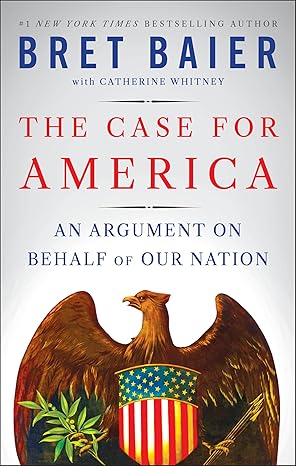
In an era defined by deep political fractures and a growing skepticism toward traditional institutions, The Case for America: An Argument on Behalf of Our Nation by Bret Baier arrives as a timely and provocative defense of the United States. Baier, one of the most recognizable voices in political journalism, steps away from the daily news cycle to offer a sweeping historical and philosophical argument for why the American experiment remains not only relevant but essential for the future of global stability. Released in 2026, this book serves as a counterbalance to modern narratives that focus exclusively on national failures, instead inviting readers to look at the “arc of the moral universe” through an American lens. In this review, we analyze whether Baier’s optimistic outlook can withstand the weight of contemporary challenges.
At a Glance: Book Details
| Book Title | Genre | Target Audience | Rating |
|---|---|---|---|
| The Case for America | Non-Fiction / History | History Buffs, Political Enthusiasts, Citizens | 4.7/5 Stars |
Plot Summary: Rescuing the American Narrative
While The Case for America is a non-fiction work of political philosophy and history, it follows a narrative structure that chronicles the “life” of the American idea. Bret Baier begins by establishing the current climate of cynicism, where both the left and the right often view the nation’s history as a series of irreparable errors or a lost golden age. Baier rejects both extremes, proposing instead that America is a living document—a continuous effort to live up to the “self-evident truths” established in 1776.
The book is divided into several thematic pillars. Baier explores the brilliance of the Constitutional framework, the unique American spirit of innovation, and the nation’s historical role as a “shining city upon a hill.” He doesn’t shy away from the darker chapters of history, including slavery, segregation, and economic inequality, but he frames them as hurdles that the American system was uniquely designed to overcome. By revisiting the words of Lincoln, FDR, and Reagan, Baier argues that the capacity for self-correction is America’s greatest strength.
The final third of the book focuses on the “Argument on Behalf of Our Nation” in the 21st century. Baier addresses the rise of authoritarianism globally and argues that a strong, united America is the only viable deterrent. He concludes with a blueprint for civic renewal, urging readers to rediscover common ground through shared history and a recommitment to civil discourse.
The “Real Talk”
Let’s get into the “Real Talk.” Bret Baier is a master storyteller, and his prose is as polished as his nightly broadcast. The book is incredibly accessible; you don’t need a PhD in political science to follow his arguments. However, for those who prefer gritty, critical historiography, Baier’s tone might occasionally feel a bit too “Flag-Waving.” While he acknowledges the nation’s flaws, his primary goal is clearly to inspire and defend, which may leave some readers wanting a deeper dive into the systemic issues he touches upon. That said, the emotional impact is undeniable—it’s a book that makes you want to believe in the possibility of a “More Perfect Union.”
Character Analysis: Figures of the Republic
In Baier’s historical narrative, he treats the Great Figures of American history like characters in an epic drama. Their motivations are analyzed to prove the book’s central thesis:
- The Founding Fathers (The Architects): Baier portrays them not as infallible gods, but as flawed geniuses who built a house they knew would need constant renovation.
- Abraham Lincoln (The Preserver): Used as the ultimate example of leadership during a fracture. Baier highlights Lincoln’s ability to maintain the “Case for America” even when the nation was literally tearing itself apart.
- The American Citizen (The Protagonist): Baier argues that the true hero of the story is the individual citizen who engages in the democratic process. He suggests that the “growth” of this character is the only way the nation survives.
Vibe Check
- Patriotic: Deeply rooted in love for country and its principles.
- Educational: Filled with historical anecdotes that many may have forgotten.
- Hopeful: A deliberate rejection of modern “doom-scrolling” culture.
- Persuasive: Written with the intent to convince the skeptic.
Thematic Analysis: Exceptionalism and Self-Correction
The core theme of The Case for America is American Exceptionalism. Baier defines this not as being “better” than other people, but as having a unique political DNA that allows for constant evolution. He argues that the US is the only nation founded on an idea rather than an ethnicity or a piece of land, which makes it fragile but also incredibly resilient.
Another vital theme is The Power of Civil Discourse. Baier laments the loss of the “loyal opposition.” He argues that when we stop viewing our political opponents as fellow citizens and start seeing them as enemies, the “Case for America” fails. The book serves as a plea for a return to a shared set of facts and a shared respect for the institutions that govern us. Finally, the theme of Global Responsibility is prevalent; Baier posits that an America that retreats from the world leaves a vacuum that will be filled by much darker forces.
Reader Reactions & Cultural Impact
Since its release, the book has become a staple on both the New York Times and Wall Street Journal bestseller lists. On Goodreads, it maintains a high rating, particularly among readers who appreciate Baier’s moderate, “fair and balanced” reputation. While some critics in more progressive circles argue that the book glosses over contemporary systemic issues, the general public reaction has been one of gratitude for a positive narrative. On BookTok, “Patriot-Reads” influencers have highlighted the book as a essential guide for understanding the foundations of the country in a confusing digital age.
FAQ Section
- Is The Case for America a partisan political book?
- While Baier is a Fox News anchor, the book is designed to be an argument for the nation as a whole. It focuses more on historical principles and shared values than on specific 2026 election talking points.
- Is this book a good gift for students?
- Yes, it is highly recommended for high school and college students looking for a comprehensive and accessible overview of American civic values and history.
- Does the book cover recent historical events?
- Yes, Baier brings the narrative up to the present day, discussing the challenges of the 2020s and the rise of digital polarization.
Where to Buy
Support your local bookstores or find your copy at these major retailers:
- Amazon: Buy on Amazon
- Barnes & Noble: Buy on Barnes & Noble
- Goodreads: View on Goodreads
- Bookshop.org: Support Local via Bookshop.org
- Audible: Listen on Audible