
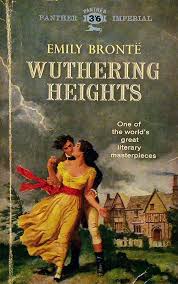
Introduction to the Masterpiece
Few novels in the history of English literature have evoked as much passion, controversy, and enduring fascination as Wuthering Heights by Emily Brontë. First published in 1847 under the pseudonym Ellis Bell, Wuthering Heights is a wild, tempestuous tale of love, revenge, and the destructive power of obsession. Set against the desolate and haunting backdrop of the Yorkshire moors, Emily Brontë crafted a narrative that defied the Victorian conventions of her time. Unlike the polite society novels of the era, Wuthering Heights explores the darkest corners of the human psyche, presenting characters who are as untamed as the landscape they inhabit. Whether you are a student analyzing this text for the first time or a lifelong fan of Gothic fiction, this guide to Wuthering Heights by Emily Brontë will provide the deep insights you need to understand this complex work of art.
Detailed Plot Summary
The story of Wuthering Heights by Emily Brontë is told through a framed narrative, primarily relayed by Nelly Dean, a housekeeper, to Mr. Lockwood, a tenant at Thrushcross Grange. The plot begins with the arrival of Heathcliff, a mysterious, dark-skinned orphan brought home to the Wuthering Heights estate by Mr. Earnshaw. While Mr. EarnHeathcliffshaw’s daughter, Catherine, forms an intense and spiritual bond with Heathcliff, her brother, Hindley, views the boy as an interloper and treats him with escalating cruelty. This dynamic sets the stage for the lifelong conflict that defines Wuthering Heights.
As Catherine and Heathcliff grow older, their bond deepens into a wild, transcendental love. However, during a stay at Thrushcross Grange, Catherine is exposed to the refined world of the Linton family. She eventually chooses to marry Edgar Linton for social standing and stability, despite her famous declaration that her soul and Heathcliff’s are the same. Devastated and humiliated, Heathcliff disappears for several years, only to return to the moors as a wealthy and educated man, hell-bent on seeking revenge against the Earnshaw and Linton families who he believes wronged him.
The second half of Wuthering Heights by Emily Brontë follows Heathcliff’s meticulous and cold-blooded destruction of his enemies. He gains control of the Heights from a gambling-addicted Hindley and marries Edgar’s sister, Isabella, solely to mistreat her. Following Catherine’s tragic death during childbirth, Heathcliff’s obsession only intensifies; he longs for her ghost to haunt him, unable to live in a world without her. The cycle of revenge extends to the next generation, involving Catherine’s daughter (Cathy), Hindley’s son (Hareton), and Heathcliff’s own sickly son (Linton).
The resolution of Wuthering Heights by Emily Brontë comes only after Heathcliff’s own demise. After years of bitterness, he loses his will to fight and eventually dies, presumably reuniting with Catherine’s spirit on the moors. The novel ends on a note of cautious optimism, as the younger Cathy and Hareton—representing a fusion of the wild Earnshaw spirit and the refined Linton nature—plan to marry, finally breaking the cycle of violence and hatred that had gripped the two houses for decades.
Character Analysis
In Wuthering Heights, Emily Brontë created characters that are remarkably psychological and often deeply unsympathetic, which was a radical departure for 19th-century fiction:
- Heathcliff: The quintessential anti-hero. Heathcliff is driven by an all-consuming love for Catherine and an equally powerful desire for revenge. He is often viewed as a victim of systemic abuse who transforms into an abuser himself.
- Catherine Earnshaw: A free-spirited and stubborn woman torn between her wild nature (represented by Wuthering Heights) and her desire for social respectability (represented by Thrushcross Grange).
- Edgar Linton: The foil to Heathcliff. Edgar is kind, cultured, and physically fragile. While he offers Catherine a stable life, he cannot compete with the primal energy she shares with Heathcliff.
- Nelly Dean: The primary narrator. Though she presents herself as a sensible observer, many scholars argue that Nelly is an unreliable narrator whose interference often exacerbates the tragedies in Wuthering Heights.
- Hareton Earnshaw: The son of Hindley, whom Heathcliff intentionally keeps uneducated as part of his revenge. His eventual redemption through Cathy’s love is a central theme of the novel’s conclusion.
Thematic Analysis & Symbols
The themes within Wuthering Heights by Emily Brontë are as vast as the moors themselves. Central to the book is the Nature vs. Civilization conflict. Wuthering Heights represents the raw, storm-tossed forces of nature and emotion, while Thrushcross Grange symbolizes the domestic, ordered, and often stifling constraints of society. Emily Brontë suggests that while civilization provides comfort, it cannot contain the fundamental passions of the human heart.
Revenge and Retribution also play a pivotal role. Heathcliff’s life becomes a study in how trauma can perpetuate itself across generations. However, the novel also explores The Supernatural, as the boundaries between life and death are frequently blurred. Whether Catherine’s ghost is a literal entity or a manifestation of Heathcliff’s deteriorating mind is left for the reader to decide, adding to the Gothic allure of Emily Brontë’s prose.
Reader Reactions & Cultural Impact
Initially, Wuthering Heights by Emily Brontë shocked Victorian critics who found its “savagery” and lack of moral resolution disturbing. However, modern readers have embraced the book as a masterpiece of emotional depth. On social media platforms like “BookTok” and “Bookstagram,” the novel is frequently discussed for its “toxic” yet captivating romance and its stunning Gothic aesthetic. It has inspired countless adaptations, from films starring Laurence Olivier to Kate Bush’s iconic 1978 song “Wuthering Heights,” proving that the world Emily Brontë built continues to resonate in our collective imagination.
About Emily Brontë
Emily Brontë (1818–1848) was one of the legendary Brontë sisters, living most of her life in the secluded parsonage at Haworth in Yorkshire. A deeply private individual, Emily was a poet at heart, and Wuthering Heights remains her only published novel. Tragically, she died of tuberculosis at the age of 30, shortly after the book’s publication, never living to see the massive literary legacy that Emily Brontë would leave behind for future generations.
Where to Buy Wuthering Heights
If you are looking to own a copy of this timeless classic, you can find Wuthering Heights by Emily Brontë at these major retailers:
- Buy Wuthering Heights on Amazon
- Buy Wuthering Heights on Barnes & Noble
- Buy Wuthering Heights on Bookshop.org
- Buy Wuthering Heights on Audible
- Buy Wuthering Heights on ThriftBooks
- Buy Wuthering Heights on AbeBooks
- Buy Wuthering Heights on Better World Books
- Read Wuthering Heights for free on Project Gutenberg