
The Tangible Reality of Independence: Introduction
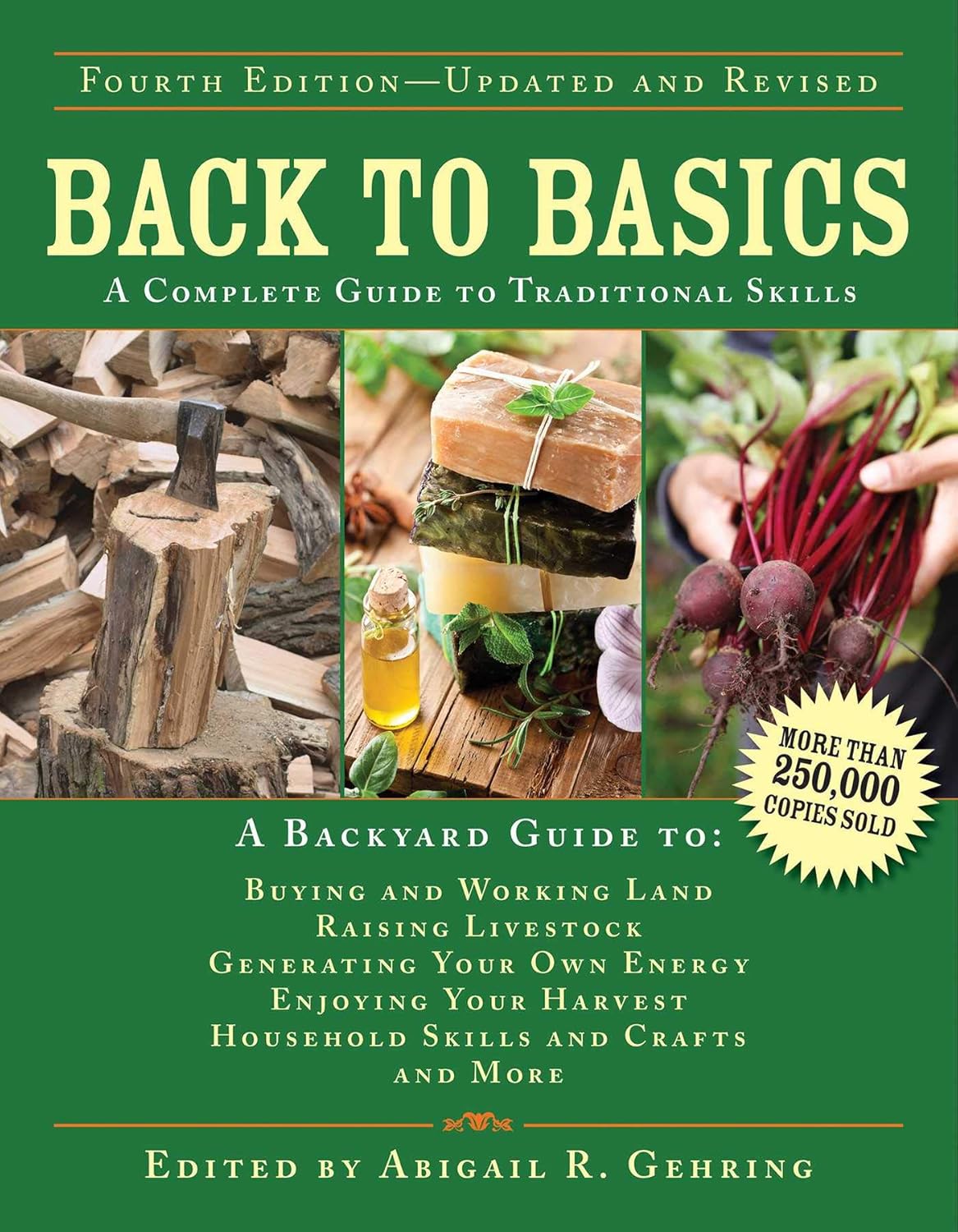
In an increasingly digital and hyper-connected world, the friction of modern dependency often sparks a deep, collective yearning for a simpler existence. Back to Basics by Abigail Gehring serves as a monumental, practical bridge to that alternative reality. Inheriting the rustic spirit of early American self-reliance guides and updating the foundational ethos of Foxfire book series, Gehring has curated an exhaustive, beautifully illustrated master anthology of traditional skills. Far from a romanticized, abstract call to abandon society, this textbook operates as a highly pragmatic blueprint for anyone seeking to reclaim control over their food, energy, shelter, and everyday lifestyle choices.
Back to Basics At a Glance: Key Details
| Book Title | Genre | Target Audience | Anwar Library Rating |
|---|---|---|---|
| Back to Basics | Non-Fiction / Homesteading & Self-Reliance | Aspiring homesteaders, eco-conscious families, off-grid enthusiasts, and DIY crafters | 4.9 / 5.0 |
The Framework of Autonomy: Plot Summary of Back to Basics
As an authoritative work of practical non-fiction, Back to Basics does not follow a fictional narrative arc, but rather structures its chapters as a progressive journey toward complete sovereign living. The book opens by establishing the physical foundation of the homestead: selecting the right tract of land, understanding soil composition, and analyzing sun exposure. From there, it systematically dismantles the complexities of green building, offering heavily detailed technical schematics for log cabins, timber-frame barns, stone walls, and efficient wood-burning heating systems. Gehring ensures that the daunting prospect of physical infrastructure is broken down into manageable, actionable steps.
The core of the compendium shifts toward agricultural independence and localized food production. The text walks the reader through every phase of organic vegetable gardening, high-yield orchard management, crop rotation, and composting ecosystems. It extends past basic flora to cover the humane management and keeping of backyard livestock, including chickens, honeybees, dairy goats, and cattle. The final segments dive deep into the micro-skills of domestic preservation—canning, dehydration, root cellaring, cheese-making, soap-crafting, and even traditional textile spinning—creating a cyclical, zero-waste system where every resource on the homestead is utilized to its absolute maximum potential.
Granular Instruction vs. Curatorial Scope: Critical Assessment of the Novel
The “Real Talk”: Pacing, Prose, and Impact
Abigail Gehring’s editorial voice is exceptionally clear, authoritative, and completely devoid of high-minded academic preachy tones or empty counter-culture rhetoric. The prose is clean and direct, written with the focused efficiency of a seasoned instructor who values functional safety and technical clarity above all else. Information is delivered with a comforting rhythmic pacing, shifting naturally from high-level overviews of sustainable systems into granular, step-by-step instructions accompanied by historical diagrams, photographs, and clear recipes.
Because the book functions as a comprehensive anthology covering hundreds of distinct traditional disciplines, certain advanced sections naturally sacrifice hyper-specific depth in favor of broad curatorial scope. For instance, while the guide provides an incredible foundation for log cabin construction or building solar arrays, a reader attempting to execute these massive infrastructure projects from scratch will likely need secondary, specialized engineering blueprints. However, as a singular, accessible encyclopedia designed to inspire, demystify, and catalog the absolute mechanics of self-sufficiency, its overall structural layout and execution are unmatched in contemporary green literature.
The Evolution of the Maker: In-Depth Character Analysis
Because this is an objective manual of non-fiction, the core development does not center on an individual protagonist, but rather tracks the psychological and operational transformation of the reader themselves. Gehring treats the aspiring homesteader as a developing figure navigating distinct developmental stages of self-reliance.
- The Dependent Consumer: The starting point of the text. This profile represents individuals completely isolated from their supply chains, reliant on corporate systems for basic nourishment, utilities, and household goods, and experiencing an underlying modern anxiety regarding systemic vulnerability.
- The Autonomous Producer: The ultimate evolution cultivated by the book. Through practicing the skills outlined by Gehring, this profile shifts toward an empowered identity characterized by physical capability, resourcefulness, an intimate understanding of nature’s seasonal rhythms, and a profound sense of self-ownership.
Atmospheric Chemistry: Vibe Check
Grounded: Every page is anchored in the physical reality of dirt, wood, tools, and real-world biological timelines.
Nostalgic: Richly celebrates and preserves the beautifully efficient, historical methodologies of generations that lived long before the industrial revolution.
Empowering: Instantly strips away the intimidation factor of complex DIY projects, instilling an immediate “can-do” mindset in the reader.
The Philosophy of Conscious Consumption: Themes & Motifs Deep Dive
The driving socio-economic theme running through Back to Basics is the profound moral and physical critique of modern hyper-consumerism. Gehring builds a compelling, step-by-step argument for decoupling from wasteful, high-emissions distribution loops. By highlighting the simple act of baking your own sourdough bread, harvesting rainwater, or spinning wool, the text transforms mundane chores into radical, everyday actions of ecological conservation and anti-corporate autonomy.
Another major motif is the restoration of the “forgotten lineage of craft.” The book champions the historical value of human labor, showing how the systemic loss of physical skills has left modern societies uniquely fragile and emotionally unfulfilled. By treating gardening, carpentry, and food preservation not as antiquarian hobbies but as vital, modern survival systems, the work elevates the status of the manual worker and honors the elegant, cyclical wisdom of traditional living patterns.
Destined for the Hearth: Target Audience Guide
This comprehensive handbook is a foundational cornerstone for any collector of homesteading literature, off-grid survival manuals, or permaculture textbooks. If you have worn out your copies of John Seymour’s The Self-Sufficient Life and How to Live It or consistently follow modern sustainability creators, Gehring’s compilation will find a permanent, heavily referenced home on your shelf. It serves as an incredible, hands-on instructional resource for families looking to integrate practical, real-world educational crafting projects into their home-school curriculums or sustainable lifestyle transitions.
If You Loved This Drama: Similar Recommendations
If the comprehensive, hand-crafted self-reliance projects detailed within Abigail Gehring’s work inspired your inner maker, consider exploring these essential handbooks next:
- The Self-Sufficient Life and How to Live It by John Seymour: The undisputed classic of self-sufficiency literature, offering deep, beautifully illustrated guides to small-scale farming.
- The Foxfire Book Series by Eliot Wigginton: An unmatched multi-volume collection documenting traditional Appalachian crafts, folklore, and survival strategies.
- Mini Farming: Self-Sufficiency on 1/4 Acre by Brett L. Markham: A highly focused, analytical guide perfect for backyard gardeners looking to maximize food production in limited spaces.
The Digital Homesteading Movement: Cultural Impact and Reader Reactions
Over the years, Back to Basics has emerged as a major cultural textbook driving the modern backyard farming renaissance across online communities. On BookTok and Instagram, younger urban homesteaders frequently display the book’s highly photogenic diagrams as aesthetic inspiration for their sustainable apartment gardening set-ups, generating millions of aggregate views. On Goodreads, the manual maintains an incredible presence, with reviewers universally praising Gehring’s ability to act as an encouraging, step-by-step mentor. The book club and green-living communities consistently celebrate the work as an essential, non-political roadmap that successfully makes environmental stewardship and physical capability accessible to absolutely everyone.
About the Author: Abigail Gehring
Abigail Gehring is an acclaimed writer, editor, and dedicated homesteader who has written and curated numerous bestselling guides on country skills, self-reliance, organic cooking, and sustainable living. Splitting her time between a historic family farm in Vermont and rural communities, Gehring practices exactly what she writes, testing every recipe, craft, and building design firsthand. Her deep editorial precision and extensive background in investigative publishing have made her an authoritative, globally trusted champion for the modern self-sufficiency movement.
Frequently Asked Questions (FAQ)
Can the skills in Back to Basics be applied in a suburban or urban apartment setting?
Absolutely. While major projects like log cabin building or keeping large livestock require land, a massive portion of the book focuses heavily on small-scale skills like canning, soap-making, baking, vertical container gardening, and honeybee keeping that are highly adaptable to suburban yards and urban spaces.
Is this book overly technical for a complete beginner with zero DIY experience?
Not at all. Gehring intentionally curates the instructions to be incredibly accessible, opening each discipline with basic terminology and foundational skills before moving into more advanced carpentry or agricultural techniques.
Does Back to Basics include specific recipes for food preservation?
Yes. The book contains dozens of fully verified, step-by-step recipes and charts for water-bath canning, pressure canning, fermenting, cheese-making, drying herbs, and preserving various types of meats safely.
Where to Buy & Read
Ready to immerse yourself in this unputdownable book? Use the verified, functional search retail links below to find the best deals on physical, digital, or audio editions: