
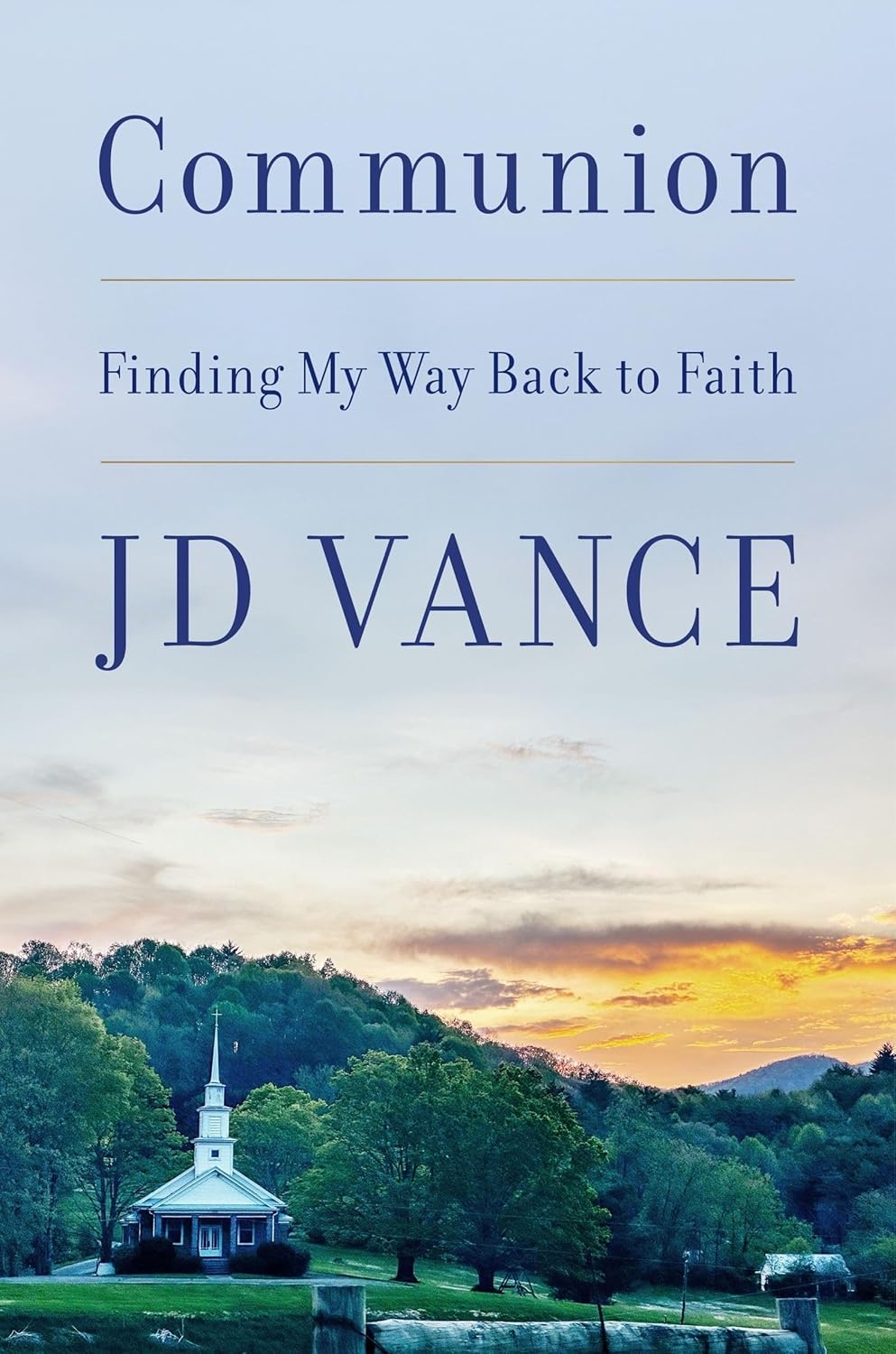
The Architecture of the Altar: Introduction
Navigating the literary offerings of active political leaders requires a delicate balance of analytical skepticism and intellectual curiosity. In Communion: Finding My Way Back to Faith by J. D. Vance, readers encounter a text that attempts to map the invisible interior terrain of soul-searching and spiritual realignment. Serving as a direct thematic sequel to his era-defining memoir Hillbilly Elegy, this work approaches the concept of spiritual conversion not merely as an emotional experience, but as an intellectual and cultural framework for surviving modern life. It shares deep thematic undercurrents with classic conversion narratives like Thomas Merton’s The Seven Storey Mountain, while reflecting the complex socio-political anxieties regarding modern culture examined in our previous analysis of Dennis Prager’s writings on faith. Vance positions his journey toward Catholicism as a protective shield against the dizzying, isolating pressures of institutional power and elite validation.
Communion At a Glance: Key Details
| Book Title | Genre | Target Audience | Anwar Library Rating |
|---|---|---|---|
| Communion: Finding My Way Back to Faith | Memoir / Religious Autobiography | Readers interested in modern spiritual journeys, Catholic theology, and personal political history. | 4.1 / 5.0 |
The Migration from the Wilderness: Plot Summary of Communion (No Spoilers)
As an autobiographical memoir, the text traces Vance’s development from the fragmented, evangelical-leaning Christian roots of his youth in Middletown, Ohio, to a state of total spiritual indifference. Following his departure from the Marine Corps and his subsequent ascent through Yale Law School and the competitive landscape of Silicon Valley venture capital, Vance chronicles his time spent in what he calls a “secular wilderness.” This period was defined by an obsessive pursuit of material privilege, institutional prestige, and intellectual validation—ambitions that ultimately left him feeling profoundly hollow and disconnected from community roots.
The core of the narrative documents his methodical, intellectual re-examination of Christian theology, culminating in his formal conversion and baptism into the Roman Catholic Church in 2019. Rather than presenting a sudden supernatural epiphany, Vance outlines a slow process of reading historical philosophy, observing the stabilizing power of tradition within his own marriage to Usha Vance, and confronting his own deep-seated childhood traumas. The final third of the book explores how this theological framework intersects with his unexpected elevation into high public office, detailing how ancient liturgy provides him with an ethical anchor when facing the shifting realities of modern domestic and global politics.
Theological Introspection vs. Public Rhetoric: Critical Assessment of the Novel
The “Real Talk”: Pacing, Prose, and Impact
In this focused look at Vance’s literary execution, what stands out is his ability to write with the same direct, analytical prose that made his first memoir a bestseller. He avoids overly sentimental religious language, preferring a clear style that treats theological concepts like problems to be solved through reason and discipline. However, the structural pacing encounters friction when the book attempts to balance deeply private spiritual confessions with the transactional realities of modern current events. Like the narrative challenges observed in our critique of You with the Sad Eyes, Vance’s dual identity as a private seeker and a highly visible public official creates a structural tension. The chapters shifting between silent monastic reflection and high-stakes political anecdotes can feel disjointed, leaving some readers to wonder where the spiritual autobiography ends and the political messaging begins.
The Restless Seeker and the Ancient Church: In-Depth Character Analysis
The primary subject of this memoir is Vance himself, framed as an individual whose career success consistently outpaced his internal peace. His development focuses on an intellectual dismantling of his younger self’s blind faith in meritocracy, transitioning from an ambitious outsider seeking elite approval to a man seeking submission within an ancient institutional hierarchy.
The Catholic Church itself functions almost as a secondary character in the text. It is depicted not as a flawless sanctuary, but as a rigid, time-tested institution whose very permanence, demanding moral expectations, and sacramental discipline offer a necessary counterweight to the hyper-fluid, temporary values of modern digital society.
Atmospheric Chemistry: Vibe Check
Contemplative: Driven by extensive interior monologues, theological debates, and reflections on historical texts.
Defensive: Features a sharp, critical stance against secular elite institutions and the cultural fragmentation of modern life.
Traditional: Marked by a profound respect for ancient rituals, historical continuity, and patriarchal family stability.
The Eucharist as an Anchor: Themes & Motifs Deep Dive
The foundational theme of Communion is the absolute necessity of institutional authority for personal and societal stability. Vance uses the motif of the Eucharist (Holy Communion) as a central symbol of ultimate belonging—contrasting the physical, shared reality of the sacrament against the disembodied, transient nature of online political warfare. Another prominent theme explores how inherited familial trauma can be managed through spiritual submission, illustrating how ancient confession rituals offer psychological relief that modern secular self-help frameworks failed to provide him.
The Pilgrim’s Road Map: Target Audience Guide
This memoir is custom-built for readers who enjoy intellectual conversion narratives that engage directly with philosophy, theology, and cultural commentary. If your library includes the works of modern Catholic thinkers like G.K. Chesterton, C.S. Lewis, or Bishop Robert Barron, Vance’s journey will resonate with your interests. It is also an essential text for political analysts seeking to understand the underlying philosophical framework driving the current populist conservative movement in America.
If You Loved This Drama: Similar Recommendations
The Seven Storey Mountain by Thomas Merton: A classic, deeply introspective autobiography of a brilliant young intellectual leaving secular disillusionment behind for the certainty of the Catholic Church.
Apologia Pro Vita Sua by John Henry Newman: For readers who want a complex, historical look at an intellectual defense of a deeply controversial religious conversion.
Orthodoxy by G.K. Chesterton: A brilliant philosophical work that matches Vance’s view of how ancient traditions often prove to be more radical and liberating than modern progressive ideas.
Polarized Pews and Bestseller Lists: Cultural Impact and Reader Reactions
Unsurprisingly, Communion has generated immense discussion across digital spaces, theological journals, and major media outlets. On Goodreads and Catholic BookTube, readers praise Vance for his intellectual honesty regarding the difficulties of adult baptism and the challenge of balancing personal faith with public office. Conversely, secular critics and progressive religious commentators have scrutinized the text, pointing out the apparent friction between traditional Christian teachings on poverty and the real-world policy positions Vance champions in Washington.
About the Author: J. D. Vance
J. D. Vance currently serves as the 50th Vice President of the United States, having previously represented Ohio in the United States Senate. A veteran of the U.S. Marine Corps who served in the Iraq War, Vance graduated from Ohio State University and Yale Law School before working as a venture capitalist. His 2016 memoir, Hillbilly Elegy, became a cultural phenomenon, examining the socio-economic struggles of the American Rust Belt and solidifying his position as an important voice in contemporary political literature.
Frequently Asked Questions (FAQ)
Is Communion a political policy book or a personal memoir?
It functions primarily as a personal and spiritual memoir focusing on faith. While it includes anecdotes from his public career, the chapters prioritize his internal theological evolution and Catholic conversion over specific legislative agendas.
Why is the book titled Communion?
The title refers directly to the Catholic sacrament of Holy Communion (the Eucharist), symbolizing Vance’s ultimate integration into the church and his search for genuine community after years of secular isolation.
Do I need to read Hillbilly Elegy before starting this book?
While Communion stands on its own as a spiritual chronicle, reading Hillbilly Elegy provides valuable context regarding Vance’s early upbringing, family struggles, and the cultural background that shaped his initial departure from faith.
Where to Buy & Read
Ready to immerse yourself in this unputdownable book? Use the verified, functional search retail links below to find the best deals on physical, digital, or audio editions: