
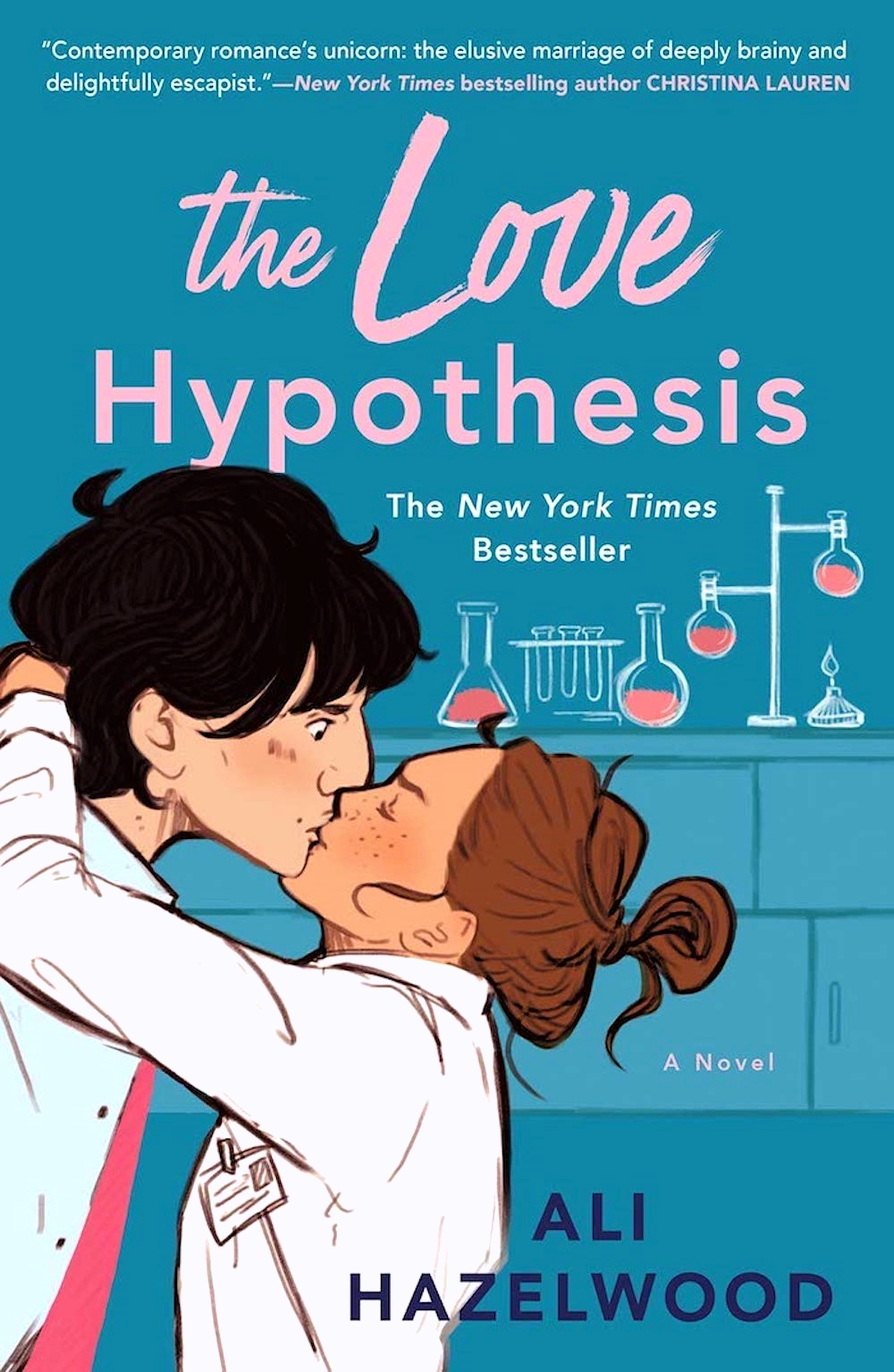
Petri Dishes and Passion: Introduction
When The Love Hypothesis by Ali Hazelwood first exploded across digital reading communities, it did more than just top bestseller lists—it fundamentally revitalized the contemporary academic romance sub-genre. Originally conceived as a work of fan fiction paying homage to classic sci-fi character dynamics, Hazelwood’s debut novel successfully cross-pollinated mainstream commercial fiction with the niche, high-pressure world of graduate school academia. It stands comfortably alongside modern romantic comedies like Colleen Hoover’s raw emotional explorations, though it swaps heavy melodrama for sharp witty banter and laboratory-grade subplots.
The Love Hypothesis At a Glance: Key Details
| Book Title | Genre | Target Audience | Anwar Library Rating |
|---|---|---|---|
| The Love Hypothesis | Contemporary Romance / STEM Rom-Com | Fans of academic tropes, fake-dating narratives, and witty women in science. | 4.7 / 5.0 |
The Catalyst of a Spontaneous Kiss: Plot Summary of The Love Hypothesis (No Spoilers)
The narrative follows Olive Smith, a third-year Ph.D. candidate in biology at Stanford University, who is completely dedicated to her research on the early detection of pancreatic cancer. Olive is a staunch pragmatist who does not believe in lasting romantic relationships. However, when she needs to quickly convince her best friend, Anh, that she has happily moved on from a brief dating experiment, Olive panics. In a moment of sheer desperation to prove her romantic availability, she kisses the first man she encounters in the dimly lit hallway of the science department.
As fate would have it, that man is none other than Dr. Adam Carlsen—a young, brilliant, and notoriously tyrannical professor known for reducing graduate students to tears during their presentations. To Olive’s absolute shock, instead of reporting her to human resources, the unapproachable genius agrees to enter into a mutually beneficial fake-dating agreement. Adam needs to convince Stanford administration that he has deep roots at the university so they will unfreeze his research funds, while Olive needs to maintain her charade for Anh’s peace of mind. What follows is a calculated dance of structured encounters, public coffee dates, and strict rules designed to keep their professional boundaries entirely intact while the entire campus watches.
The Final Equation: The Love Hypothesis Ending Explained & Plot Twists (Spoilers)
Click to expand the deep-dive spoiler zone
🚨 WARNING: Major Spoilers Ahead! Do not expand this section unless you have finished the book.
The climax of the novel hinges on a profound betrayal of academic integrity and personal trust. Olive travels to a major conference in Boston to present her groundbreaking research on pancreatic cancer biomarkers. While there, Dr. Tom Benton, a prestigious external researcher who had previously offered Olive a place in his well-funded lab, reveals his true colors. He aggressively belittles Olive’s work, steals her research findings, and threatens to destroy her academic career if she speaks out, assuming she has no institutional power to fight back.
Furthermore, Benton attempts to use Olive’s fake relationship with Adam as leverage, revealing that he deeply dislikes Carlsen. When Olive discovers that Adam’s research funds were actually frozen because he refused to compromise his ethics for Benton’s corporate connections, the stakes escalate. The major plot twist occurs when Malcolm, Olive’s supportive roommate, helps her record a secret confrontation with Benton. Armed with this evidence, and bolstered by the fierce, protective intervention of Dr. Carlsen himself, they expose Benton’s systemic misconduct to the university board, leading to his swift termination.
With the professional threat neutralized, the emotional barriers between the main characters completely dissolve. Adam confesses that he wasn’t playing along with the fake-dating scheme out of academic convenience; he had been deeply in love with Olive since a brief, anonymous conversation they shared at a coffee shop a year before the events of the book. The story concludes with Olive securing an independent path for her research, and the couple transitioning their calculated hypothesis into a genuine, deeply committed real-world partnership.
Calculated Pacing vs. Formulaic Frameworks: Critical Assessment of the Novel
The “Real Talk”: Pacing, Prose, and Impact
From a stylistic standpoint, Hazelwood excels at generating rapid-fire, highly entertaining dialogue that carries the reader effortlessly through what could otherwise be dense, dry institutional settings. The pacing is expertly calibrated to maximize the tension of the classic “forced proximity” framework. By embedding the narrative inside a realistic depiction of funding shortages, publication anxieties, and the relentless pressure of the “publish or perish” ecosystem, the romance feels grounded in a very tangible reality.
However, an honest critique must acknowledge that the book occasionally relies heavily on hyper-specific romance tropes that may polarize readers. The physical contrast between the characters—emphasizing Adam’s towering, massive frame compared to Olive’s small stature—is repeated frequently enough to border on cliché. Additionally, while the miscommunications that drive the second-act tension are highly effective for building anticipation, readers who prefer highly direct, transparent communication between characters might find certain delays frustrating. Despite these minor structural formulas, the prose remains lively, accessible, and remarkably charming.
The Anatomy of Academics: In-Depth Character Analysis
The success of the novel relies heavily on the distinct, contrasting internal architectures of its two leads:
- Olive Smith: Driven by personal loss and an intense dedication to preventative medicine, Olive is an incredibly relatable protagonist. Her external humor shields a vulnerability born from a lack of standard familial support systems. Her development centers on learning to advocate for herself, not just within a laboratory environment, but within her personal life.
- Dr. Adam Carlsen: Initially presented as the classic unapproachable anti-hero, Adam’s layers are peeled back to reveal a fiercely loyal, ethical, and deeply observant individual. His harshness toward his students is contextualized not as malice, but as a rigid standard of excellence designed to prepare them for a brutal professional landscape. His absolute willingness to stand as a shield for Olive’s career highlights his profound respect for her intellect.
Atmospheric Chemistry: Vibe Check
Caffeinated: The narrative drips with late-night lab sessions, endless loops of standard coffee runs, and the frantic energy of looming academic deadlines.
Comforting: Despite the high-stakes professional drama, the emotional core provides a warm, predictable safety net that classic rom-com lovers crave.
Sharp-Witted: The banter is fast, filled with intellectual barbs, sarcastic observations about academic life, and delightful nerddom.
Systemic Hurdles and Secret Alliances: Themes & Motifs Deep Dive
Beyond the central love story, Hazelwood uses the narrative to shine a critical spotlight on the systemic challenges within STEM fields. The book deeply explores the vulnerabilities inherent in the graduate student-advisor dynamic, highlighting how power imbalances can be weaponized by predatory figures like Dr. Benton. This elements shows a thematic similarity to the high-stakes professional obstacles analyzed in our review of And Now Back to You, where modern characters must carefully navigate personal desires alongside complex public and professional reputations.
Imposter syndrome is another foundational motif. Olive constantly questions her right to occupy space in elite research tiers, a psychological hurdle that many contemporary readers will recognize instantly. The laboratory itself serves as a profound metaphor; it is an environment where failures are expected, hypotheses are tested, and unexpected variables frequently lead to the most significant breakthroughs of all.
Graduates and Grumpy-Sunshine Enthusiasts: Target Audience Guide
This novel is perfectly tailored for readers who adore the “grumpy-versus-sunshine” dynamic executed with high contemporary intelligence. If you enjoy smart, driven heroines who refuse to compromise their career goals for romance, this book will resonate deeply. It is a fantastic match for anyone who has ever survived the pressures of higher education, worked under an intimidating mentor, or found themselves staying up far too late reading virally popular fiction recommendations online.
If You Loved This Drama: Similar Recommendations
For readers looking to capture a similar reading experience, we highly recommend exploring these excellent contemporary titles:
- If you enjoy a sharp focus on emotional tension and characters who must completely reconstruct their ideas of love after personal loss, consider reading our detailed analysis in the Ugly Love by Colleen Hoover review.
- For readers who prefer a lighter, more comedic take on complex relational contracts and playful romantic tension, check out the witty setups detailed in our Rules for the Summer by Meghan Quinn review.
- The Love Hypothesis also pairs wonderfully with Helen Hoang’s The Kiss Quotient, which similarly utilizes a structured, highly intentional agreement between two neurodivergent or highly analytical professionals as the foundation for genuine intimacy.
From Fan-Fiction Roots to Global Phenomenon: Cultural Impact and Reader Reactions
Originally trending heavily across BookTok and Goodreads, the book rapidly transitioned from a digital darling to a major mainstream publishing landmark. Readers routinely praise the accurate, unvarnished depiction of the exhausting realities of laboratory life, contrasting it against the wish-fulfillment of having a hyper-protective partner in your corner. While some literary critics note that the book adheres strictly to established commercial romance blueprints, its massive community engagement scores and sustained presence on international bestseller lists solidify its status as a foundational text of modern millennial romance.
About the Author: Ali Hazelwood
Ali Hazelwood is the pen name of a highly accomplished professor of neuroscience who chose to channel her extensive, real-world experiences within the higher education system into engaging commercial fiction. Born in Italy, she lived in various countries before relocating to the United States to pursue her academic career. Her background allows her to infuse her novels with authentic institutional texture, making her a leading voice in contemporary STEM-focused fiction. Following this explosive debut, she has continued to expand her literary universe with highly successful titles such as Love on the Brain and Love, Theoretically.
Frequently Asked Questions (FAQ)
Is The Love Hypothesis appropriate for young adult readers?
While the book features a lighthearted, comedic tone throughout most of its chapters, it contains explicit adult intimacy and mature thematic elements in the final act, making it best suited for mature young adults and general adult readers.
Is this book based on a true story?
No, the narrative is entirely fictional. However, it was originally developed as a popular piece of online fan fiction inspired by the visual and structural dynamics of specific science fiction archetypes before being fully rewritten as an original contemporary novel.
Does the academic setting feel authentic?
Yes. Because the author is an active, professional academic researcher, the descriptions of funding challenges, departmental politics, and graduate student anxieties are incredibly accurate and grounded in real-world university dynamics.
Where to Buy & Read
Ready to immerse yourself in this unputdownable book? Use the verified, functional search retail links below to find the best deals on physical, digital, or audio editions: