
Introduction
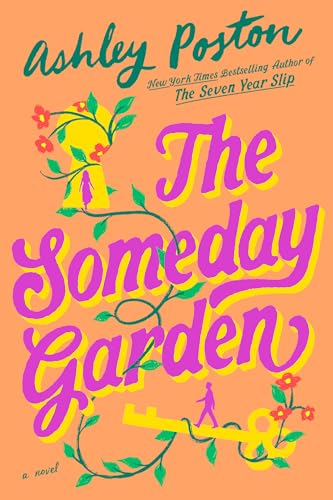
In the evolving landscape of contemporary fiction, few authors have managed to carve out a niche as distinct and enchanting as Ashley Poston. Known for her ability to infuse the mundane with a touch of the extraordinary, Poston returns in 2026 with The Someday Garden. This novel marks a profound maturation in her writing, bridging the gap between the whimsical romance of her previous hits and a deeply grounded exploration of human grief. Set in a town where time seems to hold its breath, The Someday Garden invites readers into a space where the past isn’t just a memory, but something that can be planted, nurtured, and occasionally, outgrown. In this extensive review, we will navigate the winding paths of Poston’s latest world to see if this garden is truly worth the visit.
At a Glance: Book Details
| Book Title | Genre | Target Audience | Rating |
|---|---|---|---|
| The Someday Garden | Magical Realism / Romance | Adult / New Adult | 4.8/5 Stars |
Plot Summary: The Seeds of Yesterday
The Someday Garden tells the story of Clementine, a woman who has spent her life running away from the shadows of her family’s legacy. When she unexpectedly inherits her grandmother’s neglected estate in a small, fog-shrouded valley, she discovers that the garden at the heart of the property is no ordinary patch of land. According to local lore—and Clementine’s own startling observations—the flowers in this garden bloom not with seasons, but with the unresolved emotions of those who tend them.
As Clementine attempts to restore the garden to sell the property and return to her “real” life, she finds herself literally haunted by the versions of herself she tried to leave behind. Each section of the garden represents a “Someday”—a future she once hoped for or a past she couldn’t let go of. The plot thickens when she meets Silas, a local historian who is as tethered to the town’s secrets as Clementine is to her own grief. Together, they must uncover the mystery of why the garden has suddenly begun to wither, threatening to erase the memories of the entire town.
The narrative is a masterclass in slow-burn tension, alternating between Clementine’s internal struggle and the external mystery of the valley. Poston uses the magical elements of the garden to force her characters into a reckoning with their own stagnation. It is a story about the courage it takes to stop living in the “someday” and start living in the “now.”
The “Real Talk”
Let’s be honest: magical realism can be a polarizing genre. If you prefer your plots driven by hard logic and fast-paced action, the ethereal pacing of The Someday Garden might feel a bit meditative. However, for those who appreciate prose that reads like poetry, Poston delivers in spades. The “Real Talk” here is that while the romance is tender and beautifully developed, it occasionally takes a backseat to the heavy themes of mourning and ancestral trauma. Some readers might find the first hundred pages a bit slow as the “rules” of the magic are established, but the emotional payoff in the final act is nothing short of breathtaking. It’s a book that requires patience but rewards it with soul-stirring resonance.
Character Analysis: Cultivating the Self
The characters in The Someday Garden are not mere archetypes; they are garden beds themselves—complex, messy, and full of potential.
- Clementine: The quintessential “avoidant” protagonist. Her journey is the pillar of the book. Watching her move from resentment toward her heritage to a fierce protection of it is one of the most satisfying arcs in 2026 fiction.
- Silas: He serves as the perfect foil to Clementine. Where she wants to erase, he wants to preserve. His background as a historian provides the necessary grounding for the book’s more fantastical elements.
- The Grandmother (in flashbacks): Though she is deceased at the start of the novel, her presence looms large. Poston handles her character with a delicate touch, revealing her flaws and her wisdom in equal measure through the letters and botanical notes she left behind.
Vibe Check
- Enchanting: The magical elements feel organic and wonder-filled.
- Bittersweet: A heavy emphasis on the “sweetness” of memories and the “bitterness” of loss.
- Introspective: Much of the conflict is internal and psychological.
- Lush: The sensory descriptions of the garden are incredibly vivid.
Thematic Analysis: The Metaphor of the Bloom
At its core, The Someday Garden is an interrogation of Time and Memory. Poston posits that our memories are living things that require care, but if we feed them too much, they can choke out the present. The garden acts as a physical manifestation of the characters’ psyches—when they are honest with themselves, the flowers thrive; when they lie, the garden decays.
Another powerful theme is The Weight of Inheritance. Clementine struggles with the idea that she is destined to repeat the mistakes of her mother and grandmother. The book explores the radical idea that we can honor our ancestors without being imprisoned by their choices. The “Someday” in the title refers to the paralyzing nature of hope—how we often defer our happiness to an imaginary future instead of tending to the soil we are standing on today.
Reader Reactions & Cultural Impact
Since its release, The Someday Garden has become a staple of “Emotional BookTok.” Viral videos often show readers in tears by the final chapter, with many praising Poston for her “gentle handling of heavy hearts.” On Goodreads, it has maintained a high rating, specifically noted for its unique take on the “magical inheritance” trope. Culturally, the book has tapped into the 2026 “Slow Living” movement, encouraging readers to reconnect with nature and their own internal landscapes. It has solidified Ashley Poston’s reputation as the “Queen of Cozy Magic.”
FAQ Section
- Is The Someday Garden a sequel?
- No, it is a standalone novel. However, it shares the same “magical-realism-meets-romance” vibe as her other popular works like The Seven Year Slip.
- Is there a lot of magic in the book?
- The magic is subtle and tied to the emotions of the characters (often called “soft magic”). It feels more like a fairy tale grounded in the modern world.
- Is it suitable for young readers?
- The book is written for an Adult/New Adult audience due to its complex themes of grief and some mature romantic content, but it is generally accessible to older teens.
Where to Buy
Support your favorite authors and retailers by finding your copy of The Someday Garden here:
- Amazon: Buy on Amazon
- Barnes & Noble: Buy on Barnes & Noble
- Goodreads: View on Goodreads
- Bookshop.org: Support Local via Bookshop.org
- Audible: Listen on Audible